Grass Padrique | The Fabulous Scientist
The best part of being a geologist is being out in the great outdoors — whether along the shore, out at sea, high in the mountains, or even simply by the roadside when a freshly exposed rock face appears after a road cut. Sadly, my current work happens mostly indoors. My job revolves around technical data management, data analysis, and interpretation. It creates value for the company, certainly, but some days I find myself longing to be back outside doing traditional geologic work, far away from my computer screen.
In fact, even the first draft of this blog post was written in a notebook with my fountain pens rather than typed on a keyboard. That’s how determined I was to stay away from computers during that fossil-hunting weekend.
A few weeks ago, a friend — who also happens to be one of my former Geology professors — messaged our group chat asking if anyone was interested in joining him for a fossil-hunting expedition in La Union. (Yes, I am being overly dramatic by calling it an expedition, but where’s the fun in calling it a weekend field trip?)
Having never really explored La Union before, I immediately said yes. It was the perfect excuse to escape my computer and spend a weekend doing geology with fellow geologists. My professor also casually mentioned that I could take home as many fossils as I wanted, which, unsurprisingly, sealed the deal for me.
I packed light the night before and we left around six in the morning. Since La Union is only about three to four hours away from Quezon City and we were staying for just one night in a small hotel, I only brought a large backpack and a tote bag containing my rock pick and sampling gear. Naturally, I also brought an extra bag for samples and pasalubong — priorities are important after all.
I brought along my trusty eight-year-old Fuji X-T20 as well, partly to test whether it still had plenty of life left in it. As it turned out, I was the only one carrying a camera, which automatically promoted me to official team photographer and unofficial sample-packing assistant.
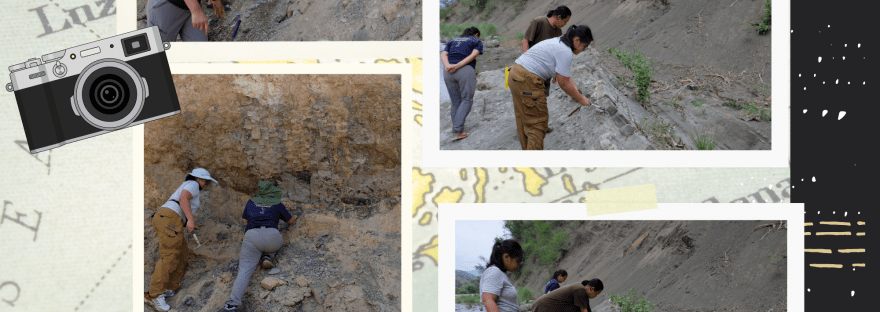
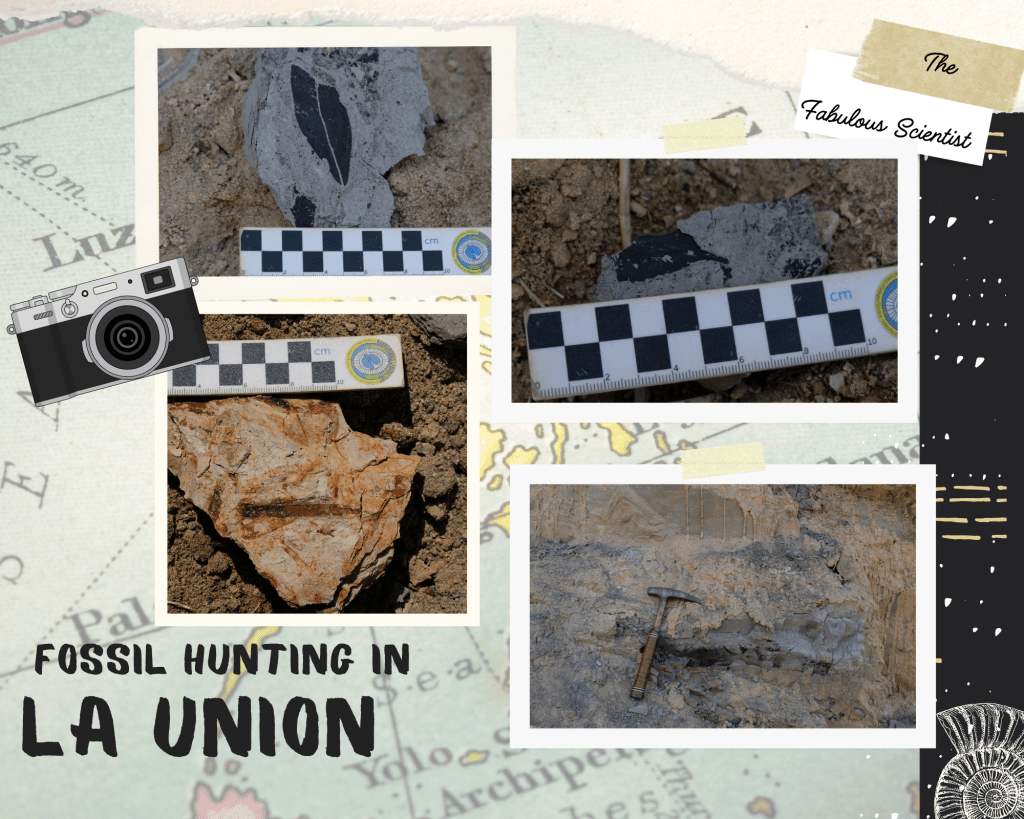
Our first stop was an outcrop along the highway in Sto. Tomas, La Union. The exposure consisted of inclined beds of sandstone and mudstone, with the mudstone intervals generally less than half a meter thick. According to our local guide — who also serves as a museum curator in La Union — the outcrop had only recently been exposed during road widening works associated with a nearby development project.
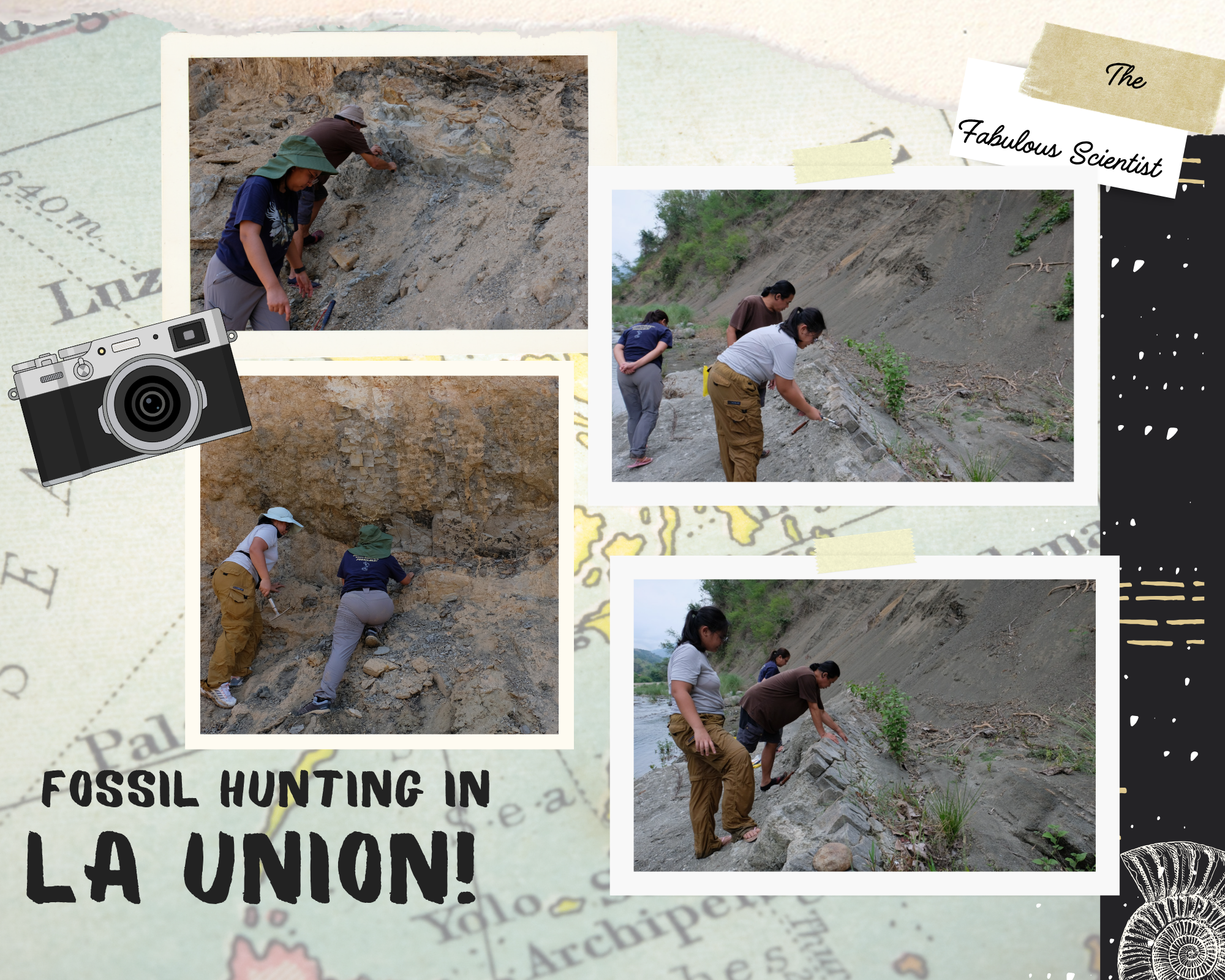
The bad news was that the outcrop would eventually be demolished to make way for construction. The good news, if there was one, was that this gave us a narrow window of opportunity to collect fossils while the rocks were still intact. The urgency of the situation was precisely what prompted my professor to organize the trip as soon as possible.
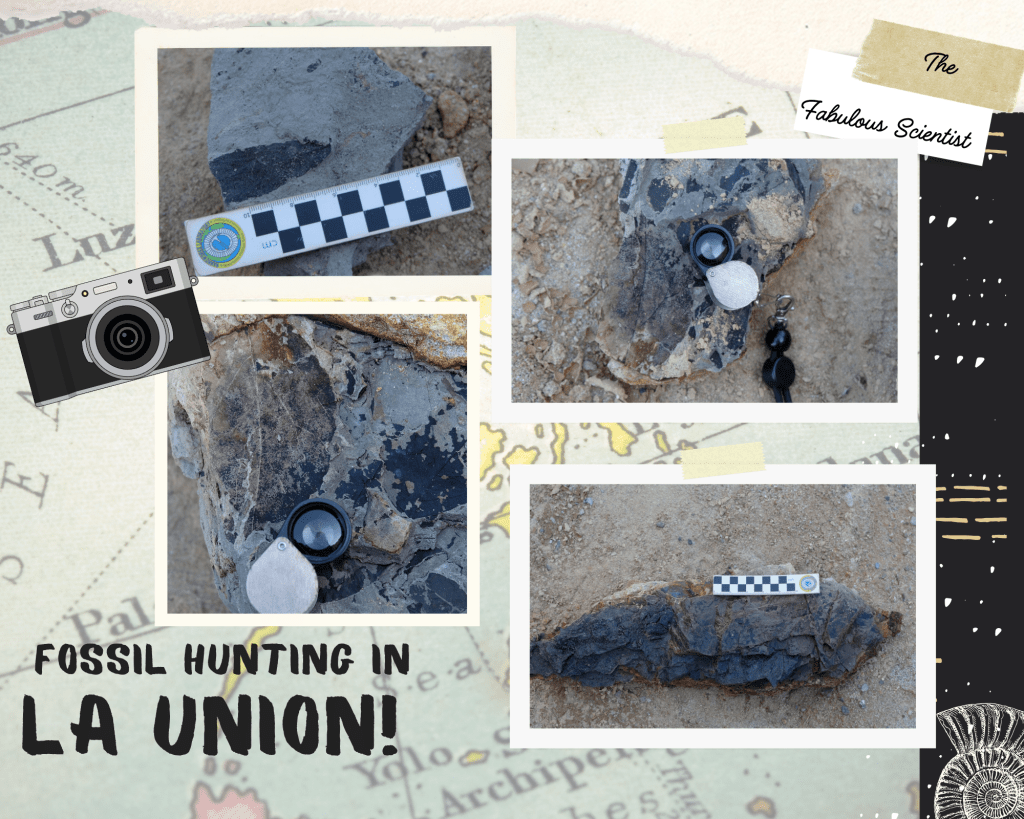
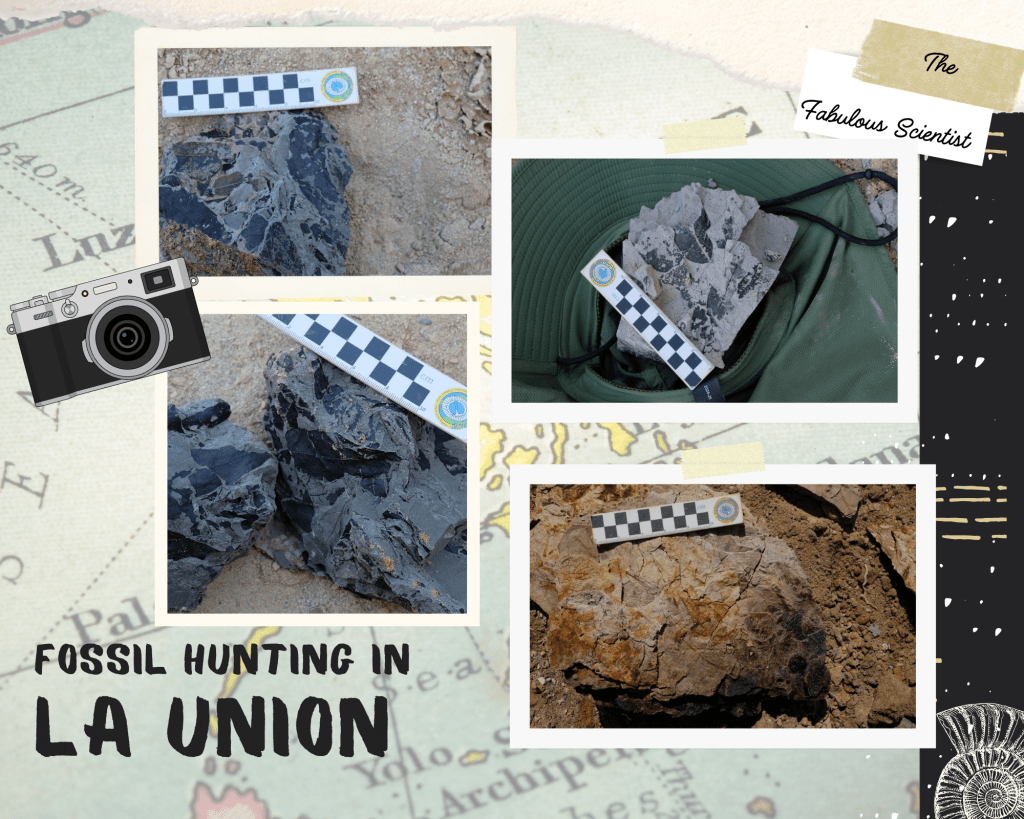
That seemingly unremarkable half-meter-thick mudstone layer turned out to be packed with leaf fossils of various shapes and sizes. Some resembled grass blades while others appeared to belong to trees and shrubs. I am far from being a paleobotanist, so I will leave the actual identification work to my professor and other experts. What I could recognize, however, was that the fossils occurred both as impressions and as carbonized remains — thin, black, and incredibly fragile.
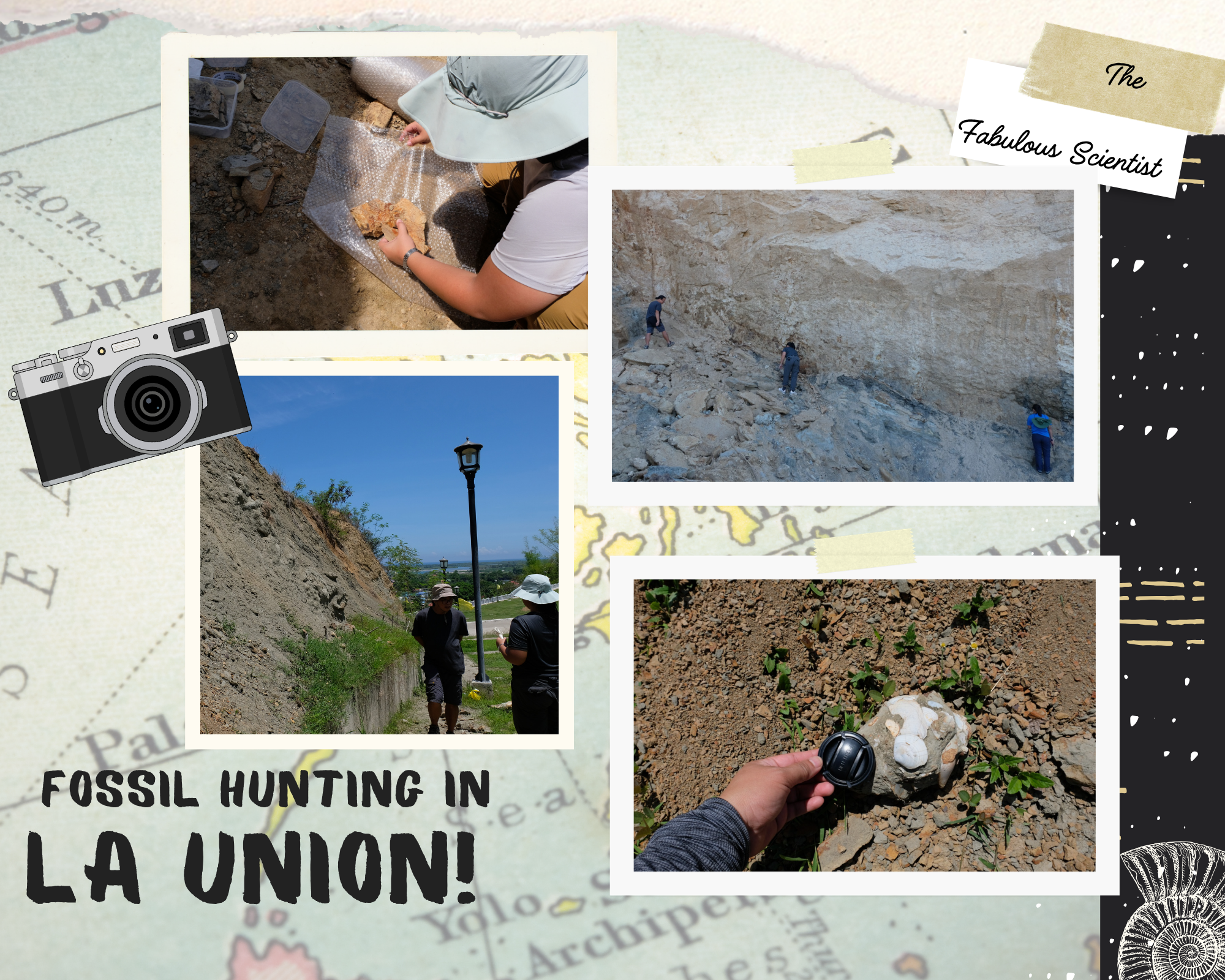
We carefully split the rocks around the fossils rather than through them, trying our best to preserve each specimen intact. The better specimens were wrapped in bubble wrap and packed into crates for further study and eventual donation to local museums.
I’ve attached a few photo collages of the fossils below for your appreciation.
That same afternoon, we visited a nearby river to collect samples of the allodapic limestone that I wrote about in my previous blog post. I’ll spare you the details here, but if you’re interested, I’ve included a short snippet below.
The following morning, we headed back to the same highway outcrop. After reviewing our haul from the previous day, we collectively decided that “not enough fossils” was apparently a valid scientific assessment. One of my professor’s students also plans to use the specimens for her thesis work, so collecting as many samples as possible while the outcrop remained accessible made perfect sense.
We spent nearly two more hours splitting mudstone under the increasingly unforgiving La Union sun before finally admitting defeat and retreating in search of food.
Along the highway we passed stalls selling dried fish, tupig, locally made vinegar, and the region’s famous longganisa. Naturally, we stocked up on supplies to bring home as pasalubong for our families. It was also our small way of supporting local businesses and communities.
Lunch was at Ciano’s Cafe and Art Gallery, which I wrote about in my previous post and thoroughly enjoyed. After several hours of fossil collecting under the sun, the food tasted even better than it probably already was.
With full stomachs and renewed energy, we made one final stop before heading home: Forest Lake Cemetery in Bauang.
The cemetery sits along the slopes of a small hill, and as we drove uphill toward the upper sections, we noticed another exposed sedimentary sequence consisting of sandstone and mudstone beds. This time, however, the rocks contained marine fossils — shells and crab remains embedded within the layers.
I managed to collect a cobble-sized sample absolutely packed with fossils. We still don’t know the age of the rocks, and the site remains part of an ongoing study, which somehow makes the specimen even more exciting.
Needless to say, I returned home with fossils, local delicacies, and even a painting from the trip.
More importantly, I came back refreshed and ready to face whatever awaited me at work. Sometimes all we need is a chance to reconnect with nature. In my case, it meant returning — even briefly — to the kind of geology that made me fall in love with the profession in the first place: fieldwork, fossil and rock collecting, and trying to piece together the geologic history of places like La Union from fragments preserved in stone.
To my professor for organizing the trip, and to the people of La Union for welcoming us so warmly, thank you.
I had an absolutely wonderful time.
Discover more from The Fabulous Scientist
Subscribe to get the latest posts sent to your email.


