Grass Padrique | The Fabulous Scientist
As geologists, we love the interesting stories rocks tell. Some remind us of the deep and peaceful oceans, while others history of exciting tectonic events. For instance, alodapic limestone may look like it comes from a coral reef, but it actually formed elsewhere through a journey we call sediment transport.
What is Alodapic Limestone?
The term alodapic limestone refers to limestone composed of carbonate materials that were originally formed in one location and subsequently transported and redeposited elsewhere. The word comes from the Greek allodapos, meaning “foreign” or “from another place.”
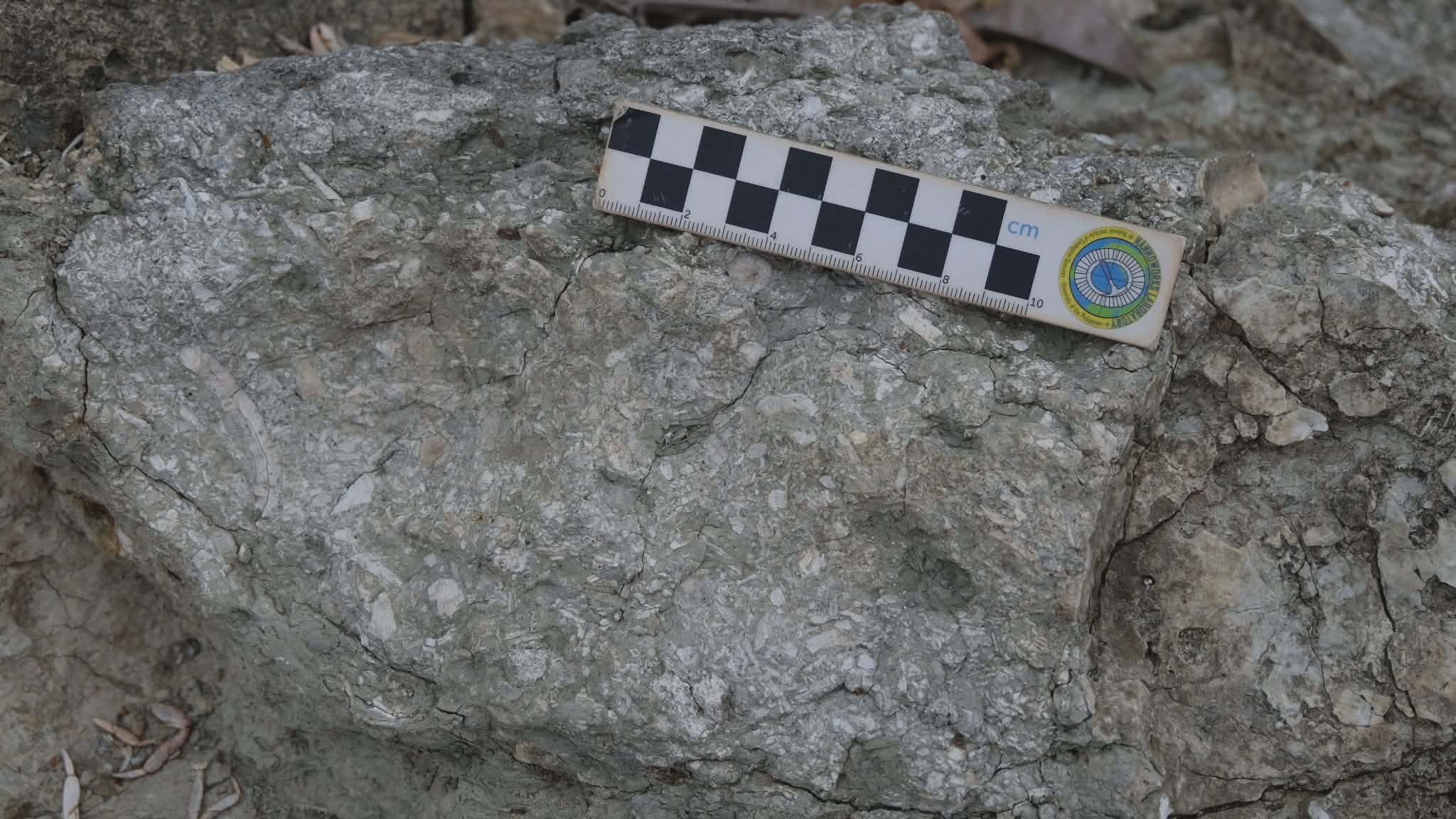
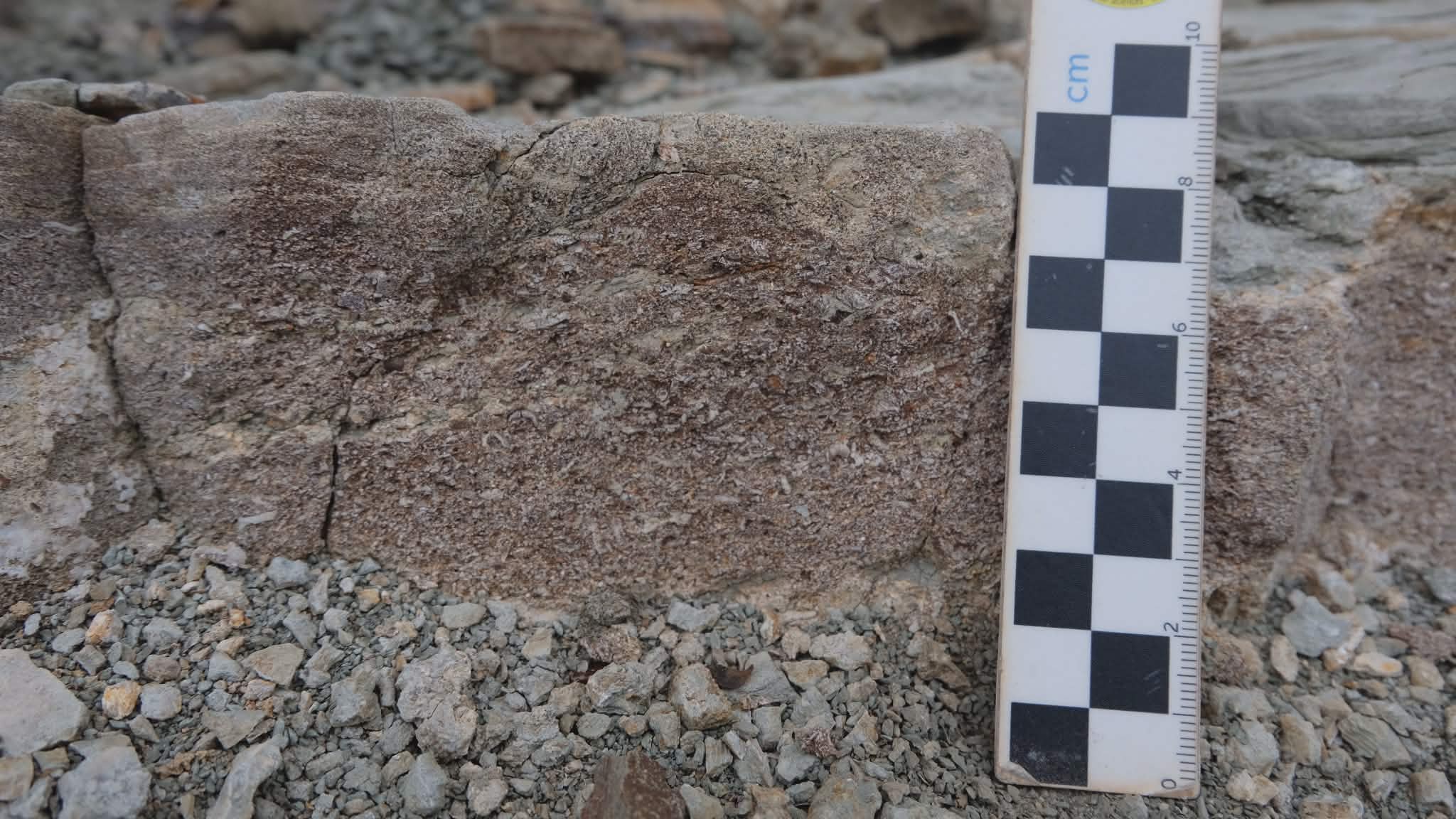
Unlike reef limestone that grows in place through the accumulation of corals and other carbonate-producing organisms, alodapic limestone consists of fragments of these materials that have been broken apart, transported by currents, gravity flows, or submarine landslides, and deposited in a different environment. These transported materials can include coral fragments, mollusk shells, algae, and other reef-derived debris mixed with sediments such as sand and mud.
Think of it as the geological equivalent of a souvenir collection. The corals and shells originated from a reef, but they ended up far away from home after being carried by various sedimentary processes.
Why is Alodapic Limestone Geologically Significant?
Alodapic limestone provides valuable clues about the geological history of an area. Finding it in the rock record often suggests several important things:
Evidence of Nearby Carbonate Platforms or Reefs
The presence of reef-derived fragments indicates that a carbonate-producing environment once existed nearby. Even if the original reef has long since been eroded or buried, the transported debris serves as evidence that it was once there.
Indicators of Active Sediment Transport
Because alodapic limestone forms through transportation and redeposition, it points to energetic geological processes. These may include submarine gravity flows, turbidity currents, slope failures, or storm-related transport events.
Clues to Ancient Water Depths
In many cases, reef organisms grow in relatively shallow marine environments, while the transported debris may eventually accumulate in deeper-water settings. This relationship can help geologists reconstruct ancient seafloor topography and understand how marine environments changed through time.
Insights into Basin Evolution
Alodapic limestone can reveal interactions between carbonate-producing reefs and adjacent sedimentary basins. Such relationships are particularly useful in reconstructing tectonic activity, sea-level fluctuations, and sediment dispersal patterns.
In short, when geologists encounter alodapic limestone, they’re often looking at evidence that pieces of an ancient reef took an unexpected journey downslope before becoming part of the geological record.
A Field Visit to an Alodapic Limestone Outcrop in Agoo, La Union
Recently, I had the opportunity to visit an excellent example of alodapic limestone exposed along a river in Agoo, La Union.
The day started early. Very early.
We left Quezon City at around 6:00 AM and embarked on what would become roughly a four-hour journey northward. As with any field trip, the travel time included the mandatory geological essentials: a breakfast stop and a few strategically timed bathroom breaks. Field geology may be about understanding Earth’s history, but it is also about understanding the limits of the human bladder.
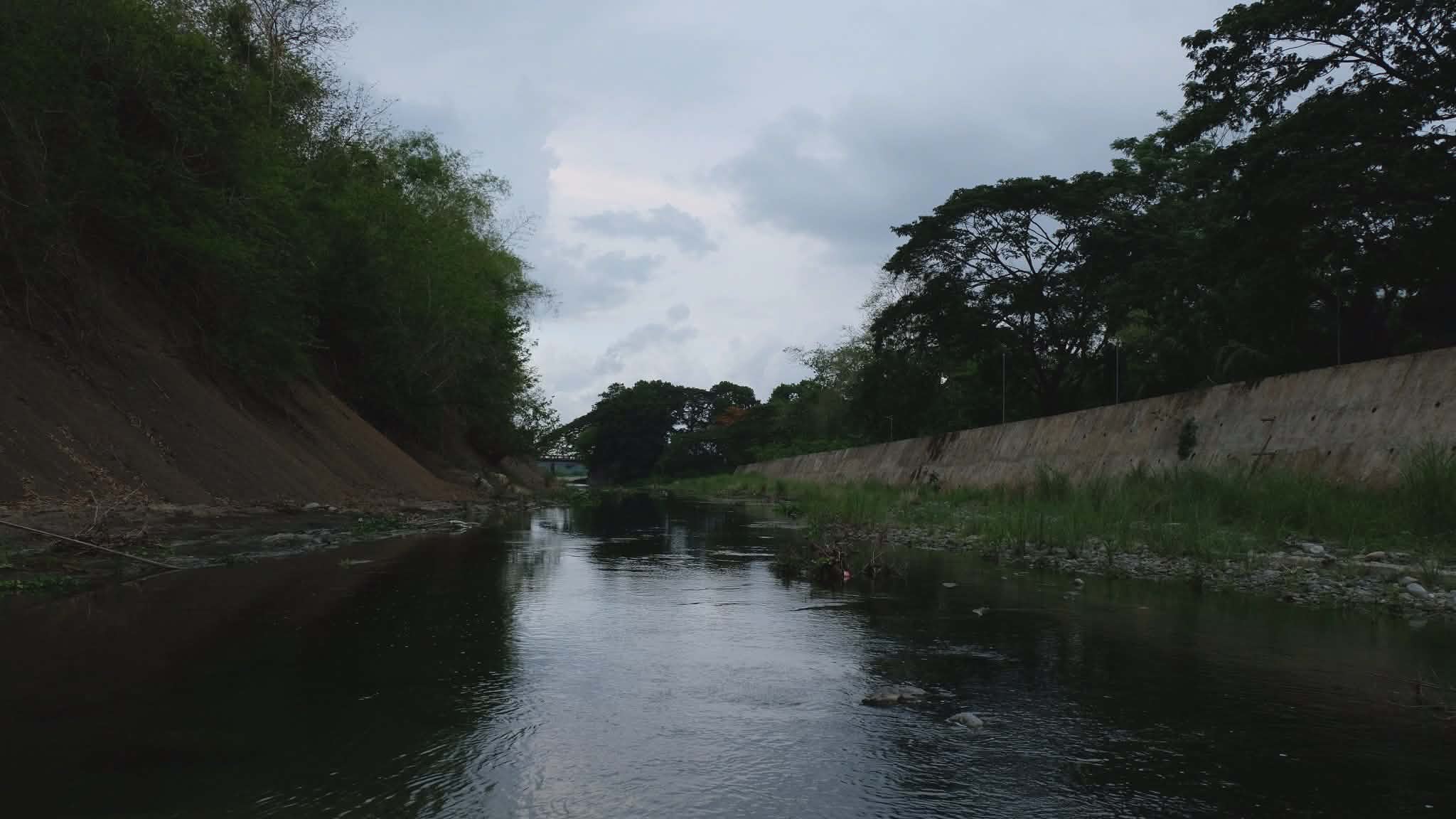
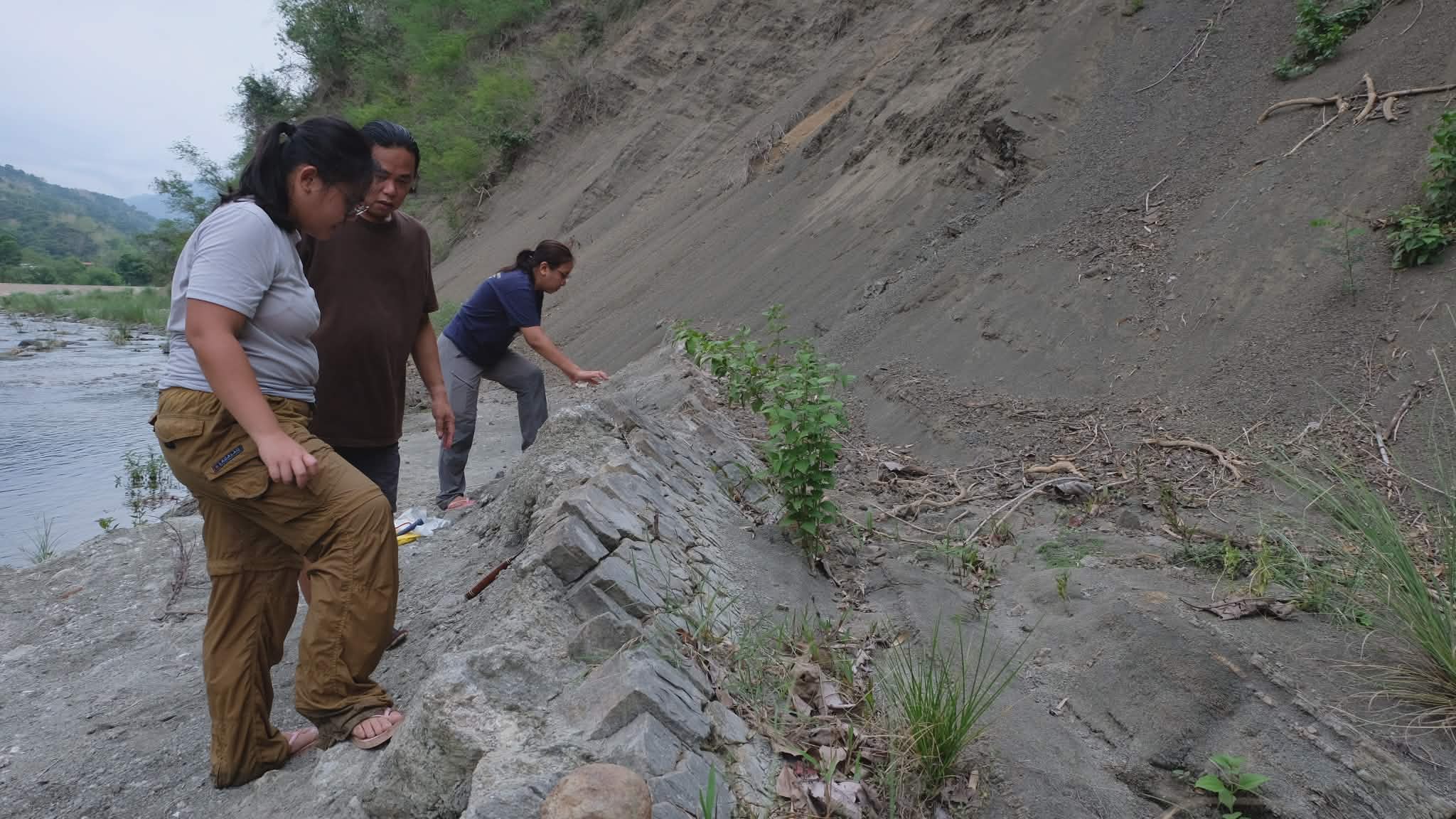
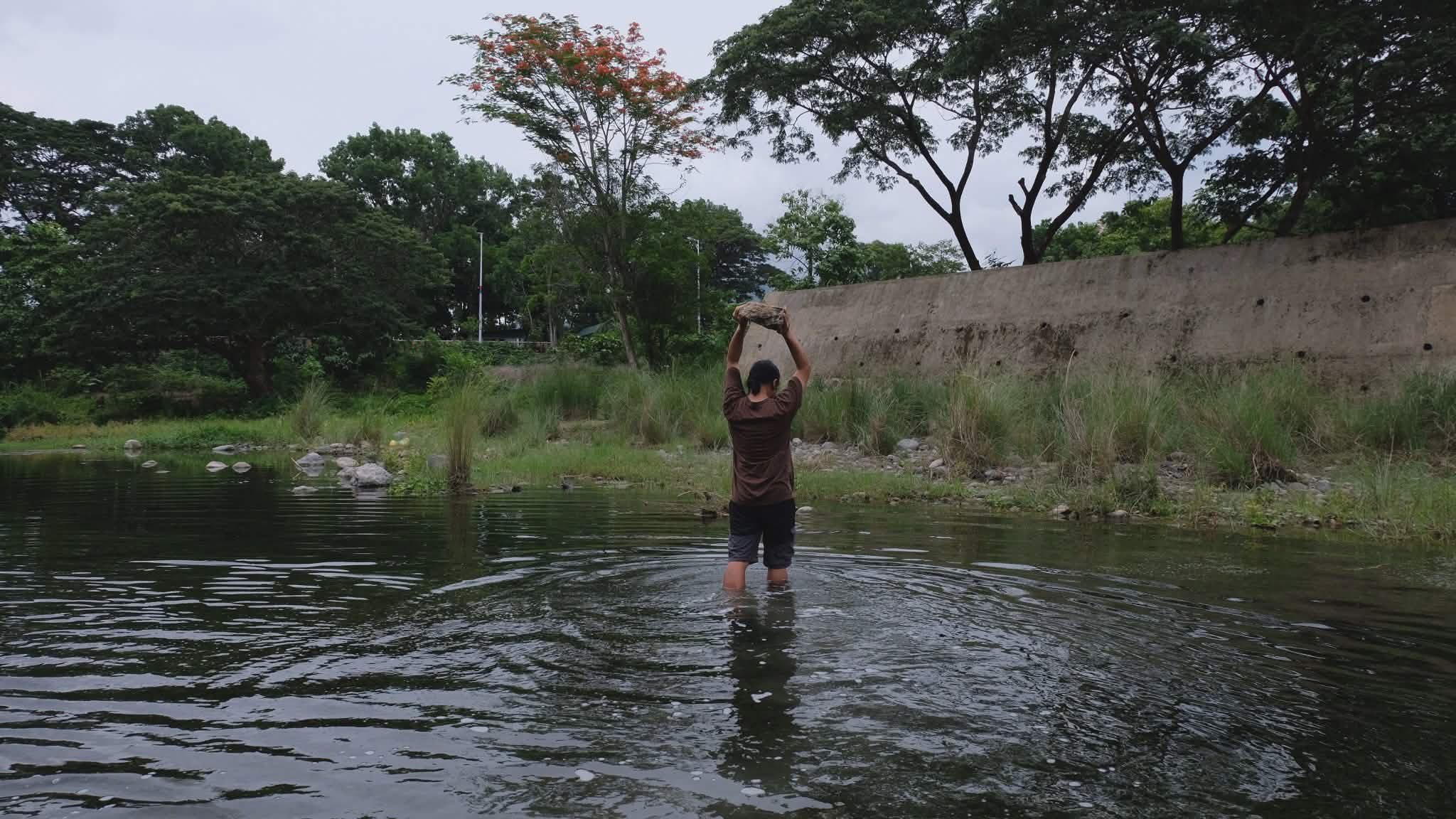
Upon reaching Agoo, we parked near a bridge and began our approach to the outcrop. The final leg of the journey required crossing a knee-deep river. Fortunately, the water was calm and remarkably clean.
For someone who spends a considerable amount of time examining rocks, crossing a clear river turned out to be one of the most memorable parts of the day. It had been a long time since I had walked through a river with such clean water, and there was something refreshing about experiencing the landscape directly rather than simply observing it from the riverbank.
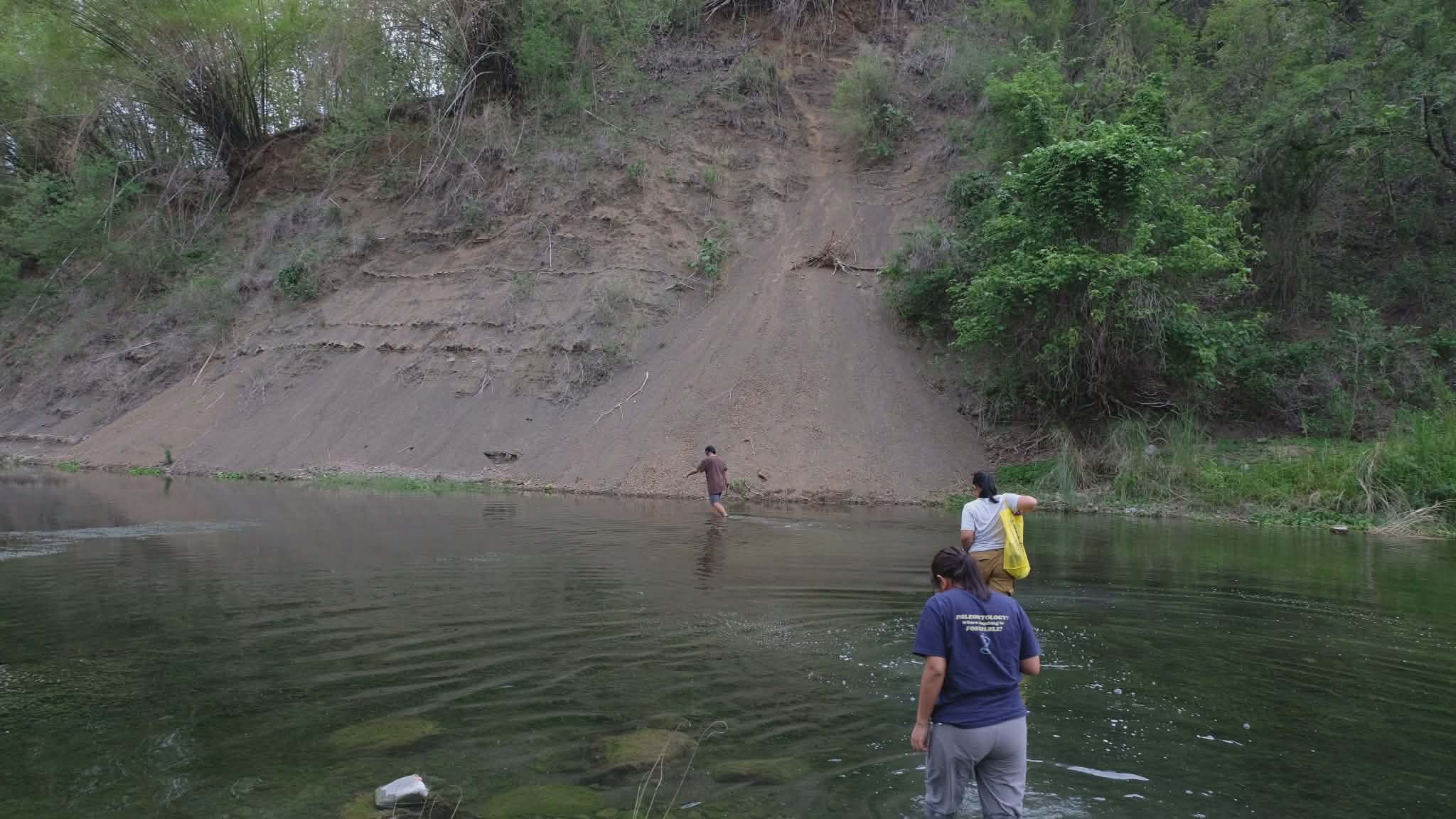
Once we reached the exposure, the geology immediately justified the trip.
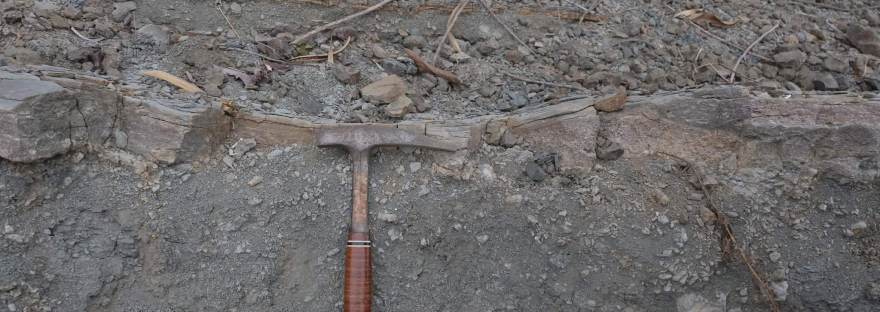
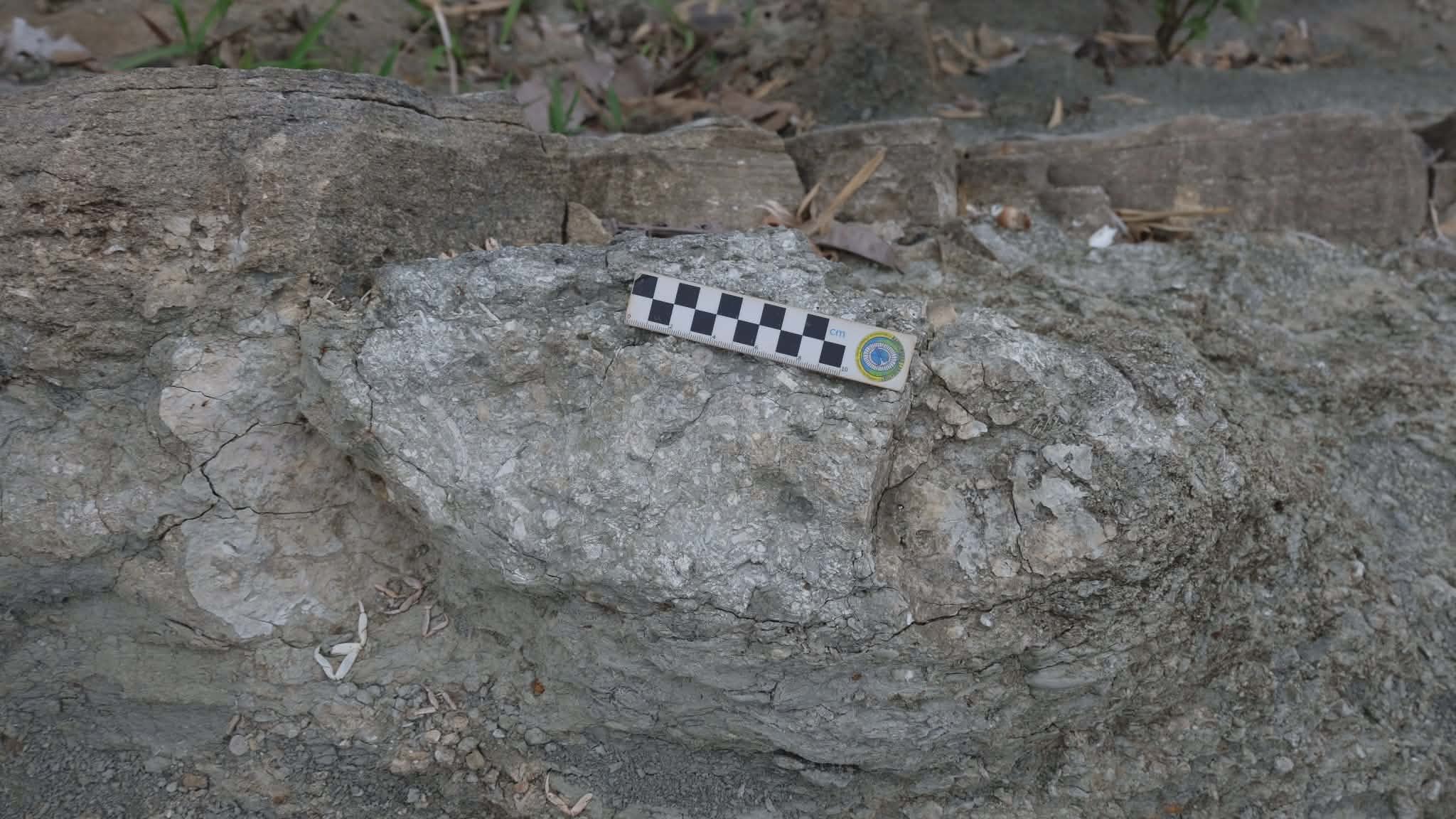
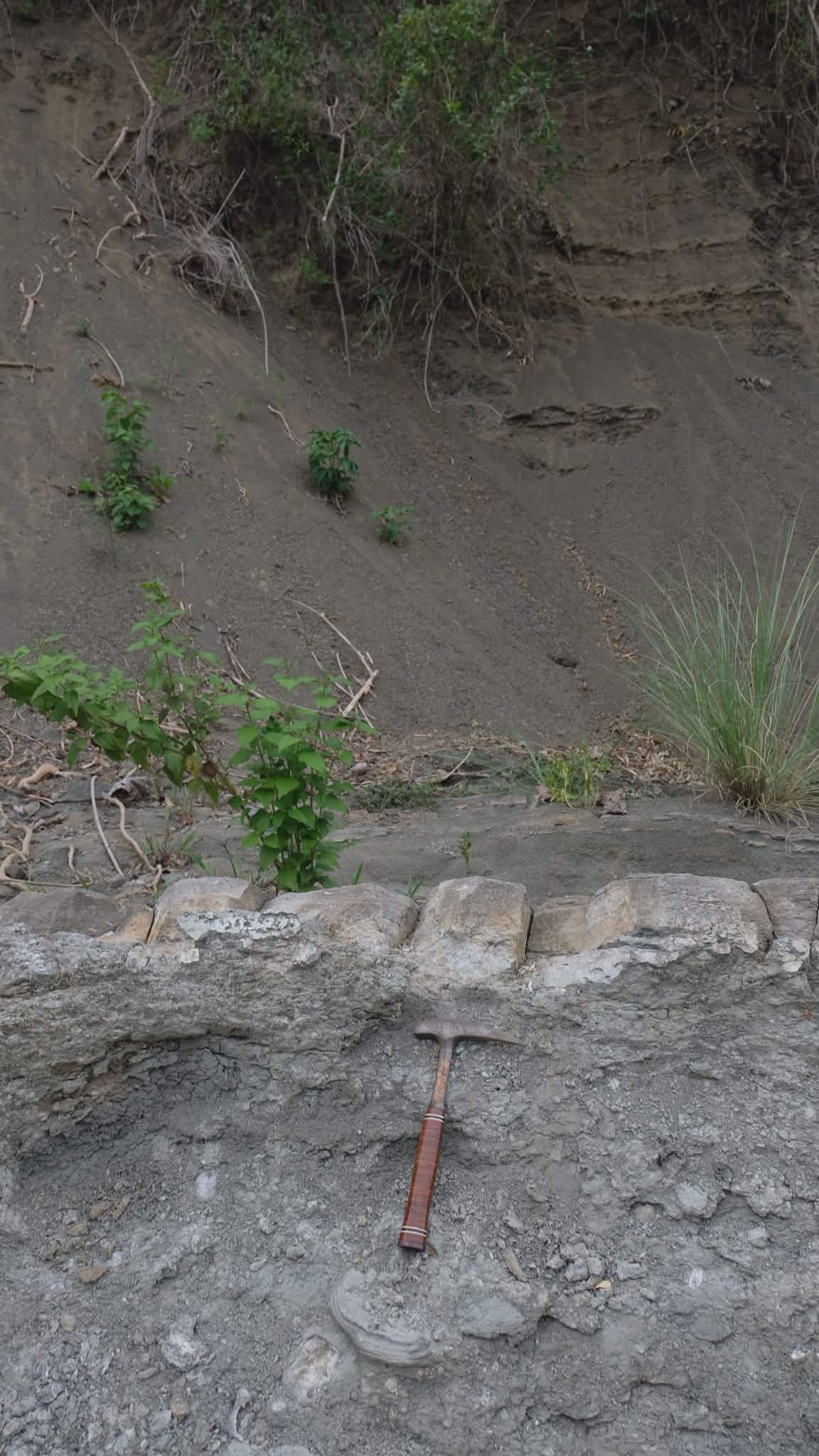
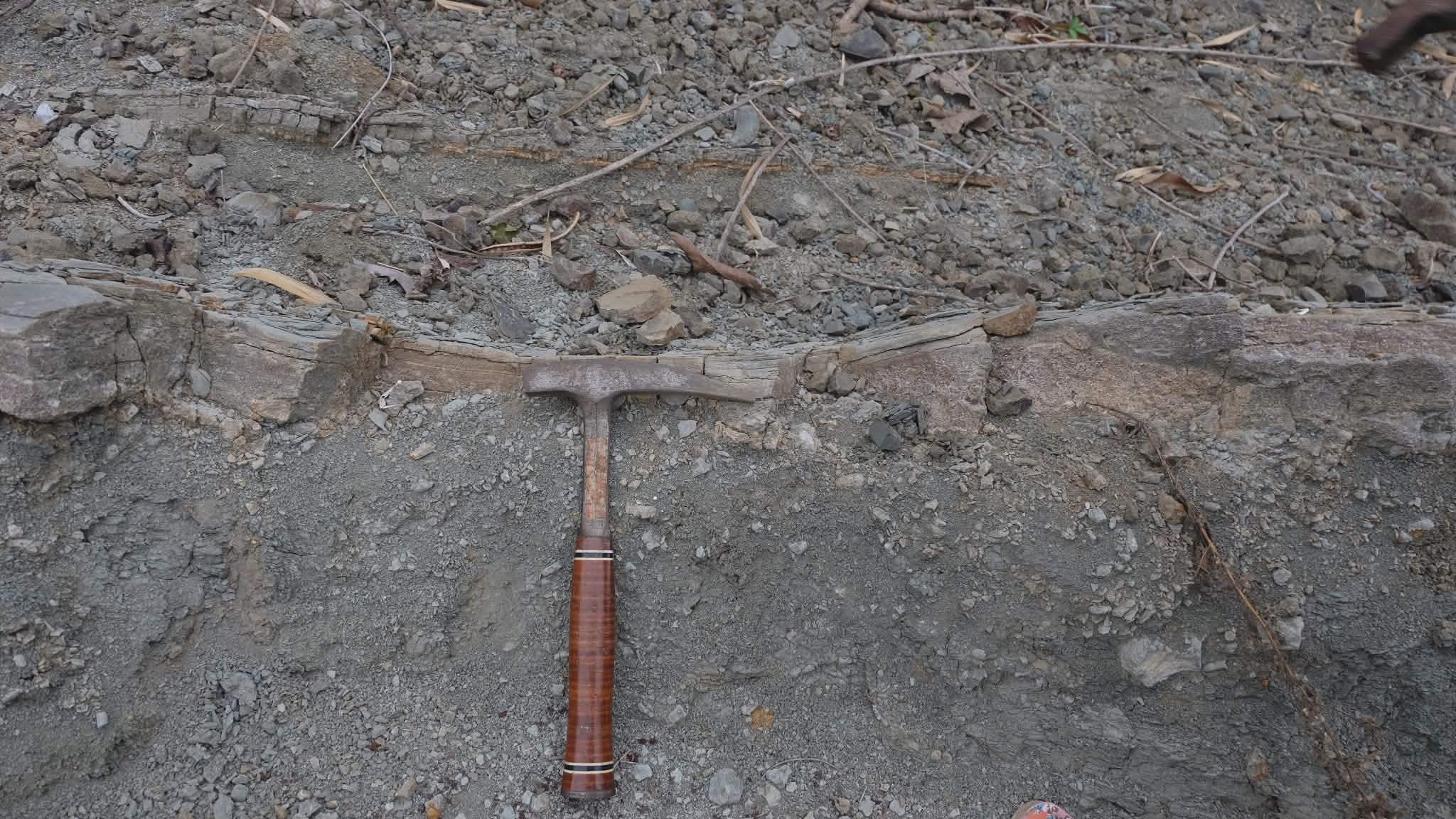
The outcrop consisted of interbedded sandstone and mudstone layers containing abundant fragments of corals, mollusks, and reef-derived carbonate debris. These materials were clearly not preserved in their original growth position. Instead, they had been broken apart, transported, and incorporated into a sedimentary sequence—classic characteristics of an alodapic limestone deposit.
Standing in front of the outcrop, it was possible to imagine the ancient environment that once existed there. Somewhere nearby, a thriving coral reef may have flourished in shallow tropical waters. Over time, storms, slope failures, or underwater sediment gravity flows transported fragments of that reef into a deeper depositional setting, where they mixed with sand and mud before eventually becoming rock.
After documenting the outcrop through photographs, we collected a few samples for analysis and also to donate to our Geology Museum in UP campus and wrapped up our work for the day.
More Than Just a Rock
One of the reasons I enjoy field geology is that every outcrop represents both a scientific puzzle and a personal experience. The rocks preserve events that happened millions of years ago, while the fieldwork creates memories in the present.
This particular alodapic limestone outcrop in Agoo offered both. It provided a glimpse into the relationship between ancient reefs and sedimentary basins, while also giving me the unexpected pleasure of wading through a clean river on a sunny day.
Not bad for a rock that spent millions of years waiting to tell its story.
Discover more from The Fabulous Scientist
Subscribe to get the latest posts sent to your email.


1 thought on “Exploring The Alodapic Limestone in Agoo, La Union: A Field Geology Experience”