Grass Padrique | The Fabulous Scientist
Some conferences remind us why we chose our profession. NIGSCON 2026 was one of those for me.
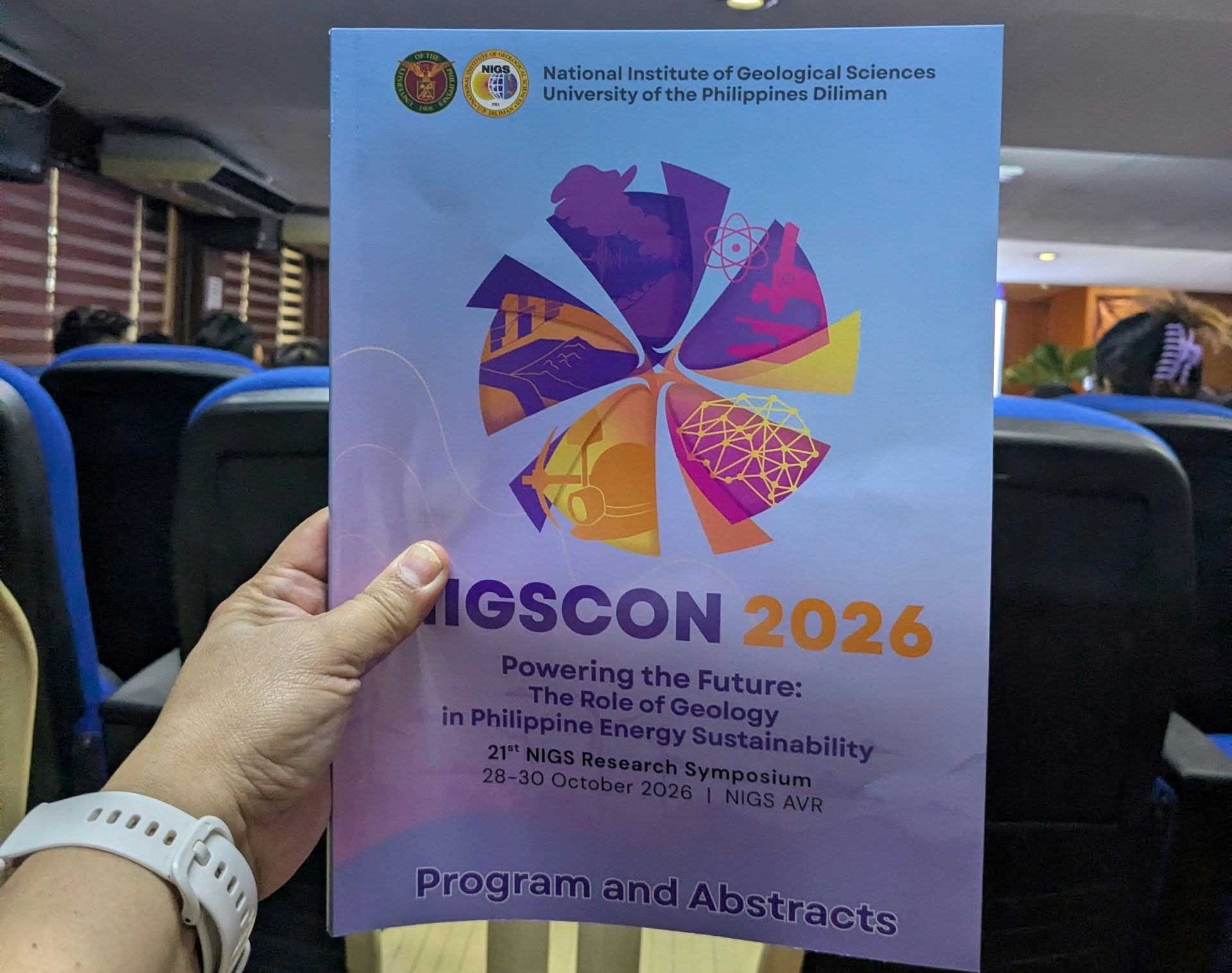
Held on October 28–30, 2026, at the AVR, National Institute of Geological Sciences (NIGS), UP Diliman, Quezon City, the annual student research symposium carried the theme, “Powering the Future: The Role of Geology in Philippine Energy Sustainability.” As a geologist working in the upstream energy industry, I was especially excited to attend. Energy resources have always been my favorite geology topic, and this year’s discussions brought together research, industry experience, and questions that matter deeply to our country’s future.
Our company was one of the major sponsors, giving us the opportunity to participate and engage with students, researchers, and fellow professionals.
My biggest takeaway from Day 1 was the critical need for academia and industry to work hand in hand. Bringing scientific research and practical experience together is essential to understanding and responsibly developing our indigenous energy resources. Global supply disruptions, including interruptions to oil and LNG shipments through the Strait of Hormuz, underscore how vulnerable an import-dependent energy system can be—and how quickly the effects can reach everyday consumers.
A remark from a former colleague particularly stayed with me: a successful geothermal drilling campaign for one company is a win for the entire country. That thought captures a shared purpose that extends beyond our individual organizations. Whether we work in academia, government, or the private sector, we can contribute to strengthening the Philippines’ energy security.
There was also a personal highlight: watching my former students present their research. Seeing them share their findings and grow as young scientists made attending this year especially meaningful.
Another welcome feature was the third day’s Job Fair, held for the first time in a while, where our company and other sponsors hosted booths. Alongside opportunities to meet potential employers, students heard from geologists working in industry and government about their career journeys, lessons learned, and advice for entering the profession.
One of my favorite parts was seeing our HR colleagues share practical job application and interview tips. A particularly useful takeaway was the STAR technique, which helps applicants turn their experiences into clear, structured answers to questions such as, “Tell me about a time you solved a problem.”
STAR stands for:
- Situation: Briefly describe the context or challenge.
- Task: Explain your responsibility or what you needed to accomplish.
- Action: Describe the specific steps you personally took.
- Result: Share the outcome, including what you achieved or learned.
For students and fresh graduates, these examples do not have to come from formal employment. Fieldwork, thesis research, laboratory activities, student organizations, and group projects can all demonstrate relevant skills.
For example, a geology student could describe how they successfully handled a challenge, such as discovering inconsistent sample labels during a research project, taking responsibility for checking the dataset, confidently tracing the discrepancies through field notes and laboratory records, and resolving the issues in time to support a strong interpretation. The strength of the answer lies in clearly highlighting their own positive contribution and the successful outcome. In geologic fieldworks where geospatial distribution of samples matters a lot, this is already a very good example of S.T.A.R.
It is a useful reminder that an interview is an opportunity to show how we think, work with others, and respond to challenges. Specific, honest examples make those abilities easier for an employer to recognize.
I left NIGSCON 2026 encouraged by both the conversations about Philippine energy and the young geologists preparing to contribute to it. From research presentations to career advice, the symposium showed how much we gain when we make space to learn from one another.
Discover more from The Fabulous Scientist
Subscribe to get the latest posts sent to your email.


