
Grass Padrique | The Fabulous Scientist
There comes a point in every fountain pen enthusiast’s life when you realize you may have accidentally developed a “type.” Some people collect understated black cigar-shaped pens. Some gravitate toward vintage flex nibs. Me? Apparently, I collect pens that shimmer, glow, shift colors dramatically, and look like they were forged from enchanted aquarium water.
Enter the Asvine P20.
Before diving into the pen itself, let’s first talk about the brand behind it. Asvine is a Chinese fountain pen brand known for producing affordable yet visually striking writing instruments with features usually found in more expensive pens — things like piston fillers, vacuum fillers, chatoyant resin bodies, and smooth steel nibs. According to the company, Asvine began as a small workshop in Southern China focused on crafting fountain pens that combine artistry, functionality, and accessibility.
Over the years, Asvine has become quite popular among fountain pen enthusiasts for offering surprisingly premium-feeling pens. In online fountain pen communities, many users praise the brand for its excellent value, beautiful materials, and generally reliable nibs for the price range. I myself have written about how much I love using my Asvine C80, blog below:
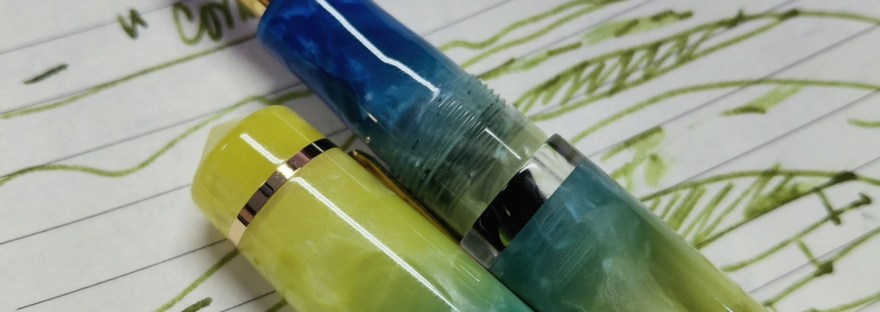
The first thing that immediately drew me to the Asvine P20 was the resin body. It has this wonderfully chatoyant finish that shifts and dances under the light — exactly the kind of aesthetic weakness I consistently fall victim to. The design fits seamlessly with the rest of my collection because apparently I have unknowingly curated an entire lineup of “magpie pens.” If it sparkles, swirls, or vaguely resembles a gemstone, chances are I will suddenly develop emotional attachment to it.
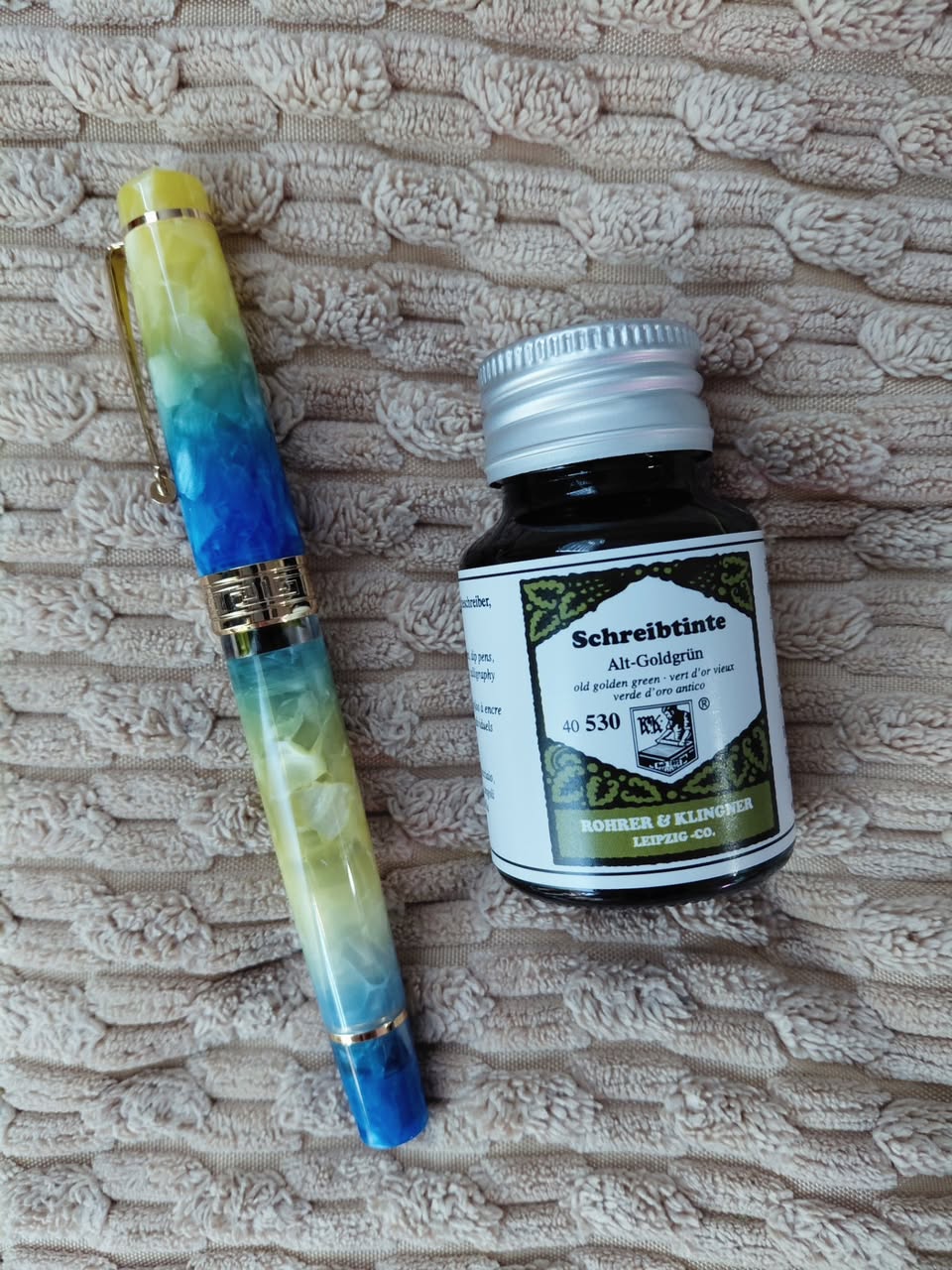
I got the ombré colorway that transitions from lemon yellow to teal to blue, and it genuinely looks like a tropical beach vacation trapped inside acrylic. Another thing I appreciate is the piston-filling mechanism. I always enjoy when a pen feels a little more “serious” in use — like I’m participating in some ancient writing ritual instead of merely refilling ink while half-asleep at my desk. The translucent body is also a thoughtful touch because when held against the light, you can actually see the ink level inside. No more dramatic surprises where your pen abruptly runs dry in the middle of writing something important or emotionally profound. Or worse, in the middle of grocery lists.
The gold-tone steel nib pairs beautifully with the gold-tone trimmings and clip, giving the pen a polished and cohesive appearance. The overall design actually reminds me quite a bit of the Leonardo Momento Zero Grande Pura Vida at least visually. I do not own a Leonardo pen though, so I cannot make a direct comparison.
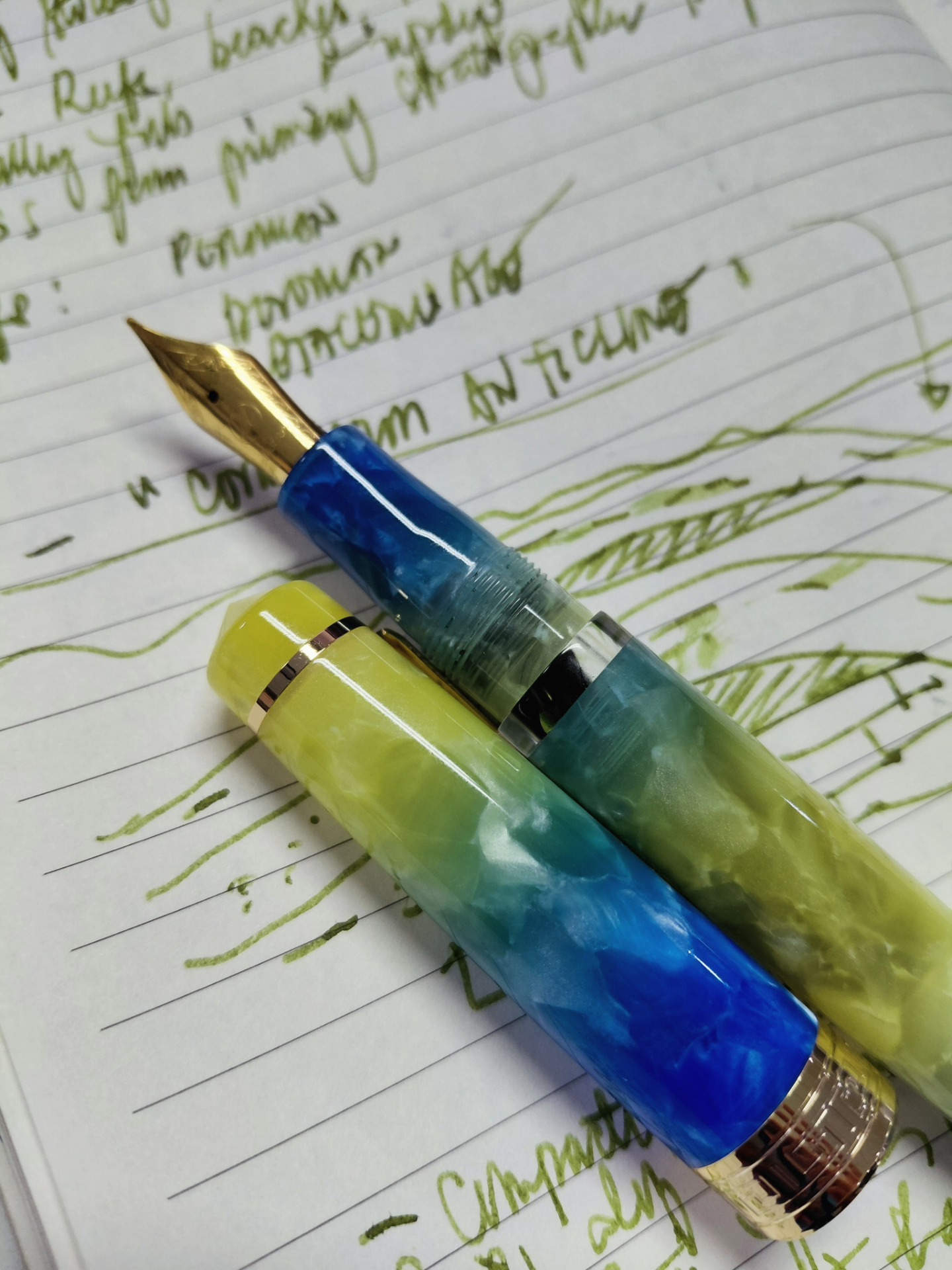
Currently, my Asvine P20 is inked with Rohrer & Klingner Alt-Goldgrün, one of my recently acquired inks that I read about a long time ago but only got to pair with this pen. I noticed that the ink runs a bit dry in this pen compared to how it behaves in my Pilot Explorer. On the Pilot Explorer, Alt-Goldgrün flows comfortably and consistently. On the Asvine P20, however, it feels slightly more restrained. Nothing catastrophic, but enough for me to suspect that the nib tines may be sitting a little too close together. I may eventually inspect and tune the nib a bit because fountain pen people apparently cannot leave well enough alone.
Still, even with that minor issue, I genuinely think the Asvine P20 is a beautiful pen for the price. The material feels more premium than expected, the piston filler adds functionality and charm, and the chatoyant resin body absolutely scratches that particular collector itch in my brain.
The Asvine P20 may not pretend to be a luxury grail pen, but it also doesn’t need to. It succeeds wonderfully at being visually stunning, enjoyable to use, and delightfully affordable — which, frankly, is a dangerous combination for anyone already deep into the fountain pen rabbit hole.
This is a short video of my Asvine P20 along with TWSBI Kai and Asvine C80:
Discover more from The Fabulous Scientist
Subscribe to get the latest posts sent to your email.


1 thought on “Affordable Luxury: Asvine P20 Fountain Pen Overview”