

Grass Padrique | The Fabulous Scientist
If you’ve been following my website for a while, you’ll know that I love painting with watercolors. Every now and then, I also bring out my fountain pens to sketch outlines for my line-and-wash artworks. There’s something wonderfully satisfying about combining the precision of ink with the unpredictable, fluid nature of watercolor.
For this technique, waterproof ink is essential. Unless, of course, you actually want your ink to bleed into the paint and create interesting effects—which, admittedly, I’ve experimented with myself. But when I want my lines to stay crisp and defined, I need an ink that won’t surrender the moment it encounters a wet brush.
I’ve been using Rohrer & Klingner sketchINK for this purpose. After all, it was designed with drawing and watercolor applications in mind. According to the manufacturer, sketchINK uses fine nano-pigments and is exceptionally waterproof and lightfast, allowing artists to paint over their lines once the ink has dried. Its lightfastness is particularly reassuring for artwork you want to preserve.
The only downside? It can be a little expensive for someone who likes experimenting with different inks and colors. So, imagine my delight when I stumbled upon a much more affordable alternative!
A Lucky Find at the Pelikan Hub
During the Pelikan Hub, one of the perks for attendees was a basket of bottled inks donated by fellow members. Everyone could pick an ink to take home, which made for a fun little treasure hunt among the bottles.
I picked up a new bottle of Sheaffer red ink because, well, I don’t have that many red inks in my collection. A fountain pen enthusiast can always find a reason to justify adding another bottle, right?
Meanwhile, one of the new friends I met at the event managed to get a bottle of banana yellow ink before I did. Banana yellow! How could I not be curious about a color with such a delicious-sounding name?
My new friend inked one of her empty fountain pens and gave it a try. It was adorable! Seeing how interested I was, she generously offered me a 3 ml sample to take home.
Naturally, I had to investigate.
A little online searching revealed that the ink was Tramol Candy Ink, a waterproof ink available in a variety of colors. I tested the banana yellow myself, and sure enough, once it had dried, it held up against water.
Well, that was enough to pique my interest. I went looking for more colors online and discovered that there were plenty of options to choose from. Since I still had some banana yellow left, I decided to try two bottles from the brand’s painting series: Swing, a dark green, and Water Lily, a dark blue.
At around US$4 per bottle based on the price I found, these inks were considerably easier on my wallet than many specialty waterproof inks.
Testing Tramol Swing and Water Lily
My two new bottles arrived last week, and I wasted no time testing them. I opened them up and used my glass dip pen to try out the colors before putting them through a simple water test.
The results were encouraging. Both inks held up when I applied water after allowing them to dry, matching the waterproof performance I was hoping for.
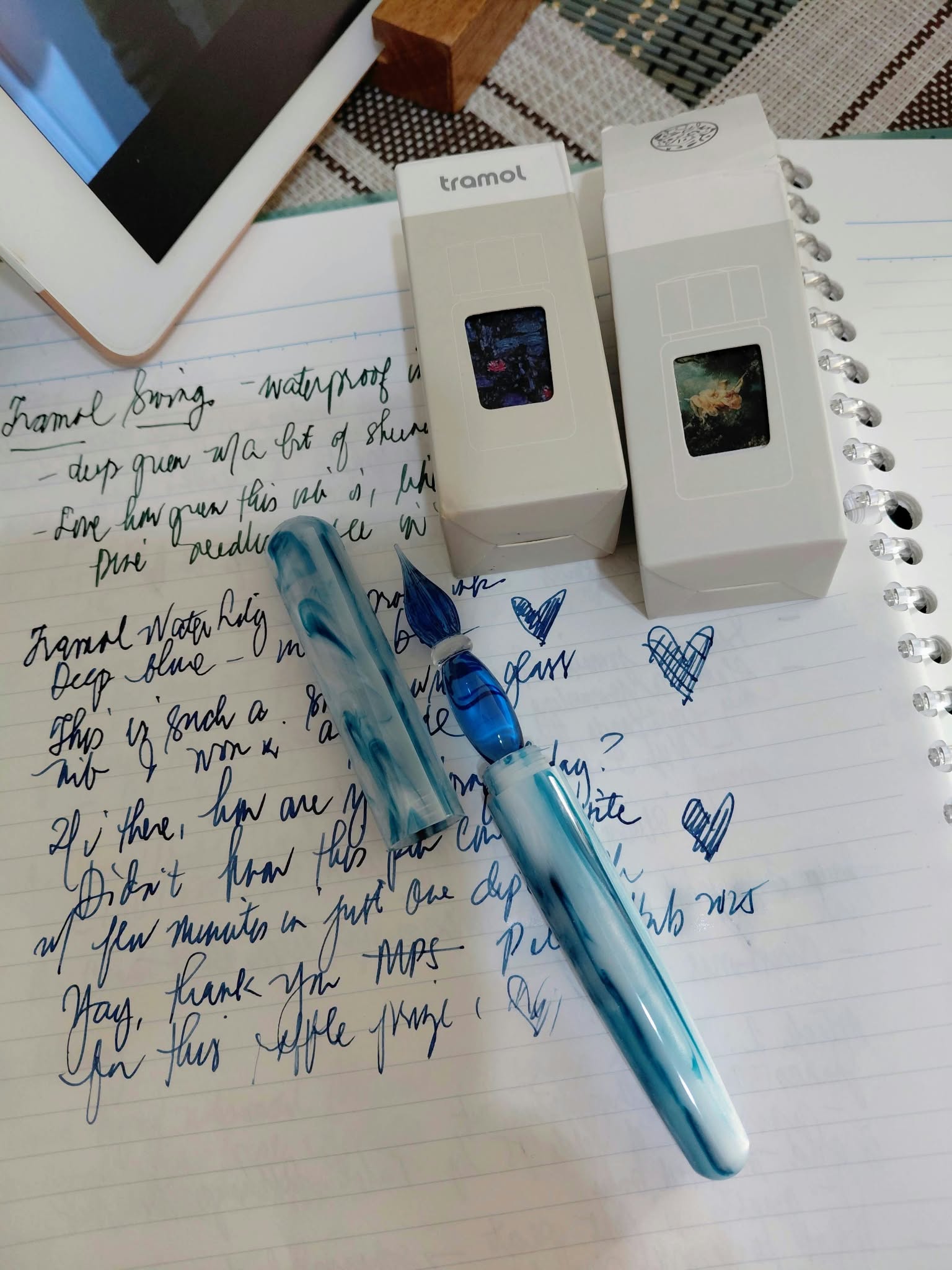
Of course, a home water test isn’t a scientific assessment of long-term durability or lightfastness. But for my immediate purpose—finding an ink that won’t dissolve into a watercolor wash—it was a promising start.
This morning, I finally put Water Lily to work in an actual painting. I inked an empty Platinum Preppy fountain pen with it and applied the ink on my pencil lines. Then I erased the pencil marks with a rubber eraser, before applying the watercolor washes.
I used the ink to create a landscape inspired by one of Matty Burnham’s artworks as part of my ongoing artist study. I’m always interested in learning from other artists, and experimenting with different materials is one way I explore their approaches while developing my own.
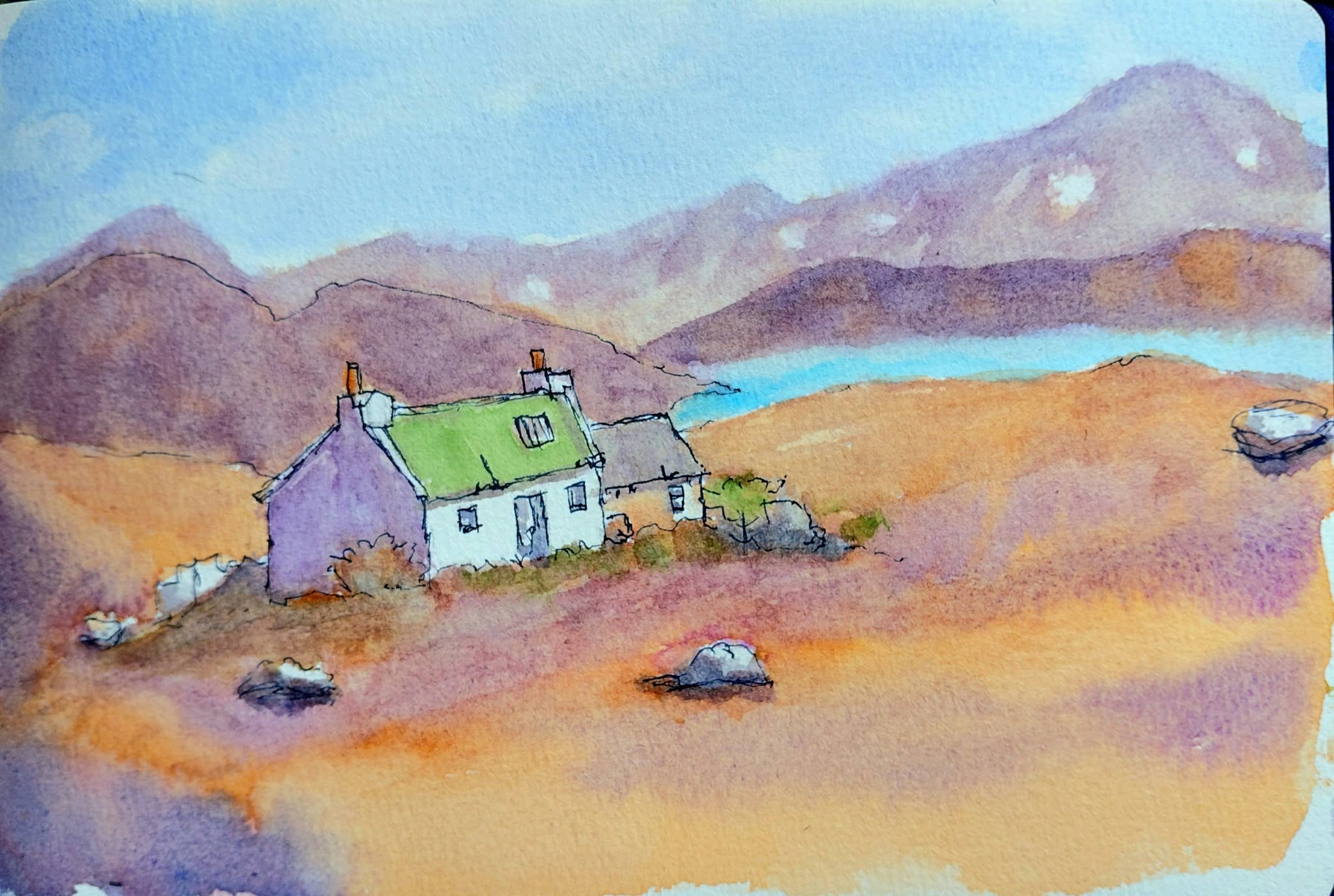
The Water Lily ink turned out to be a lovely purplish blue. Once the lines had dried, I applied watercolor washes over them, and the ink stayed put without smearing into the paint.
That’s exactly what I need from a waterproof drawing ink!
Is Tramol Candy Ink Worth Buying?
For my purposes, absolutely.
I still love my Rohrer & Klingner sketchINK, particularly because the manufacturer specifically identifies its lightfastness as well as its waterproofness. However, I’m happy to have discovered Tramol Candy Ink as a more affordable option for my line-and-wash exercises and watercolor studies.
At around US$4 per bottle, it makes experimenting with different colors much less intimidating. I can explore a dark green, a purplish blue, or even a cheerful banana yellow without feeling that every experiment has to justify a premium price tag.
There are still things I’d like to investigate further, especially how the inks behave over longer periods and how well their colors resist fading. And, as with other pigment-based waterproof inks, I’d exercise caution when using them in fountain pens: clean your pens regularly and avoid leaving the ink sitting unused for long periods.
For now, though, I’m pleased with what I’ve seen.
Tramol has earned a place on my watercolor desk, and I’m looking forward to exploring more of its colors. My sketchINK bottles aren’t going anywhere, but it’s nice to know that I have a more budget-friendly alternative for everyday artistic experiments.
Because art supplies are expensive enough already. If I can save a little on ink and spend that money on watercolor paper instead, that’s a trade I’m more than happy to make!
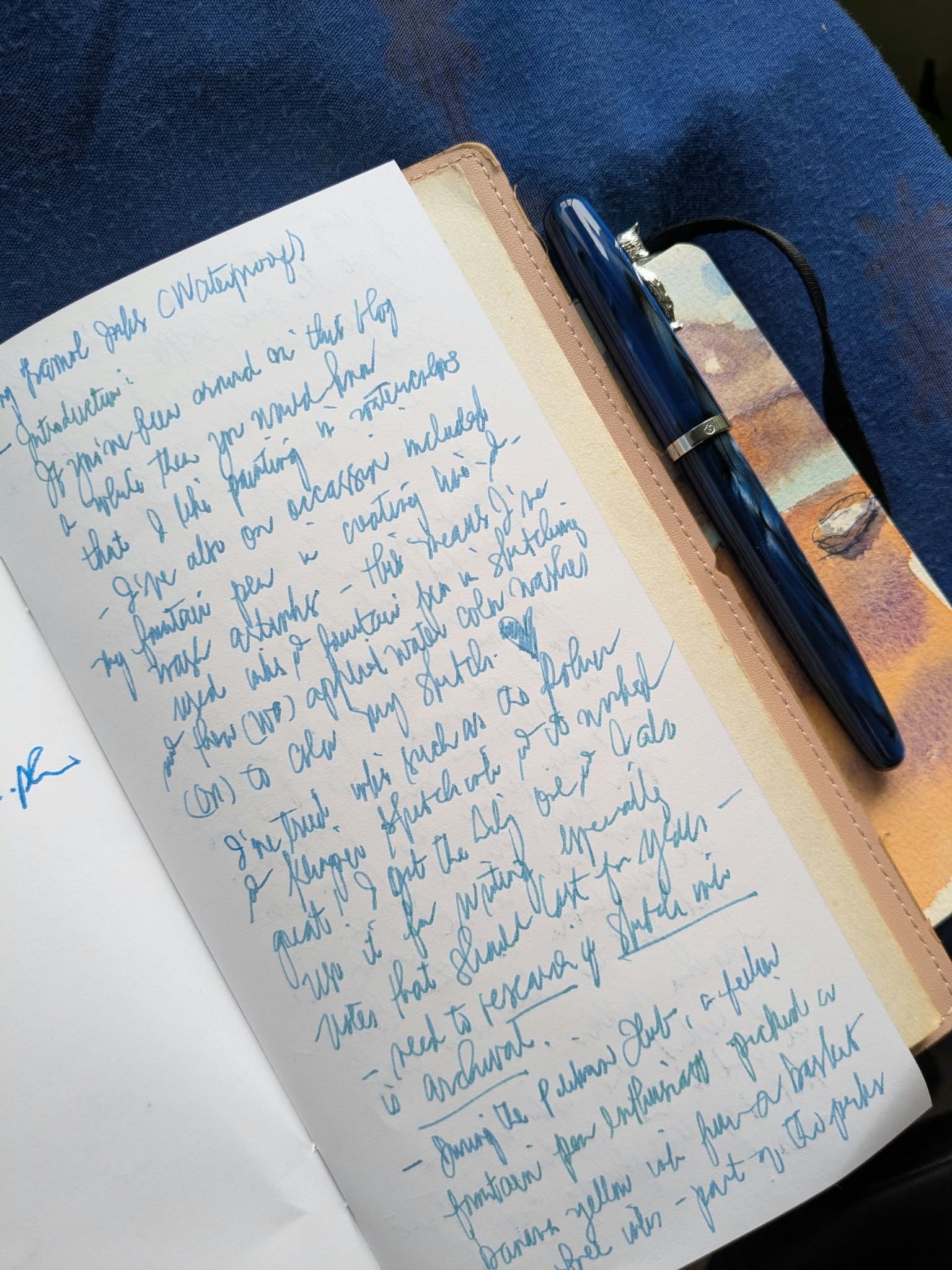
Btw, I wrote this review’s draft using my PENBBS 498 fountain pen inked with Lennon Tool Bar Ying Piao ink. I will be reviewing this ink soon! If you’re curious about the fountain pen, I recently published it on this blog as well.
Thank you for reading this far. – Grass
Discover more from The Fabulous Scientist
Subscribe to get the latest posts sent to your email.


