
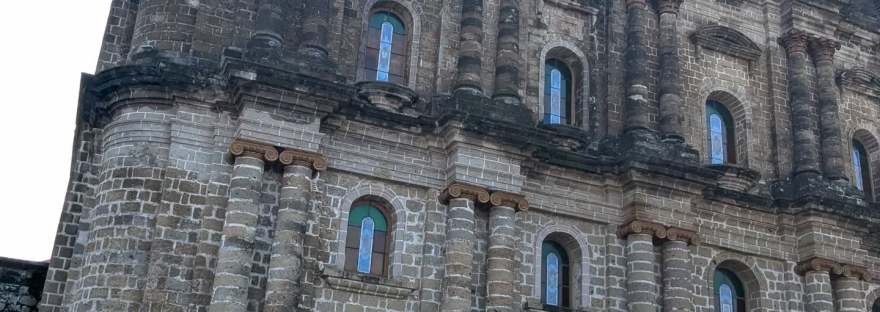
Grass Padrique | The Fabulous Scientist
When you hear about Taal, one thing that probably pops into your mind is the famous active volcano sitting within a lake in Batangas. At least, that’s the first thing I would think of—being a geologist and all. Put the words Taal and Batangas together and my brain immediately goes into volcano mode.
But did you know that there is another Taal worth exploring—one where the history is written not in volcanic rocks, but in old churches, ancestral houses, streets, and buildings that have survived for generations?
Welcome to Taal Heritage Town.
Located in the municipality of Taal in Batangas, about two hours south of Alabang by car, the town is one of the Philippines’ remarkable heritage areas. Taal itself was founded in 1572 at an older location near Taal Lake. Because of repeated volcanic eruptions, the town was eventually transferred to its present location. The devastating 1754 eruption of Taal Volcano destroyed the old town and prompted another major relocation.
Today, the town proper is a designated historical landmark and is known for its remarkable collection of well-preserved Spanish colonial-era structures. Its heritage houses showcase the distinctive Filipino bahay na bato tradition—often combining masonry or adobe on the lower level with wooden upper floors, capiz-shell windows, and generous open spaces designed for the tropical climate.
Some of these houses are remarkably old. The Agoncillo-Mariño ancestral house, for example, dates to around the 1780s and is associated with Marcela Mariño de Agoncillo, one of the makers of the Philippine national flag. Other heritage houses in town date from the 1800s, including Casa Villavicencio, built in 1850.
Taal is also famous for things beyond its architecture. It is known for its traditional burdang Taal or hand embroidery, particularly intricate work on piña and jusi fabrics, as well as the famous Batangas balisong. The town has even been called the “Balisong and Barong Tagalog Capital of the Philippines.”
But this time, I wasn’t there for a geology field trip.
I was there with a camera.
A Quick Photowalk
Our Photography Club decided to do a photowalk around Taal Heritage Town, and it seemed like the perfect place for it. We left Alabang and arrived at around 8:00 in the morning after roughly two hours on the road.
I also brought my eldest son along. It was our first time visiting Taal Heritage Town, so this wasn’t just a photography session for us—it was also a little mother-and-son adventure.
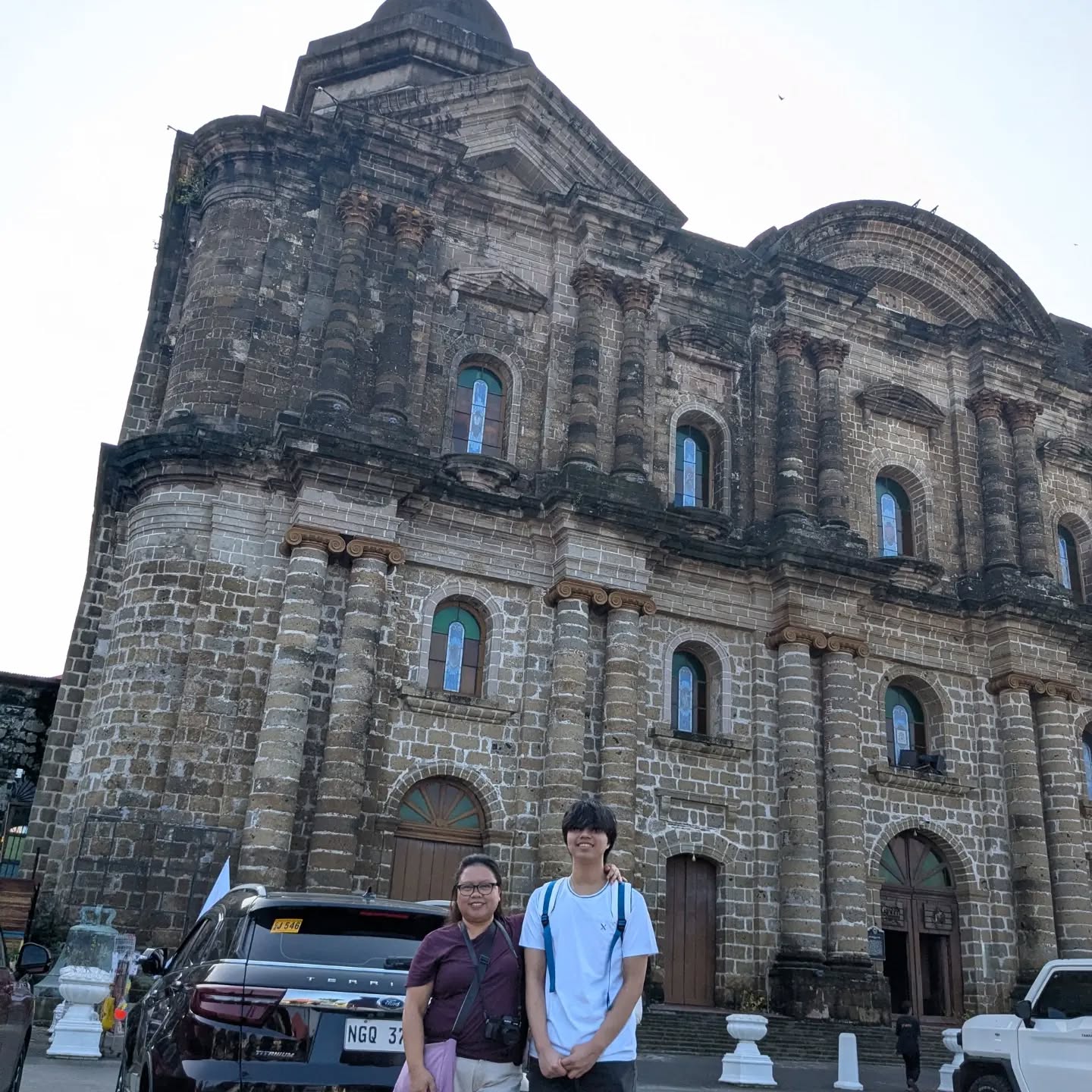
And what better way to explore an unfamiliar town than to walk around with cameras in hand?
We visited the church, wandered through the old streets, photographed ancestral houses, explored the market, passed through parks, and stopped at various old buildings along the way. Essentially, we gave ourselves permission to be tourists for the morning, except that instead of constantly asking, “Where do we go next?”, we were asking, “Wait, can you take a photo of this?”
And there was plenty to photograph.
What immediately caught our attention were the old houses.
Even after all these years, many of them still retain their original architectural character—capiz-shell windows, wooden details, wide upper floors, and the distinctive two-storey proportions of the old bahay na bato. Some of the houses have adapted to modern life, with the ground floor now converted into shops or businesses while the upper floor retains much of its historic character.
There was something particularly fascinating about seeing old and new existing side by side.
Some houses have retained much of their original wooden structure. Others have been modified with modern concrete and stone additions. It wasn’t always perfectly “museum-like,” and perhaps that’s precisely what made it interesting. These are not merely preserved buildings frozen in time. Many are still part of everyday life. I would definitely call Taal Heritage Town as a living museum, much like Batanes Island but more accessible to most Filipinos in Metro Manila. But, that’s just me. I’m no expert on this.
People live in them. People work in them. Businesses operate from them.
History, in other words, is still being used.
And for someone who spends a lot of time looking at rocks, I couldn’t help but look at the building materials, too.
And Then There Was the Basilica
The highlight of the walk was undoubtedly the Minor Basilica of Saint Martin of Tours, more popularly known as the Taal Basilica.
And wow.
The first thing you notice is its sheer size.
The basilica dominates the town from its hilltop location, and it is considered the largest church building in the Philippines. It measures roughly 88.6 meters long and 48 meters wide. The present structure was constructed beginning in 1856 under the direction of architect Luciano Oliver and was completed in 1878.
It is enormous.
As a photographer-wannabe and a geologist at that, however, the scale wasn’t the only thing that caught my attention. It was the material.
The basilica’s massive walls are made largely of adobe and coral stone, giving the structure that characteristic warm, earthy appearance. And yes, my inner geologist immediately woke up.
Adobe.
Now, before anyone imagines that the walls are made from the same kind of mud bricks we normally associate with adobe construction, the historical use of the term here refers to masonry blocks, including volcanic materials. Taal’s heritage architecture makes extensive use of locally available stone and adobe, reflecting the construction practices of the Spanish colonial period.
One particularly fascinating bit of information we learned came from the most senior member of our photography club, who also happens to live in a nearby city and knows the area well. He told us about the traditional materials and techniques used in the construction of the basilica, including the use of lime-based mortar and egg whites in old masonry and restoration traditions.
There is actually historical documentation that the basilica’s adobe and coral blocks were held together using lime and egg whites—a wonderfully strange-sounding construction technique to modern ears.
Apparently, even before modern cement became the standard, people already knew how to make buildings that could stand for centuries.
Although the basilica has undergone restoration and structural reinforcement over the years, conservation work has attempted to retain and reveal its original adobe masonry. The National Historical Commission of the Philippines carried out significant restoration work, including stabilizing the walls and repointing gaps between adobe and coral stones.
Standing there, looking at those enormous walls, I couldn’t help but think about the materials differently.
As a geologist, I’m used to looking at rocks and asking: What happened here? Where did this material come from? What processes formed it?
In Taal, I found myself asking a slightly different question:
What stories can these rocks tell?
Looking at Taal Through a Camera
That, I think, was what made this photowalk particularly enjoyable.
We weren’t there to make a detailed historical study. We weren’t there to conduct a geological survey. We simply wanted to walk around, look closely, and take photographs.
But photography has a funny way of making you slow down.
You start noticing the little things—the texture of an old wooden door, the geometric patterns of capiz windows, weathered walls, ornate architectural details, shadows falling across an old façade, a shop occupying what was once part of an ancestral home, or the enormous scale of a centuries-old church.
And because it was our first time in Taal, my son and I were seeing all of these things with fresh eyes.
For a few hours, we wandered through a town where the past isn’t confined to a museum. It is built into the streets, embedded in the walls, incorporated into people’s homes, and woven into the everyday life of the community.
And perhaps that’s what makes Taal Heritage Town so special.
It isn’t simply a collection of old buildings.
It is a living heritage town.
And for a geologist who came expecting to think about a volcano, I ended up spending the morning thinking about something else entirely:
rocks, architecture, history—and the fascinating ways people manage to make all three last.
I will definitely visit again, this time with family and we’re going to stay for a bit longer. 🙂
xoxo,
Grass
Discover more from The Fabulous Scientist
Subscribe to get the latest posts sent to your email.


1 thought on “Quick Photowalk Along the 18th Century Taal Heritage Town”