
Line-and-wash watercolor art is a technique that combines detailed line work, typically created with ink or fine pen, with washes of watercolor. The process generally begins by drawing the outline of a scene, object, or figure in pencil and then in ink – some sketch straight with ink. Once the ink drawing is complete and dry, the artist applies transparent watercolor washes over it to add color and depth.
This method allows for the precision of line drawing to coexist with the fluidity and expressiveness of watercolor, often resulting in artwork that has both structure and a soft, atmospheric quality. The ink lines help define shapes and contours, while the watercolor adds texture, light, and mood. It’s commonly used in architectural sketches, landscapes, and botanical illustrations. I also notice that a lot of urban sketchers use this technique especially when sketching cityscapes.
My Art Materials for Line-and-Wash Art
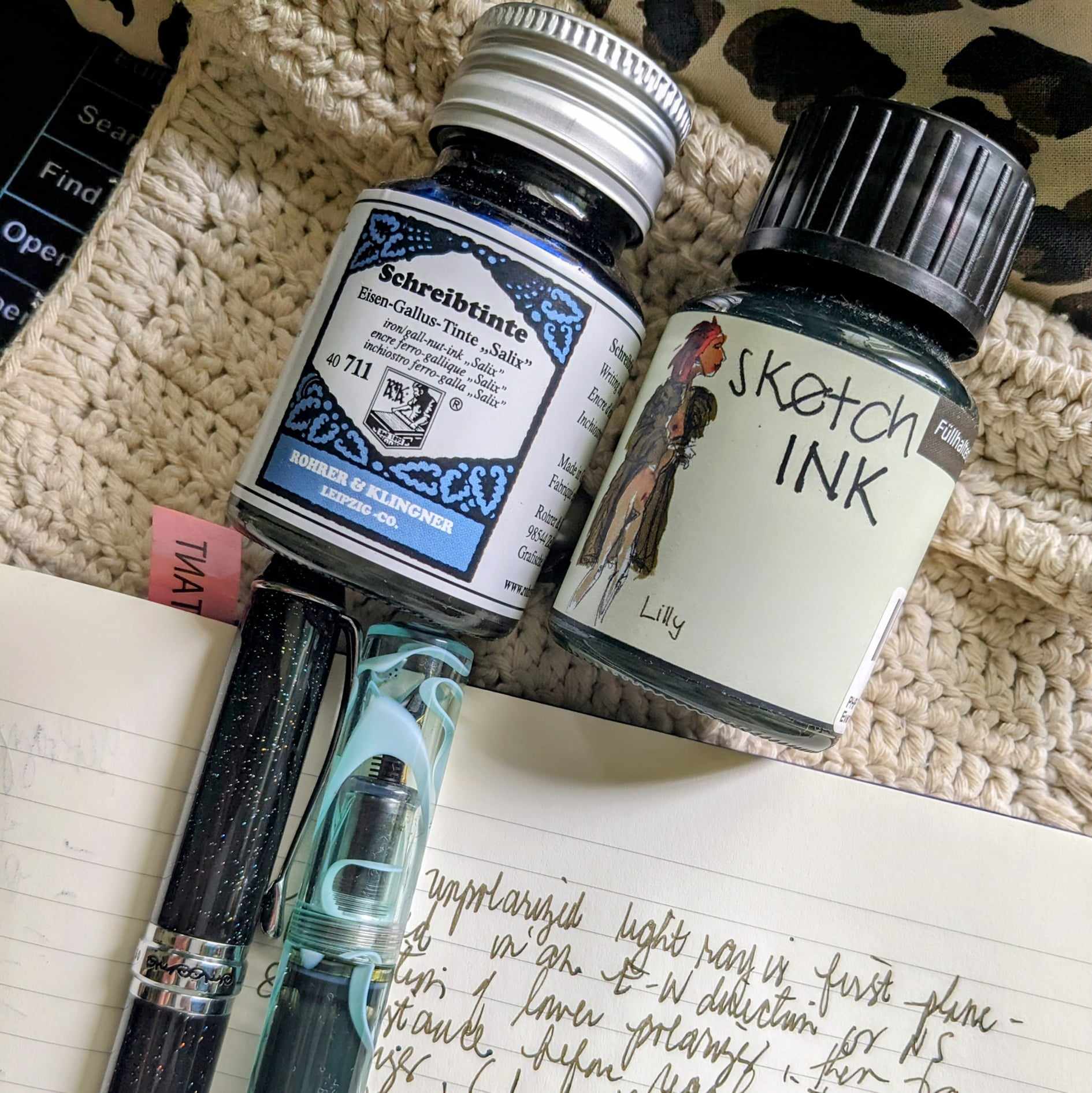
For my line-and-wash paintings, I sketch first using a mechanical pencil for the first draft. When I’m happy with my draft, I sketch over it using a fountain pen inked with waterproof ink such as Rohrer and Klingner SketchINK. I then remove the excess pencil lines using a kneadable eraser. I have two waterproof inks in my stash at the moment – Rohrer Klingner SketchINK in Lily and iron gall Salix. For my recent sketches, I have used only the RK SketchINK since I’m worried about the Salix oxidizing and affecting my sketch eventually (photos below).

My sketches below are my most recent ones using my Majohn Wancai fountain pen inked with the RK SketchINK. I love this ink because of its waterproof property which allows me to paint over my sketch with watercolors without bleeding. I like using the Majohn Wancai for sketching because it is small and I can simply put it in my pocket when I’m done sketching outdoors for example. It can also be eye dropped and thus, can contain about 2 ml of ink which can last for months. For these line-and-wash artworks, I used my favorite sketchbook, a Hahnemuhle sketchbook in passport size.

Below is a line-and-wash art from Paul Clark’s book about the basics of watercolors. The blue door was one of the first subject my kids and I painted using watercolors from his book during the pandemic because we really like the line art. The lighthouse was based on a photo reference I got from Pinterest from months ago for personal art study.


When I was working as a research associate in our institute’s geology museum, I would sometimes sketch the specimens as part of daily sketching practice. This ammonite fossil was one of my sketches done using fountain pens – in this photo – Platinum Preppy, Jinhao 82, and Jinhao X159. I sketched this one on a Japanese fountain pen notebook so I could not lay down as many watercolor washes as when I am using cotton papers.

I have also used fountain pen inks that are water-soluble for watercolor artworks and I’ve talked about it in the blog article below:
Finally, I now prefer using fountain pens over other ink pens for the following reasons:
- Line Variation: Fountain pens offer natural line variation, which allows me to create both fine and bold lines depending on the pressure applied or the angle of the nib. I bought a Sailor Profit pen with fude nib for this reason alone.
- Smooth Flow: Fountain pens deliver ink smoothly, which makes for fluid strokes and reduces hand strain during extended sketching sessions. The consistent flow ensures a steady line without the need to press hard, unlike ballpoint pens.
- Ink Versatility: Fountain pens can be refilled with a wide range of inks, including water-soluble, waterproof, or even colored inks. This variety gives me more control over the aesthetic of my sketches, as I can choose inks depending on my mood. I plan to get more RK SketchINK in the future as they come in variety of colors.
- Precision and Control: I find fountain pens to be excellent for detailed work due to their precise nibs. I can achieve intricate details with fine-point nibs while also covering larger areas with broader strokes.
- Unique Aesthetic: The ink from a fountain pen has a distinct richness and saturation, often giving sketches a more vibrant and polished look compared to standard pens or pencils.
- Less Hand Fatigue: Since fountain pens don’t require as much pressure to produce marks, they’re more ergonomic for long sketching sessions, helping reduce hand fatigue.
Thank you for reading this far!

Discover more from The Fabulous Scientist
Subscribe to get the latest posts sent to your email.

 The Fabulous Scientist