By Grass Padrique | The Fabulous Scientist
One of the reasons I fell down the rabbit hole of fountain pen writing was surprisingly simple: my cursive handwriting became more legible whenever I used one.
Back in grade school, our English teachers would often ask us to write essays in cursive. Those with the best handwriting would have their work displayed on the corkboard in one of the corners of our classroom. Unfortunately, mine never made it to the wall. Don’t get me wrong; my handwriting wasn’t exactly terrible, but it wasn’t quite good enough to earn a spot in that little classroom gallery. And it certainly wasn’t for lack of trying!
Part of the problem was the writing instrument itself. Back then, we mostly used Panda ballpoint pens. I always found them rather cumbersome to write with. I had to grip them tightly to keep them from slipping through my fingers, especially with the tropical heat making my palms sweaty. Eventually, all that gripping gave me callouses on my fingers. Who knew that something as simple as writing an essay could be such a physically demanding activity?
Fast forward to adulthood, and I discovered that fountain pens made writing a much more enjoyable experience. My handwriting became more fluid, and I found myself looking forward to putting pen to paper. Little did I know that there was another level of fountain pen enjoyment waiting for me: flex nibs!
My First Encounter with Flex Nibs
Last July, I met a fellow fountain pen enthusiast who generously let me try some of his pens. During our next meetup, he introduced me to flex nibs.
What a revelation!
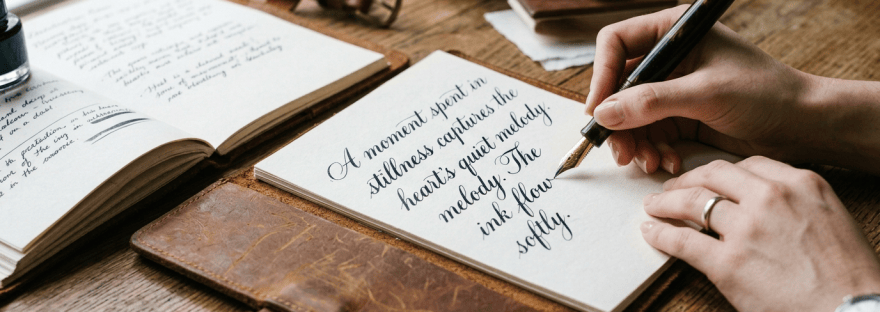
I was already perfectly happy with the regular nibs on my fountain pens, so I didn’t think there was much more to discover. But watching a nib produce different line widths depending on how much pressure I applied was fascinating. The ability to create expressive strokes, from thin hairlines to broader downstrokes, added an entirely new dimension to writing.
Needless to say, my new fountain pen friend successfully penabled me once again!
After that experience, I decided to explore some affordable and accessible flex nib options available through local online shopping platforms. I wasn’t quite ready to spend a considerable amount on more expensive flex nib pens, so I turned to brands that fellow fountain pen enthusiasts had recommended.
Enter the Majohn Flex Nib
Sometimes, the joy of trying something new doesn’t have to come with an expensive price tag.
My first purchases were two Majohn flex nibs: one installed on a Jinhao 9016 and another on a Majohn P139.
As a beginner experimenting with flex nibs, I immediately learned that not all fountain pens behave the same way when paired with a flex nib.
One of the things I noticed was how important ink flow is when using flex nibs. Since flex writing requires the nib to spread its tines and deliver more ink onto the paper, a pen needs to keep up with that increased demand. Otherwise, you may experience railroading, which happens when the ink flow cannot keep up with the nib’s movement, leaving two parallel lines instead of a properly filled stroke.
Between my two pens, I noticed less railroading with the Majohn P139 than with the Jinhao 9016. The difference could be related to their respective feed and ink delivery systems, as well as how each pen is tuned. The Jinhao 9016 comes with a converter and is installed with a plastic feeder while Majohn P139 has piston filler and installed with an ebonite feeder. The P139’s larger ink capacity is also a welcome feature when experimenting with flex writing.
This experience made me appreciate that choosing a flex nib isn’t just about the nib itself. The pen’s feed, ink supply, and overall compatibility also play important roles in getting a satisfying writing experience. Nevertheless with slow writing rhythms, I think the Jinhao 9016 can keep up so I would say that it’s not so bad at all given that it’s also a more affordable option to Majonh P139.
Is the Majohn Flex Nib Worth Trying?
For someone who wants to experiment with flex writing without immediately investing in more expensive pens, I think the Majohn flex nib is a good starting point.
It offers an opportunity to explore line variation and practice calligraphy (or in my case, improving my cursive writing) without making a significant dent in one’s wallet. Of course, it may not offer the same writing characteristics as more expensive flex nib pens, but for a beginner like me, it has been an enjoyable introduction.
I still have my eye on more premium options, particularly the Pilot Falcon and BlueDew pens. Perhaps someday, when my fountain pen budget allows it, I’ll get to experience what these pens can offer. For now, I’m happy exploring the more affordable alternatives.
A Quick Comparison: Kanwrite Soft Flex
Another nib I’ve had the opportunity to try just this week is the Kanwrite Soft Flex, which was installed on a Jinhao 82 fountain pen. The nib is smooth, pleasant to use, and doesn’t demand much effort when writing normally.
However, when it comes to flex writing, I find that I need to apply considerably more pressure to achieve noticeable line variation compared with the Majohn flex nib.
Between the two, I personally prefer the Majohn for calligraphy and experimenting with line variation, while the Kanwrite Soft Flex is a nice option for regular writing.
Of course, these are my observations based on the particular nibs and pens I’ve tried. Your experience may vary depending on the nib, feed, ink, paper, and even how you write.
More Flex Writing Adventures Ahead!
Trying flex nibs has given me another reason to enjoy my fountain pen hobby. I started collecting fountain pens because I wanted to improve my handwriting, but along the way, I’ve discovered that there’s so much more to explore beyond the usual fine, medium, and broad nibs.
There’s something particularly satisfying about watching a simple handwritten word transform into something more expressive just by varying the pressure applied to the nib.
I’m still very much a beginner when it comes to flex writing, and I have plenty of practicing to do. But that’s part of the fun, isn’t it?
For now, the Majohn flex nibs have given me a taste of what flex writing can offer. And who knows? Perhaps this is just another rabbit hole I’m happily willing to fall into.
Until my next penabling adventure! Thank you for reading this far.
xoxo,
Grass
Discover more from The Fabulous Scientist
Subscribe to get the latest posts sent to your email.


