Pip: The Fabulous Scientist is a blog where someone writes about data and science — and also, apparently, about the radical act of licking a stamp.
Mara: That's fabulousgrass, and this episode covers two ideas that turn out to be quietly connected: why handwritten letters still hold something digital messages can't, and what it finally took to start selling watercolor art as postcards.
Pip: One is about sending things through the mail on purpose. The other is about believing your work is worth sending at all.
Mara: Let's start with the case for snail mail.
Why Handwritten Letters Still Matter
Mara: The question here is a real one: with instant messaging available to everyone, why would anyone still sit down, write by hand, address an envelope, and wait days for it to arrive?
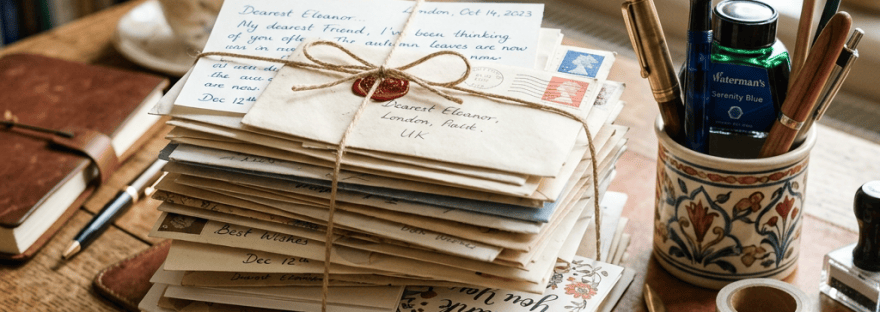
Pip: The post doesn't dodge it. The answer is right there in the text: "a handwritten letter leaves something behind. You can hold it in your hands. You can recognize someone's handwriting immediately. You can see where the ink became darker because the writer paused for a moment, or where a word was crossed out and replaced with another."
Mara: What that means practically is that a letter carries physical evidence of the person who wrote it — imperfections a typed message can never reproduce. The crossing-out, the pause, the pressure of the pen. Those aren't flaws; they're the signal.
Pip: And there's a second argument in the piece that I find more surprising: paper is actually better for thinking. A blank screen feels like it demands something polished. A blank sheet gives you permission to be messy — arrows, crossed-out sentences, margin scribbles.
Mara: That observation came directly from working on a graduate thesis. Staying away from the computer for days at a stretch, developing ideas on paper first, then returning to the screen only to organize what was already thought through.
Pip: So the letter isn't just nostalgia. It's a different cognitive tool.
Mara: The post also notes a younger generation quietly rediscovering this — fountain pens, journaling, film photography, stationery. Some have even turned snail mail into small businesses, selling card and sticker packs to customers who specifically want physical mail.
Pip: Which brings us to the question of what happens when you decide your art is worth putting in an envelope with a price tag on it.
Turning Art Into Postcards
Mara: The tension in the watercolor postcards piece is about self-belief as much as logistics: why does it take an artist more than two years to decide their work is worth selling?
Pip: The post is pretty direct about the mechanism. Every compliment got explained away — friends being polite, not wanting to hurt feelings. As the piece puts it, "I have somehow managed to turn receiving a compliment into an exercise in suspicion."
Mara: That's the core of it. The practical barrier — art materials are expensive, prints could offset costs — was always there. The real block was never believing the work was good enough to reproduce.
Pip: What finally broke the stalemate was a friend looking at some test prints and saying, simply, that the artwork needed to be out there.
Mara: And then the first small batch sold out almost immediately. That's when the calculus shifted. Not a gradual confidence-building exercise — just a clear, fast answer from actual buyers.
Pip: There's also a lovely side detail: the printer was tested not with a watercolor painting but with a photograph from a photowalk in Taal Heritage Town — a butterfly over a gumamela flower. Vivid colors, a good stress test for color accuracy, and apparently a convincing one.
Mara: The piece ends on something worth sitting with: if she had waited until she truly believed her art was good enough, she might still be waiting. So she stopped waiting.
Pip: Two posts, one through-line — effort is what makes the thing meaningful, whether it's a handwritten letter or a watercolor print.
Mara: And sometimes it takes someone else seeing the value before you can. More from The Fabulous Scientist next time.
Discover more from The Fabulous Scientist
Subscribe to get the latest posts sent to your email.


