
Grass Padrique | The Fabulous Scientist
We live in a time when communicating with someone halfway around the world takes only a few seconds. An email can be sent before your coffee gets cold, and a message through Facebook Messenger, WhatsApp, or any other messaging app can reach its recipient almost instantly. Social media has made it even easier to keep track of friends and family, regardless of where they happen to be in the world. With all these conveniences, it is easy to wonder why anyone would still bother writing a letter by hand, putting it in an envelope, and sending it through the postal system.
I still do.
I don’t write letters because I think technology is bad or because I want to return to some romanticized version of the past. I use email, messaging apps, and social media like everyone else. I am grateful that I can easily communicate with friends and family who live far away. But despite all these conveniences, I still believe there is something special about receiving a handwritten letter that digital communication has not quite managed to replace.
For me, a letter is a tangible form of human connection.
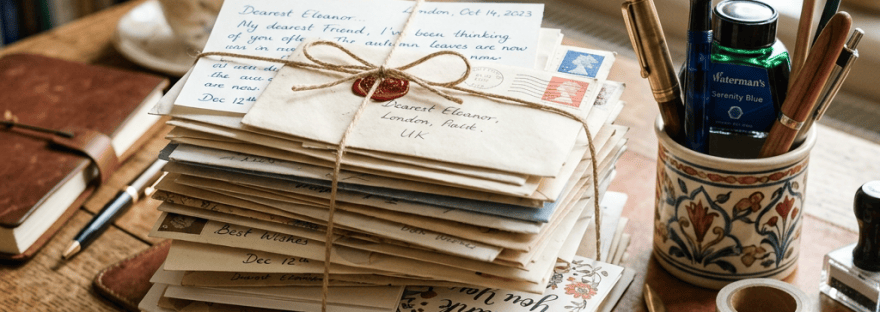
I still have letters that friends sent to me years ago, back when Facebook had not yet become the default way of keeping in touch. I have kept them all these years (currently stashed in my journal notebook), and I admit that I have reread some of them many times. It is not necessarily because I have forgotten what they said. Sometimes I simply want to be reminded that there were people who cared enough about me to sit down, take a blank sheet of paper, and write.
Some of those letters came from friends here in the Philippines, while others traveled much farther. They came from friends living abroad who took the time to write something, put it in an envelope, go to the post office, and send it across borders and oceans just so it would eventually reach me.
There is something deeply comforting about that effort.
Whenever I reread those letters, I am reminded that someone had thought about me. Someone had taken time out of their day to put their thoughts into words. Someone had gone through the trouble of physically sending those words to me. During moments when I feel lonely, those old letters have a way of making me feel less alone and more loved. They are small physical reminders of friendships that existed across distance and time.
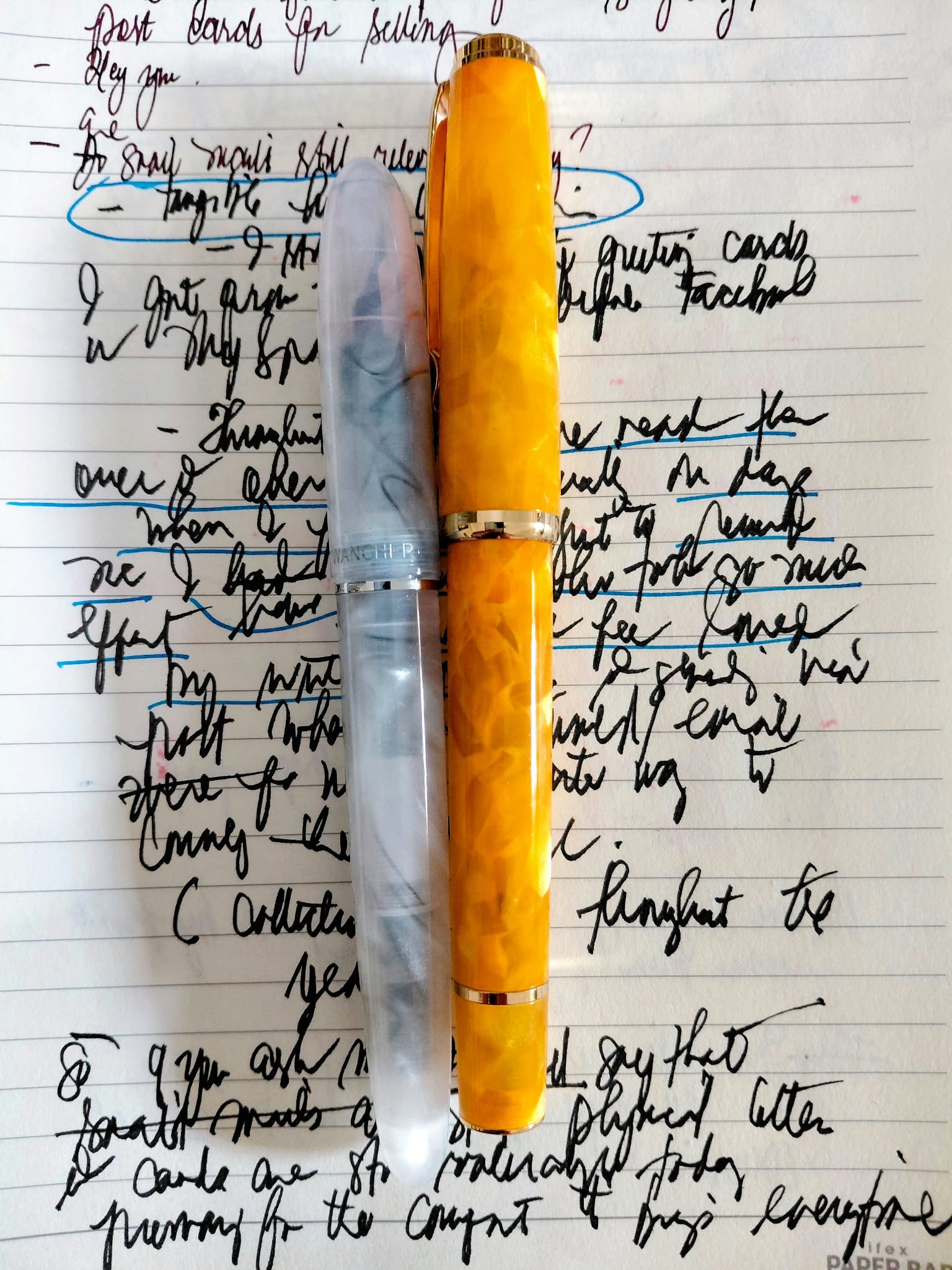
A digital message can certainly convey the same sentiment, but a handwritten letter leaves something behind. You can hold it in your hands. You can recognize someone’s handwriting immediately. You can see where the ink became darker because the writer paused for a moment, or where a word was crossed out and replaced with another. There are little imperfections that would never exist in a perfectly typed message. Those imperfections are part of what makes the letter personal.
In a way, a handwritten letter is a small artifact of another person’s life.
My own relationship with letter writing was revived when I became interested in fountain pens in 2023. What began as an interest in pens, nibs, inks, and all the other things that can turn an otherwise sensible adult into a stationery enthusiast eventually led me back to something rather basic: actually writing.
Since then, I have started sending letters to friends who live abroad. Part of the reason is simply that I miss them. But there is another reason behind it. I want them to know that although I may be far away, I am still here. If they ever miss home, miss the Philippines, or simply want to have a conversation in our native language, they know they can reach out to me.
A letter becomes my way of saying, without having to put it quite so directly, that distance has not erased the friendship.
There is another reason I enjoy writing by hand, and this one has less to do with communication and more to do with thinking. I find a blank sheet of paper considerably less intimidating than a blank computer screen.
This might sound strange coming from someone whose work involves computers, data, and increasingly digital ways of doing things. Yet I have noticed that my thoughts often behave differently when I put pen to paper. A blank screen somehow feels as though it is waiting for me to produce something polished and intelligent. A blank sheet of paper, on the other hand, gives me permission to be messy. I can write fragments, draw arrows, cross things out, rearrange ideas, scribble something in the margin, or turn the page sideways if I feel like it.
I experienced this particularly strongly when I was writing my graduate thesis. There were times when I found it much easier to develop an idea on paper than in front of a computer. I would sometimes deliberately stay away from the computer for a few days so that I could think without the distraction of having to turn those thoughts immediately into properly formatted paragraphs. I even printed some of the published papers I used as references so that I could read and annotate them using my pens. I was, in a way, detoxing from the screen.
Once I had worked through the ideas on paper, returning to the computer became much easier. The computer was then simply the tool I used to organize and refine what I had already thought about.
Perhaps there is something about paper that allows us to think without worrying too much about getting everything right the first time.
Interestingly, I have also noticed what seems to be a renewed interest in analog activities among younger people. I am careful about making a sweeping claim about this because I am basing it on my own observations rather than a scientific survey, but it is something I have encountered repeatedly. Young people who have grown up surrounded by smartphones, social media, streaming services, and digital entertainment are also becoming interested in physical books, journaling, fountain pens, film photography, stationery, and handwritten correspondence.
I noticed this quite clearly just recently when I attended a Pelikan Hub. I expected the gathering to be dominated by older fountain-pen enthusiasts, but there were almost equal numbers of younger and older members in attendance. Seeing that mix was interesting to me. The fountain pen is hardly the most efficient writing instrument available today, yet people from different generations continue to find something enjoyable about using one.
I see something similar among artists and stationery enthusiasts I follow online. Many of them are interested in journaling and other forms of analog creativity. Some create and sell stationery, art prints, stickers, and cards. There are even people who have turned snail mail into a small business, putting together cards and sticker packs and sending them to customers who specifically enjoy receiving physical mail.
It is an interesting development. We have created technology that allows us to communicate instantly with practically anyone on Earth, and some people are responding by deliberately putting things into envelopes and sending them through the postal system.
Perhaps this isn’t really about going backward.
Maybe it is about finding something that technology does not quite provide.
Technology has made communication faster, easier, and more convenient, and I have no desire to give those advantages up. I am perfectly happy to send a quick message to a friend abroad and receive a reply almost immediately. There are many situations in which instant communication is exactly what we need.
But perhaps not every form of communication needs to be instant.
There is a different kind of meaning in knowing that someone took time to write something specifically for you. The process itself requires a little more intention. The writer has to sit down, think about what they want to say, put those thoughts on paper, address an envelope, and send it. The recipient then has to wait for it to arrive.
That waiting is part of the experience.
And when the letter finally appears in the mailbox, it is something more than information. It is a physical reminder that another person spent time thinking about you.
That, perhaps, is what I value most about handwritten letters. They are physical evidence of effort.
Someone didn’t simply type a few sentences, press send, and continue with their day. They took the time to write. They may have chosen a particular pen or ink. They may have stopped and thought about what to say. They may have crossed out a sentence and started again. Eventually, they folded the paper, put it into an envelope, addressed it, and sent it into the world with the hope that it would reach you.
Years later, I can still hold the letters my friends sent me. Their handwriting remains even though their lives have changed. Some of those friends now live in different countries. Some have become busy with careers and families. Some friendships have naturally changed with time, and some people I once spoke to regularly are now people I hear from only occasionally.
But the letters remain.
When I read them again, I am transported back to a particular period in our lives. I am reminded of who we were, what we were doing, and what mattered to us at the time. More importantly, I am reminded that there was a point when someone cared enough to put their thoughts on paper and send them across the distance.
I don’t think that makes handwritten letters better than email or social media. They simply serve a different purpose.
A quick message can tell someone that you are thinking of them. A letter can do the same thing, but it can also become something they can keep.
And perhaps that is why, despite living in an age of instant communication, I still enjoy the slow business of writing with a pen, putting a letter into an envelope, and sending it through the mail.
Sometimes, taking the long way is precisely what makes the message meaningful.
Why Handwritten Letters Still Matter in the Age of Instant Communication
We live in a time when communicating with someone halfway around the world takes only a few seconds. An email can be sent before your coffee gets cold, and a message through Facebook Messenger, WhatsApp, or any other messaging app can reach its recipient almost instantly. Social media has made it even easier to keep track of friends and family, regardless of where they happen to be in the world. With all these conveniences, it is easy to wonder why anyone would still bother writing a letter by hand, putting it in an envelope, and sending it through the postal system.I still do.I don’t write letters because I think technology is bad or because I want to return to some romanticized version of the past. I use email, messaging apps, and social media like everyone else. I am grateful that I can easily communicate with friends and family who live far away. But despite all these conveniences, I still believe there is something special about receiving a handwritten letter that digital communication has not quite managed to replace.For me, a letter is a tangible form of human connection.I still have letters that friends sent to me years ago, back when Facebook had not yet become the default way of keeping in touch. I have kept them all these years, and I admit that I have reread some of them many times. It is not necessarily because I have forgotten what they said. Sometimes I simply want to be reminded that there were people who cared enough about me to sit down, take a blank sheet of paper, and write.Some of those letters came from friends here in the Philippines, while others traveled much farther. They came from friends living abroad who took the time to write something, put it in an envelope, go to the post office, and send it across borders and oceans just so it would eventually reach me.There is something deeply comforting about that effort.Whenever I reread those letters, I am reminded that someone had thought about me. Someone had taken time out of their day to put their thoughts into words. Someone had gone through the trouble of physically sending those words to me. During moments when I feel lonely, those old letters have a way of making me feel less alone and more loved. They are small physical reminders of friendships that existed across distance and time.A digital message can certainly convey the same sentiment, but a handwritten letter leaves something behind. You can hold it in your hands. You can recognize someone’s handwriting immediately. You can see where the ink became darker because the writer paused for a moment, or where a word was crossed out and replaced with another. There are little imperfections that would never exist in a perfectly typed message. Those imperfections are part of what makes the letter personal.In a way, a handwritten letter is a small artifact of another person’s life.My own relationship with letter writing was revived when I became interested in fountain pens in 2023. What began as an interest in pens, nibs, inks, and all the other things that can turn an otherwise sensible adult into a stationery enthusiast eventually led me back to something rather basic: actually writing.Since then, I have started sending letters to friends who live abroad. Part of the reason is simply that I miss them. But there is another reason behind it. I want them to know that although I may be far away, I am still here. If they ever miss home, miss the Philippines, or simply want to have a conversation in our native language, they know they can reach out to me.A letter becomes my way of saying, without having to put it quite so directly, that distance has not erased the friendship.There is another reason I enjoy writing by hand, and this one has less to do with communication and more to do with thinking. I find a blank sheet of paper considerably less intimidating than a blank computer screen.This might sound strange coming from someone whose work involves computers, data, and increasingly digital ways of doing things. Yet I have noticed that my thoughts often behave differently when I put pen to paper. A blank screen somehow feels as though it is waiting for me to produce something polished and intelligent. A blank sheet of paper, on the other hand, gives me permission to be messy. I can write fragments, draw arrows, cross things out, rearrange ideas, scribble something in the margin, or turn the page sideways if I feel like it.I experienced this particularly strongly when I was writing my graduate thesis. There were times when I found it much easier to develop an idea on paper than in front of a computer. I would sometimes deliberately stay away from the computer for a few days so that I could think without the distraction of having to turn those thoughts immediately into properly formatted paragraphs.Once I had worked through the ideas on paper, returning to the computer became much easier. The computer was then simply the tool I used to organize and refine what I had already thought about.Perhaps there is something about paper that allows us to think without worrying too much about getting everything right the first time.Interestingly, I have also noticed what seems to be a renewed interest in analog activities among younger people. I am careful about making a sweeping claim about this because I am basing it on my own observations rather than a scientific survey, but it is something I have encountered repeatedly. Young people who have grown up surrounded by smartphones, social media, streaming services, and digital entertainment are also becoming interested in physical books, journaling, fountain pens, film photography, stationery, and handwritten correspondence.I noticed this quite clearly just recently when I attended a Pelikan Hub. I expected the gathering to be dominated by older fountain-pen enthusiasts, but there were almost equal numbers of younger and older members in attendance. Seeing that mix was interesting to me. The fountain pen is hardly the most efficient writing instrument available today, yet people from different generations continue to find something enjoyable about using one.I see something similar among artists and stationery enthusiasts I follow online. Many of them are interested in journaling and other forms of analog creativity. Some create and sell stationery, art prints, stickers, and cards. There are even people who have turned snail mail into a small business, putting together cards and sticker packs and sending them to customers who specifically enjoy receiving physical mail.It is an interesting development. We have created technology that allows us to communicate instantly with practically anyone on Earth, and some people are responding by deliberately putting things into envelopes and sending them through the postal system.Perhaps this isn’t really about going backward.Maybe it is about finding something that technology does not quite provide.Technology has made communication faster, easier, and more convenient, and I have no desire to give those advantages up. I am perfectly happy to send a quick message to a friend abroad and receive a reply almost immediately. There are many situations in which instant communication is exactly what we need.But perhaps not every form of communication needs to be instant.There is a different kind of meaning in knowing that someone took time to write something specifically for you. The process itself requires a little more intention. The writer has to sit down, think about what they want to say, put those thoughts on paper, address an envelope, and send it. The recipient then has to wait for it to arrive.That waiting is part of the experience.And when the letter finally appears in the mailbox, it is something more than information. It is a physical reminder that another person spent time thinking about you.That, perhaps, is what I value most about handwritten letters. They are physical evidence of effort.Someone didn’t simply type a few sentences, press send, and continue with their day. They took the time to write. They may have chosen a particular pen or ink. They may have stopped and thought about what to say. They may have crossed out a sentence and started again. Eventually, they folded the paper, put it into an envelope, addressed it, and sent it into the world with the hope that it would reach you.Years later, I can still hold the letters my friends sent me. Their handwriting remains even though their lives have changed. Some of those friends now live in different countries. Some have become busy with careers and families. Some friendships have naturally changed with time, and some people I once spoke to regularly are now people I hear from only occasionally.But the letters remain.When I read them again, I am transported back to a particular period in our lives. I am reminded of who we were, what we were doing, and what mattered to us at the time. More importantly, I am reminded that there was a point when someone cared enough to put their thoughts on paper and send them across the distance.I don’t think that makes handwritten letters better than email or social media. They simply serve a different purpose.A quick message can tell someone that you are thinking of them. A letter can do the same thing, but it can also become something they can keep.And perhaps that is why, despite living in an age of instant communication, I still enjoy the slow business of writing with a pen, putting a letter into an envelope, and sending it through the mail.Sometimes, taking the long way is precisely what makes the message meaningful.
Discover more from The Fabulous Scientist
Subscribe to get the latest posts sent to your email.


