
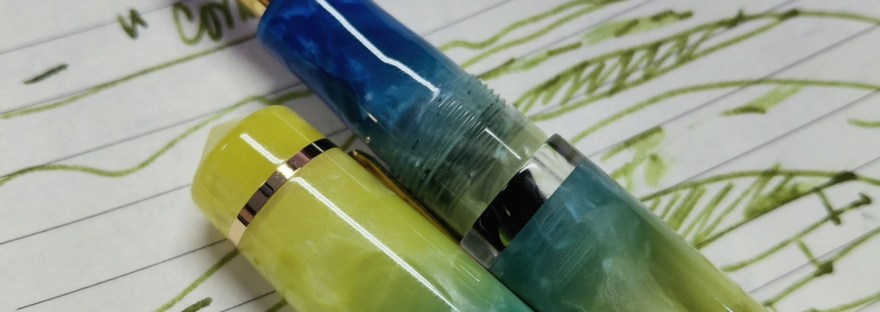
Pip: Welcome to The Fabulous Scientist, where fabulousgrass makes a compelling case that the most sophisticated piece of lab equipment you own might be the one you fill with ink.
Mara: Today we're looking at the science of how we actually process information — why the tool you use to take notes changes what your brain does with what it reads.
Pip: Let's start with the case against your keyboard.
—
Why Your Pen Outsmarts Your Laptop
Mara: The central tension here is simple: we obsess over calibrating our instruments, but we give almost no thought to the tool we use to process what those instruments tell us.
Pip: And the post opens with exactly that observation — then drops a study. Mueller and Oppenheimer in 2014 gave half a group of students laptops and the other half pen and paper. The finding: "the laptop users took way more notes, but they didn't learn as much."
Mara: What that means in practice is that speed works against you. Typing fast enough to transcribe everything puts your brain on autopilot — you're capturing words, not building understanding. The hand-writers were forced to digest and summarize in real time, and that compression is where the learning actually happens.
Pip: So the laptop is not a note-taking tool. It's a very expensive stenography machine.
Mara: The post goes further and asks why a fountain pen specifically, not just any pen. The answer comes down to physics. A ballpoint forces you to press hard to roll thick paste ink onto paper, which causes hand fatigue over long sessions. A fountain pen runs on capillary action — the ink flows on contact. The post describes it as "a controlled leak." You guide rather than press, and the post cites a colleague who wrote pages without any strain, something she couldn't do with a ballpoint.
Pip: There's also a sensory dimension that Mangen and Velay's 2010 research backs up — the feel of the nib, the sound of the scratch, the visible wet ink drying. That tactile loop slows you down just enough to keep you anchored in the material.
Mara: The post translates all of this into a concrete reading protocol: print the paper, attack the margins with quick marks — question marks for suspect data, arrows connecting ideas — then stop at the end of each section and write a plain-language summary in a notebook. The test is simple: if you cannot explain it simply, you have not learned it yet.
Pip: And if the paper describes a structure, sketch it. Keyboards are, as the post puts it, terrible at shapes.
Mara: The closing argument is that a laptop is "an infinite noise machine" and paper is silent — it forces the grappling that produces real understanding.
—
Pip: Slow tools, faster thinking. There's something almost perverse about that being the takeaway from a science blog.
Mara: The research holds up, though. Next time, we'll see what else on the site is worth reaching for a pen over.
Discover more from The Fabulous Scientist
Subscribe to get the latest posts sent to your email.


