
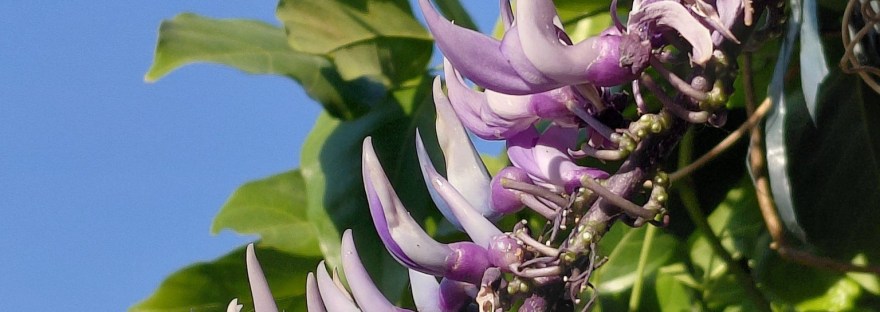
Grass Padrique | The Fabulous Scientist
Hey, everyone! If you’ve been hanging around this blog for a while, you probably already know I’m a full-on dendrophile—a person who gets unreasonably excited about trees and plants. One of my favorite things to do during my fitness walks (whether in UP Diliman or wherever I happen to be) is to slow down, look up, and admire whatever leafy or flowering wonder is within eyesight. I take photos not just because they’re pretty—though they definitely are—but also because they make excellent painting references… and, let’s be honest, because plants deserve their moment on my social media feed too.
A few years ago, I stumbled upon one of my rarest plant sightings: what many people now call the “JC’s vine,” scientifically known as Strongylodon juangonzalezii. At the time, I thought it was just another unusually beautiful vine doing its thing. It was only later—after a bit of reading and some enthusiastic plant-nerd digging—that I realized I had come across something incredibly rare.
The name itself is actually quite special. The species was named after Juan Carlos Tecson Gonzalez, a zoology professor and former director of the UPLB Museum of Natural History. And somehow, knowing that this plant carries the name of a Filipino scientist makes the encounter feel even more meaningful—like it’s not just a rare plant, but also a quiet tribute rooted right here at home.
What is a JC’s Vine? (And Its Relationship to the Emerald Vine)
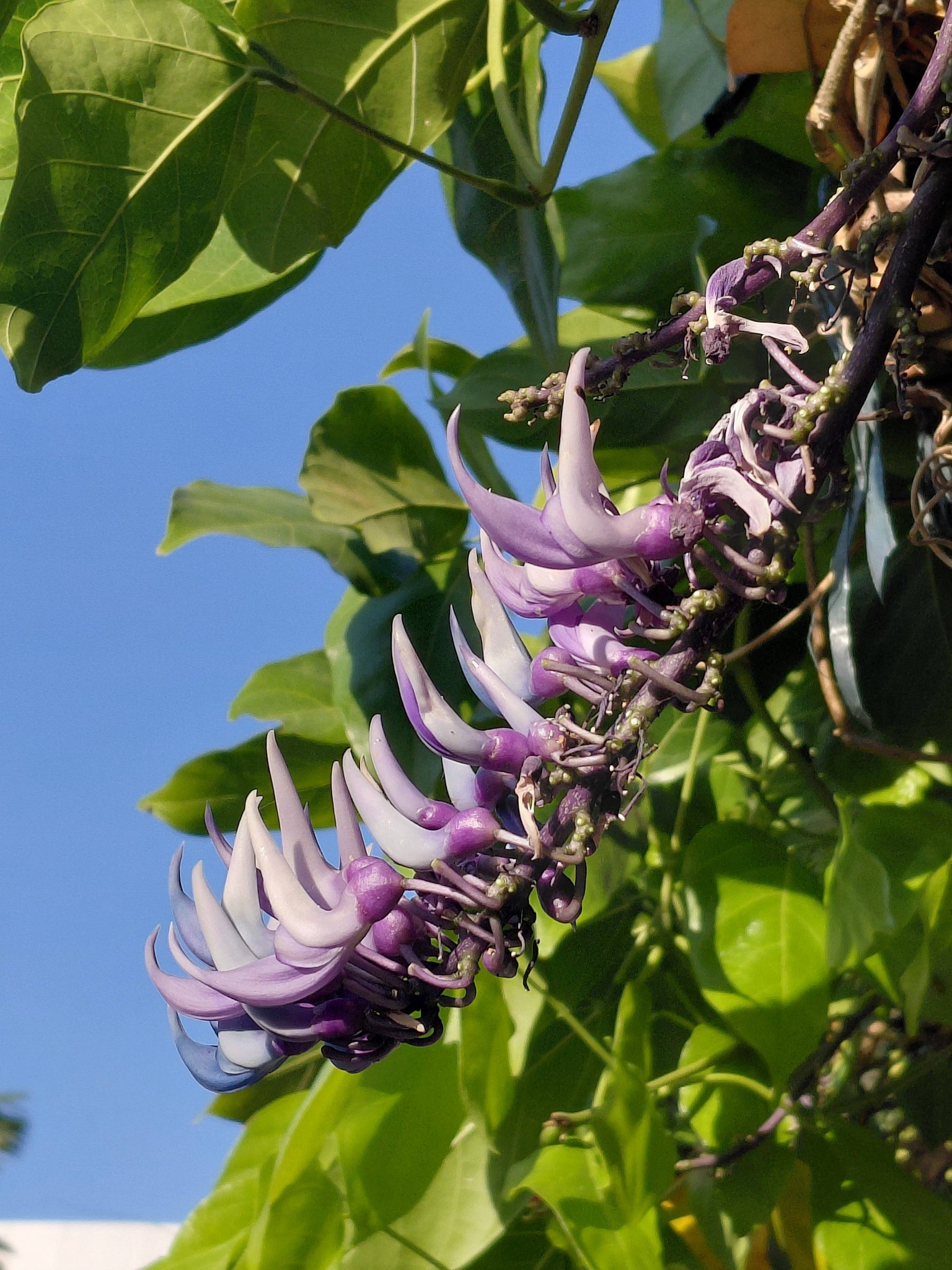
Among plant enthusiasts, the “JC’s vine” is often used to refer to a rare purple-flowering relative of the well-known Strongylodon macrobotrys, commonly called the emerald or jade vine. While the jade vine is famous for its surreal turquoise blooms, the JC’s vine stands out for its deep, rich violet to purplish hues, equally striking, but far less commonly seen.
Both belong to the same genus, Strongylodon, a group of tropical climbing plants native to Southeast Asia, particularly the Philippines. However, while the emerald vine has become relatively more visible in cultivation, its purple counterpart remains elusive, making encounters with it feel even more special.
Why It Is Considered Endangered
Like many native Philippine plants, the JC’s vine is considered endangered due to the steady loss of its natural habitat. Deforestation, land conversion, and urban expansion have significantly reduced the forest ecosystems where these vines naturally thrive.
Adding to this vulnerability is its specialized pollination system. Much like its jade-colored relative, it relies on specific pollinators—often bats—to reproduce successfully. When these pollinators decline, so does the plant’s ability to sustain its population in the wild.
The result is a plant that is not only rare but increasingly difficult to encounter outside protected environments.
Legal Protection: Why You Shouldn’t Take It Home
The JC’s vine, as part of the Philippines’ native and threatened flora, is protected under Republic Act No. 9147. This law prohibits the collection, possession, and transport of wildlife—including plants—from their natural habitats without proper authorization.
This means that picking seeds, taking cuttings, or attempting to grow one at home from wild sources is illegal. While it might feel like a harmless act of admiration, it actually contributes to the decline of already fragile populations.
Conservation begins with restraint, admiring these plants where they naturally grow rather than removing them from it.
Why I Love the JC’s Vine
What draws me to the JC’s vine is its sheer uniqueness. The first time you see it, it feels almost unreal—like something that belongs in a painting rather than a forest.
I’ve encountered many beautiful flowers, but none quite like this. The shape is already unusual, but paired with that deep, moody purple, it becomes something else entirely—elegant, dramatic, and quietly mesmerizing. If the emerald vine feels bright and otherworldly, the JC’s vine feels more like a hidden secret—less flashy, but just as captivating.
Blooming Behavior: When It Comes to Life
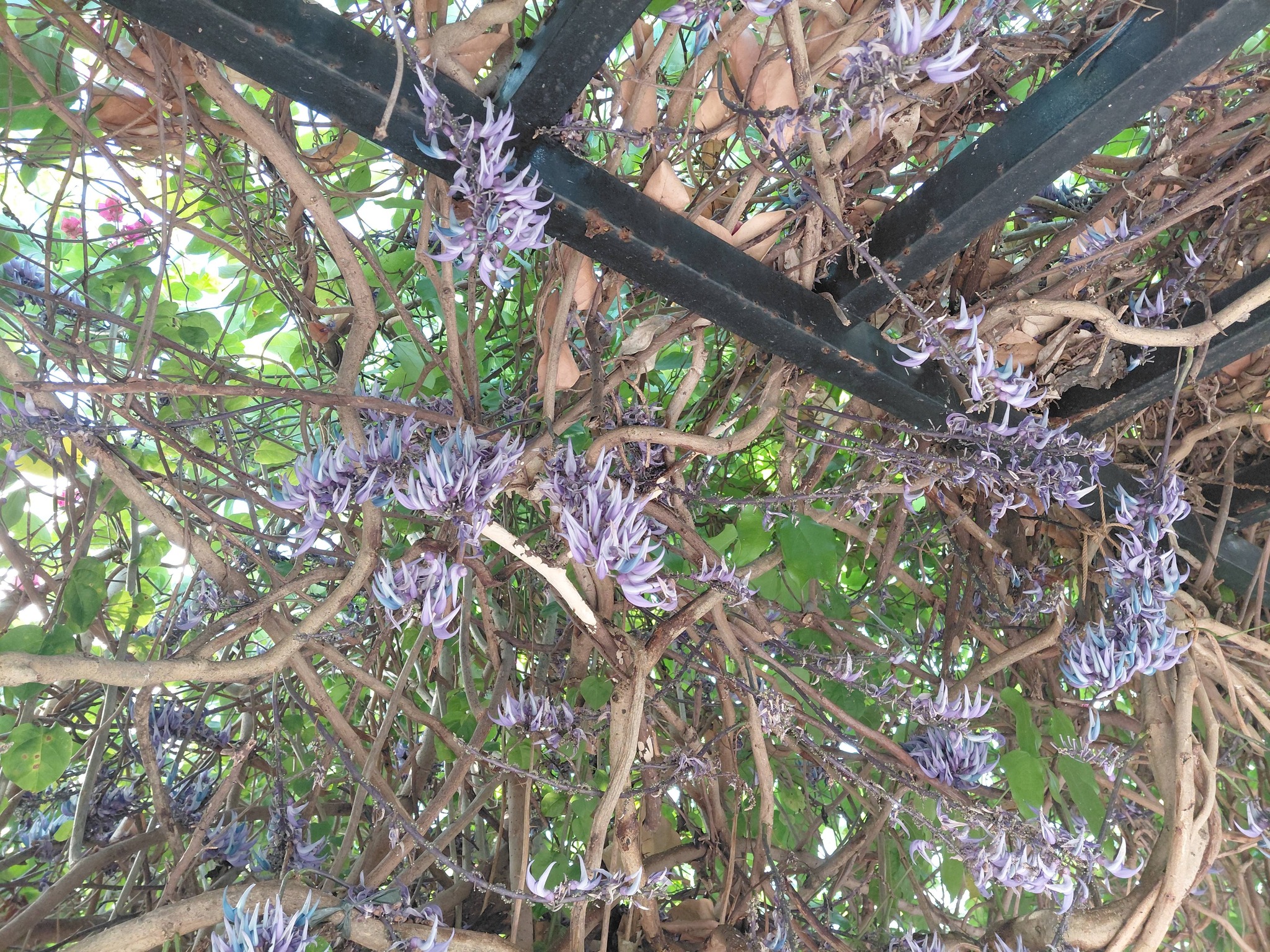
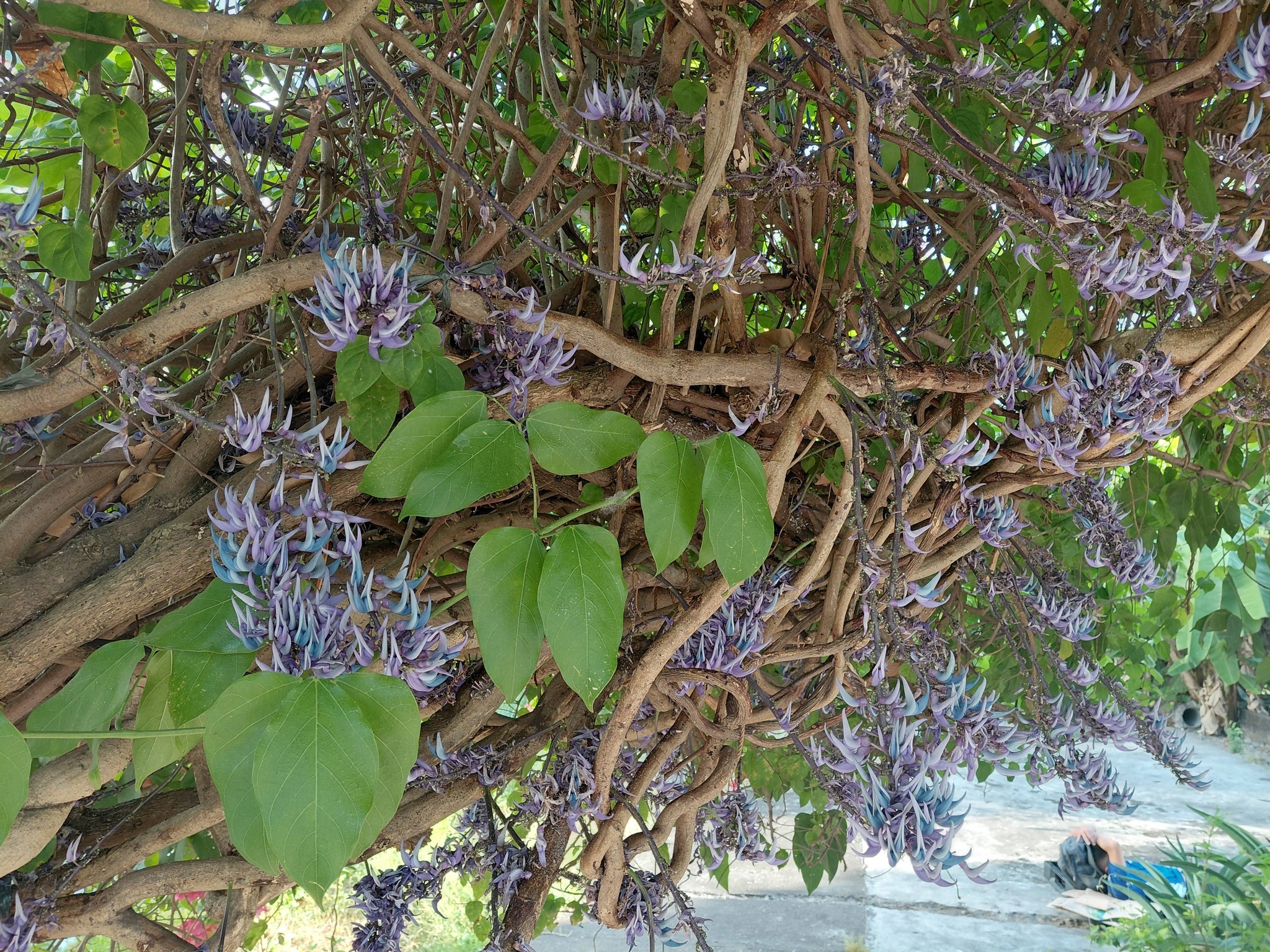
The JC’s vine typically blooms once a year, often during the warmer months—around March to May, though timing can vary depending on environmental conditions. Based on my personal observation, they bloom in UP Diliman campus near the Institute of Biology during the summer months.
When in bloom, it transforms into a cascade of purple clusters that seem to glow subtly under natural light, less luminous than the jade vine, perhaps, but no less enchanting.
Where You Might Encounter It in the Philippines
Seeing a JC’s vine in the wild is rare, but not impossible. It is more commonly found in protected areas and botanical collections, such as:
- Makiling Botanic Gardens
- La Mesa Eco Park (Quezon City)
- UP Diliman Campus (near the Institute of Bioloy)
- Masungi Georeserve (Rizal)
In its natural habitat, it thrives in tropical forests, climbing tall trees and allowing its flowers to hang freely beneath the canopy. I took a video of this vast JC’s Vine behind the Institute of Biology along the entrance to the hidden Japanese forest.
Closing Thoughts
Because the JC’s vine blooms only once a year, every encounter during my fitness walks feels like a small, fleeting reward. It’s the kind of sight that makes you slow down, look a little longer, and appreciate just how special our local flora really is.
I wrote this blog not just to share that joy, but also to gently remind everyone that this is a rare and protected plant. Picking the flowers, vandalizing the vine, or collecting seeds to grow at home might seem harmless, but these actions are actually prohibited under Republic Act No. 9147—and more importantly, they put an already vulnerable species at greater risk.
Discover more from The Fabulous Scientist
Subscribe to get the latest posts sent to your email.


