

by Grass Padrique | The Fabulous Scientist
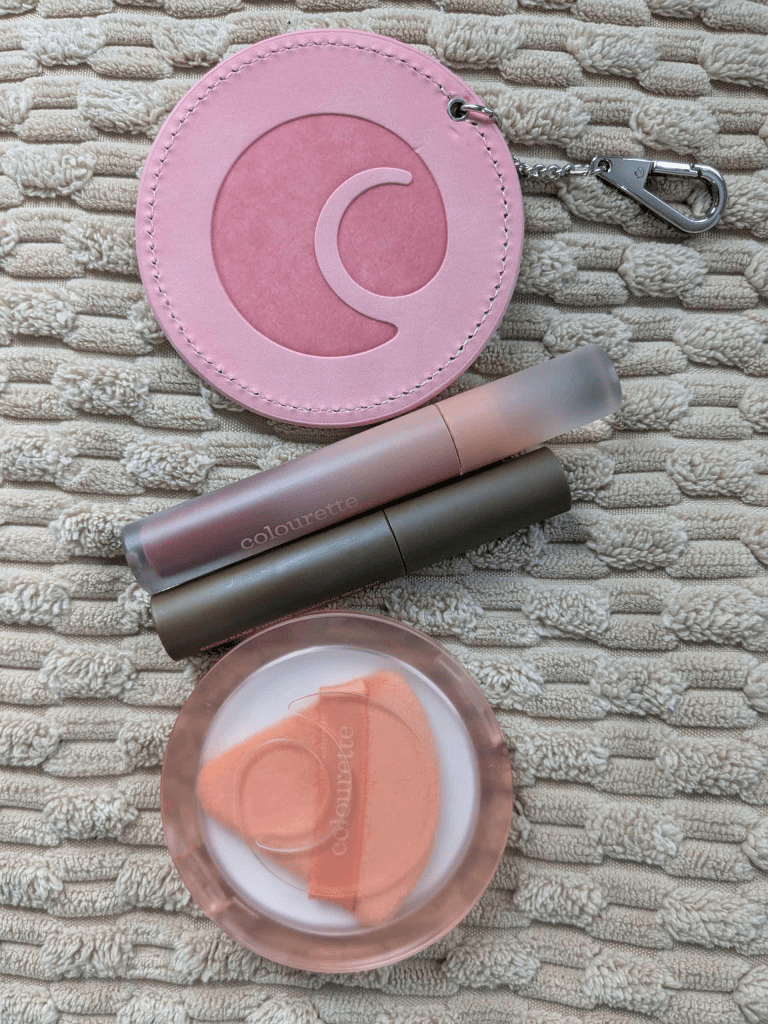
This morning, I reached for my favorite Colourette lip tint and powder blush as I get ready for work. The small tube of color and compact blush brighten my face and my day. These two are more than makeup for me. They’re a symbol of creativity, courage, and community as the products I now use constantly were built by a Filipina entrepreneur, powered by local talent, and supported by women who believe in other women (i.e. The Colourette Club).

As I brushed the tint across my lips, I thought of something that connects both of my worlds: beauty and geology. We often see makeup as a modern luxury, but every shade, shimmer, and tint we use today is rooted, quite literally, in the earth. The story of cosmetics is, at its heart, a story about minerals, science, and human artistry.
From Soil to Shimmer: The Earth Beneath Our Beauty
Long before chemists perfected formulas in laboratories, the first pigments came from the ground. Early humans crushed rocks, ground clay, and mixed minerals with animal fats or plant oils to decorate their skin. Ancient Egyptians lined their eyes with galena (a lead sulfide mineral) and malachite, a green copper carbonate (British Museum, n.d.). In Greece and Rome, artists and women used red ochre, iron oxide, to color their cheeks (Guineau, 2017). Even the famous white face powders of the Renaissance were made from finely ground chalk and lead carbonate (Edwards, 2019).
As a geologist, I can’t help but see the entire makeup industry as a conversation between science and aesthetics. The same iron oxides that form the rust-red layers in the earth’s crust give us the warm terracotta and rose tones in our blush and lipstick. Mica, a silicate mineral known for its glittering flakes, gives eyeshadows their sparkle. Kaolin, a type of clay, smooths our powders and helps absorb oil. And titanium dioxide and zinc oxide, both naturally occurring minerals, protect our skin as sunscreens (USGS, 2022).
The earth has always been our first palette. Every jar of pigment, every compact of powder, carries within it the memory of geologic time, minerals shaped by pressure, heat, and water long before they became part of our beauty rituals.
The Power of Buying Local
But just as important as where our ingredients come from is where our products are made. Supporting local brands like Colourette isn’t just about national pride — it’s about strengthening the foundation of our economy and empowering communities.
When we buy local, we circulate our money within our own ecosystem. A peso spent on a Filipino-made product doesn’t just vanish; it multiplies — paying local workers, sustaining small suppliers, funding creative startups, and inspiring other entrepreneurs to take the leap (Philippine Statistics Authority, 2023).
Colourette, founded by a single mom, is a beautiful example of how local businesses can redefine industries traditionally dominated by global giants. Each product represents not just color and confidence, but resilience and opportunity. As a mom myself, I see in that story a reflection of my own journey, balancing science as my profession, art, and motherhood while creating something meaningful.
Buying local becomes an act of connection. It’s saying, “I see you, I believe in your craft, and I want to help this community grow.”
A Geologic Lens on Sustainability
The geology of makeup also reminds us to look deeper — literally and ethically. Many global beauty products still rely on minerals like mica that are mined under poor labor conditions (UNICEF, 2018). Choosing transparent, ethical brands (especially local ones that source responsibly) helps minimize the hidden cost of beauty.
Geologists often talk about resource stewardship — the careful use of Earth’s limited materials. The same principle applies to what we put on our skin. When we support brands that are mindful about ingredients and packaging, we contribute to a cycle that values both the planet and the people who live on it.
It’s poetic, really — the minerals that once formed deep in the earth now touch our skin, linking us back to the natural world we depend on.
The Science of Color and Confidence
Science tells us that color affects mood. Warm tones like red and coral can boost energy, while pinks evoke comfort and kindness (Elliot & Maier, 2014). But the story behind those colors adds another layer: when we wear a shade created by a local brand, we’re also wearing a piece of a shared dream.
It’s easy to overlook the science behind our daily rituals, but think of what happens when we apply makeup: chemistry in motion. Pigments disperse evenly thanks to particle size and binding agents. The way light reflects off mica layers gives that subtle “glow.” Even the smooth glide of a lip tint owes itself to precise molecular interactions between oils, waxes, and pigments — a dance of physics and geology in a single swipe.
To me, there’s something empowering about understanding the science behind beauty. It doesn’t make the ritual less magical — it deepens it.

The Earth and the Everyday
When we talk about sustainability, we often imagine large-scale efforts — renewable energy, climate action, conservation. But sustainability also begins with small, personal choices: buying from ethical local brands, using products that last, understanding where our materials come from.
In that sense, every tube of Colourette lip tint, every jar of locally made clay mask, becomes part of a larger story — one that values both the Earth’s gifts and human creativity.
We may not all mine the minerals or mix the formulas, but each of us participates in the cycle of making, using, and appreciating. And when we support businesses rooted in our own soil, we’re helping shape an economy — and a future — that reflects our values.

Closing Reflection
As I cap my lip tint and prepare for the day, I feel a quiet pride — not just in looking a little brighter, but in knowing that my small choice has meaning. It’s a reminder that the line between geology and beauty, science and self-expression, is thinner than it seems.
The earth gives us minerals; we give them purpose.
Local makers turn them into art; we wear that art with pride.
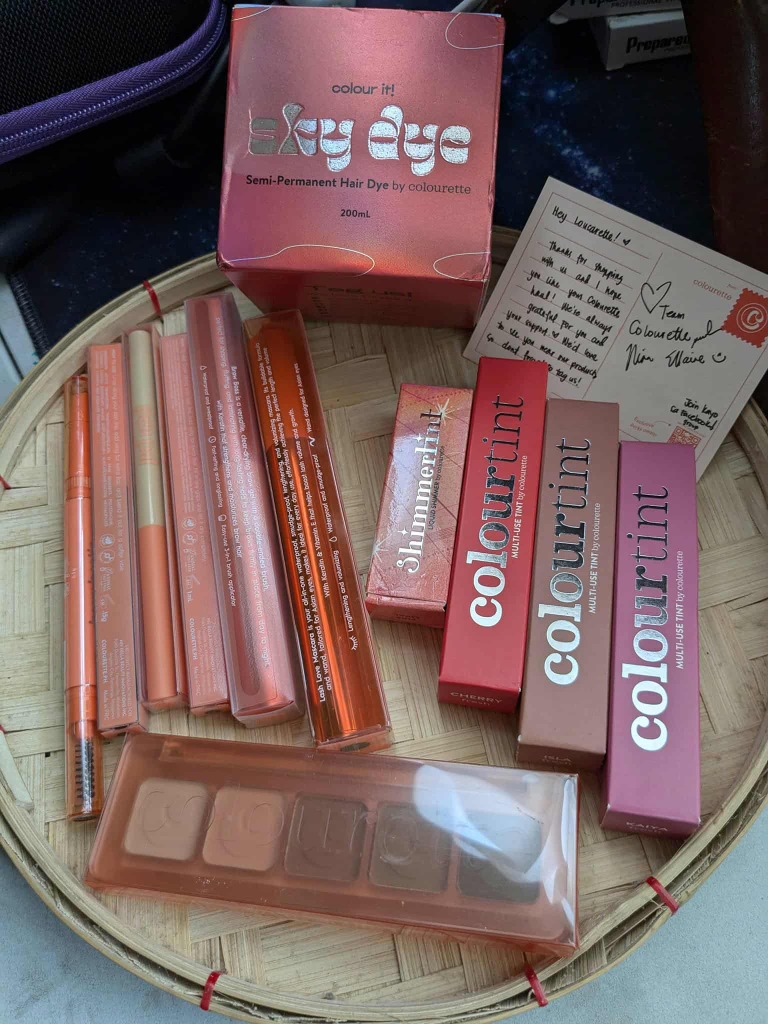
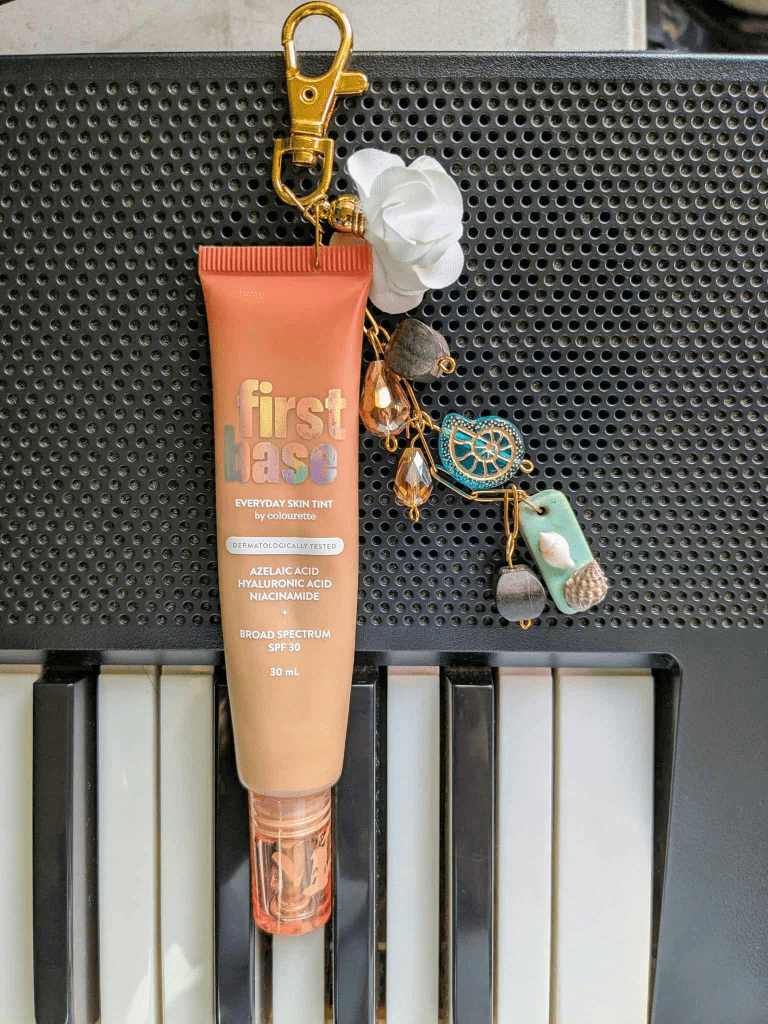
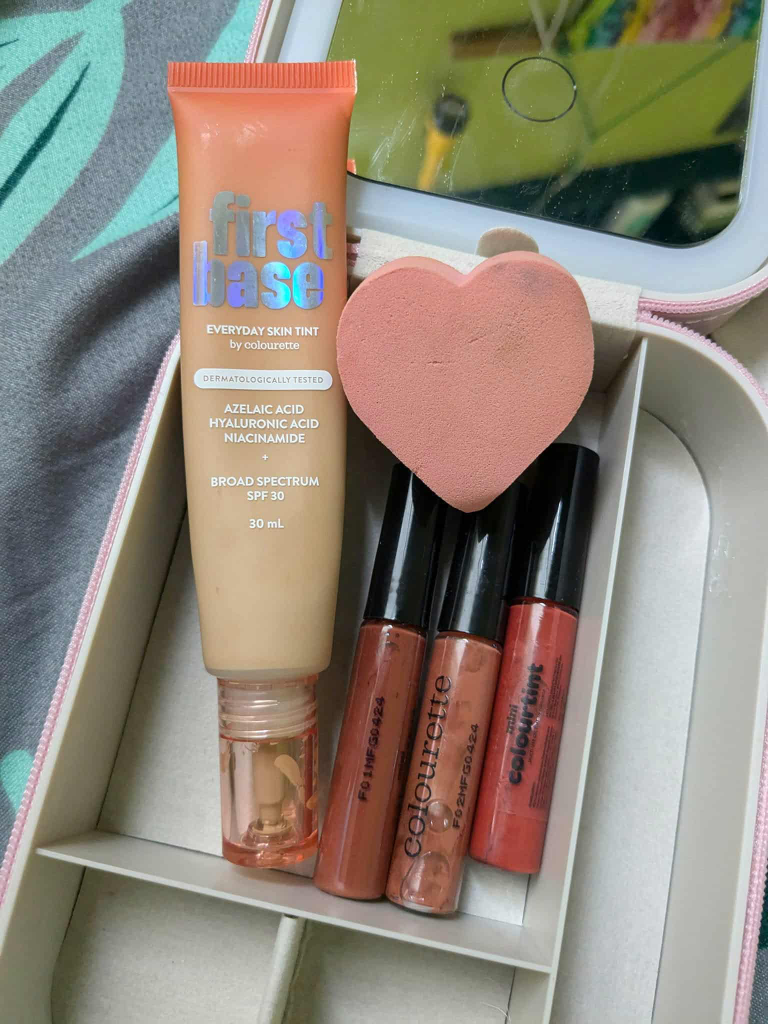
Every shade we choose — whether drawn from volcanic reds or kaolin whites — carries within it the memory of stone, time, and transformation. And when we choose local, we keep that transformation close to home — where it matters most. Below are photos of my current stash of Colourette products that I definitely swear by:
References
- British Museum. (n.d.). Cosmetic palette and pigments in ancient Egypt. Retrieved from https://www.britishmuseum.org/
- Edwards, E. (2019). The poisonous beauty of historical makeup. Smithsonian Magazine.
- Elliot, A. J., & Maier, M. A. (2014). Color psychology: Effects of perceiving color on psychological functioning in humans. Annual Review of Psychology, 65, 95–120. https://doi.org/10.1146/annurev-psych-010213-115035
- Guineau, B. (2017). The colors of antiquity: Ochre and mineral pigments in ancient art. Getty Conservation Institute.
- Philippine Statistics Authority. (2023). Contribution of MSMEs to the Philippine economy.
- UNICEF. (2018). Child labor and responsible sourcing of mica.
- United States Geological Survey (USGS). (2022). Mineral commodity summaries: Titanium, zinc, kaolin, and mica.
Discover more from The Fabulous Scientist
Subscribe to get the latest posts sent to your email.

 The Fabulous Scientist