
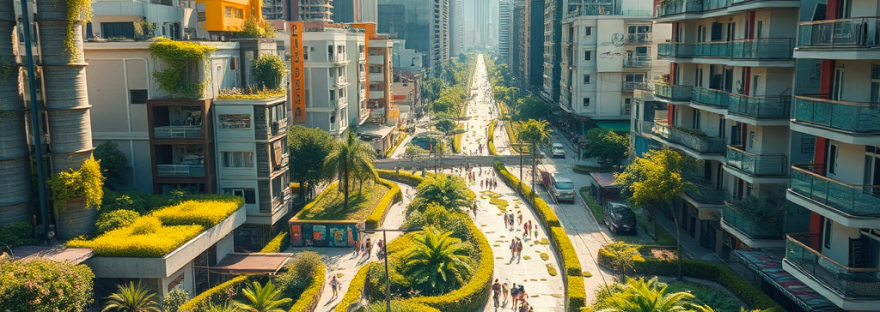
Earlier this month, a fellow MS in Geology graduate who now works with the UP Resilience Institute and I discussed a bold, forward-looking idea: what if Metro Manila could reimagine itself not as a flood-prone metropolis struggling to cope with yearly inundations, but as a “sponge city“, an urban landscape designed to live with water rather than fight against it? Within the Institute’s mission of promoting disaster resilience through science-based solutions, this idea could fit squarely within their mandate.
This conversation reflects a growing recognition among scientists and planners that traditional infrastructure alone cannot solve Metro Manila’s chronic flood problems. Instead, innovative, nature-based strategies are needed: an approach already proven in other parts of Asia.
1. What is the Concept of a Sponge City?
A sponge city is a city designed to absorb, store, and reuse rainwater much like a sponge. Through urban green infrastructure such as parks, wetlands, green roofs, permeable pavements, it mimics the natural water cycle, allowing excess rainfall to infiltrate the ground rather than overwhelming drains and rivers. Beyond flood control, sponge cities improve water security, enhance urban biodiversity, and mitigate urban heat (Yu et al., 2015; Chan et al., 2018).
2. What Country in Asia Has Done This?
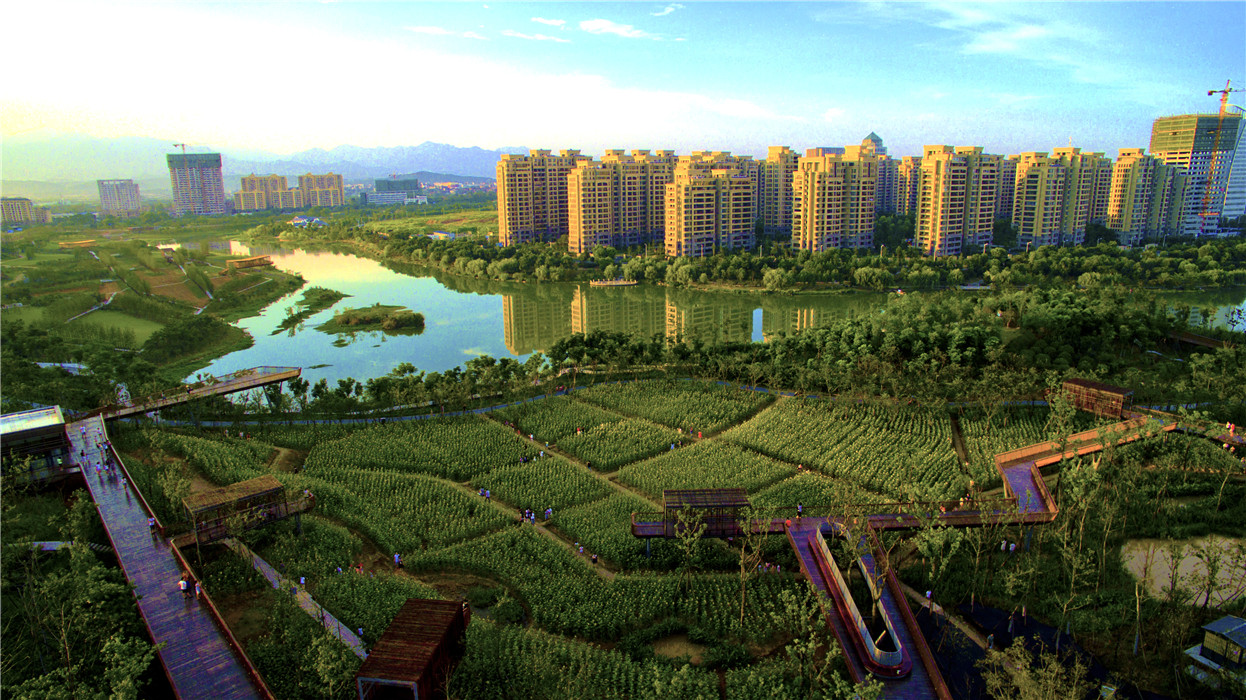
China stands as the most significant example. Since 2014, over 30 pilot cities, including Wuhan and Shenzhen, have embraced the sponge city model. These cities integrate blue-green infrastructure into their master plans, aiming to capture and use 70% to 80% of annual rainfall on-site. Their success demonstrates how policy, engineering, and ecology can work together to build urban flood resilience (Li et al., 2020).

3. What are the Mechanics in Building a Sponge City?
A sponge city relies on layered interventions, both small-scale and city-wide:
- Green infrastructure: rain gardens, bioswales, green roofs, tree-lined corridors
- Blue infrastructure: retention ponds, wetlands, restored esteros, and river parks
- Permeable urban surfaces: roads, parking lots, and sidewalks that allow infiltration
- Water recycling systems: rainwater harvesting and storage for irrigation and non-potable uses
- Urban planning reforms: integrating water-sensitive design in zoning and building codes
Each intervention contributes to capturing water where it falls, slowing its movement, storing it safely, and releasing it gradually.
4. Is It Doable in Asian Countries Like the Philippines?
Absolutely. Southeast Asian cities, from Singapore’s ABC Waters Program to Bangkok’s urban flood parks, have begun integrating sponge city principles. For Metro Manila where severe floods from monsoons and typhoons are almost annual events, the potential benefits are even more urgent.
Challenges remain: land use conflicts, fragmented urban governance, and a public still largely unfamiliar with nature-based solutions. However, with leadership from agencies like the UP Resilience Institute, PAGASA-DOST, Mines and Geoscience Bureau, Metro Manila Development Authority, Department of Public Works and Highways, partnerships with LGUs, and alignment with national flood management goals, these barriers can be addressed.
5. Conclusion: Moving Forward with Dialogue and Collaboration
Realizing a sponge city for Metro Manila begins with a series of sustained dialogues among key stakeholders: LGUs, urban planners, water managers, scientists, and local communities. The vision must align not only with infrastructure projects but also with education, public engagement, and long-term urban planning keeping in mind the Filipino values, cultures, and traditions.
Through the government’s works and collaboration with stakeholders, Metro Manila could evolve from reactive flood management towards proactive, sustainable urban resilience—one neighborhood, one estero, and one green space at a time.

References
- Asian Development Bank. (2020). Nature-Based Solutions for Building Resilience in Towns and Cities: Case Studies from the Greater Mekong Subregion. ADB.
- Chan, F. K. S., Griffiths, J. A., Higgitt, D., Xu, S., Zhu, F., Tang, Y. T., & Xu, Y. (2018). “Sponge City” in China—A breakthrough of planning and flood risk management in the urban context. Land Use Policy, 82, 932–940.
- Li, F., Li, X., Zhang, X., & Tang, Z. (2020). A review of the Sponge City development in China. Journal of Environmental Management, 267, 110593.
- Ministry of Housing and Urban-Rural Development of the People’s Republic of China. (2015). Technical Guidelines for Sponge City Construction (Trial).
- Nguyen, T. P. L., Han, J., & Le, Q. A. (2019). Sponge City concept: New direction for urban flood risk management. IOP Conference Series: Materials Science and Engineering, 471, 082009.
- Yu, K., Li, D. H., & Yuan, H. (2015). Thoughts on sponge city construction. Urban Planning Forum, 4, 1-5.
- https://www.brightvibes.com/how-pioneering-sponge-cities-help-mitigate-effects-of-climate-change/
Discover more from The Fabulous Scientist
Subscribe to get the latest posts sent to your email.

 The Fabulous Scientist