by Grass Padrique | The Fabulous Scientist
There’s something grounding about creating color with your own hands — literally. Long before tubes of paint lined art store shelves, artists and scientists alike relied on the earth itself for pigment: crushed rocks, minerals, clay, and soil. Each hue told a story of its origin — a red ochre from an iron-rich hillside, a soft gray from volcanic ash, or a warm yellow from weathered limestone.
Today, we can still rediscover this ancient connection through a simple, beautiful activity: making natural watercolor pigments from rocks and soil. It’s a project that blends art, science, and sustainability — perfect for families, homeschoolers, or anyone curious about the earth beneath their feet.
Gathering Colors from the Ground
Start by taking a short walk outdoors, perhaps in your backyard, garden, or a nearby trail. Bring a small trowel, a few containers, and your sense of curiosity. Notice how the soil changes color from place to place: red or brown in iron-rich areas, gray near volcanic rocks, or creamy beige near limestone. Even a small patch of ground can reveal an entire palette.
When collecting, take only a small amount — a spoonful or two is enough. If you’re on public land, gather responsibly and avoid disturbing plants or habitats. For children, this step alone becomes a mini field study: observing texture, moisture, and the subtle shifts in color that make each sample unique.
Once home, spread your samples on a clean surface to dry. Let them sit under sunlight for a day or two until completely dry. This prevents mold from forming later on. You can also dry the soil using an oven toaster, just make sure the soil is enclosed in an aluminum foil and that you’re using metal pan that is not used for baking or heating food.
From Soil to Pigment
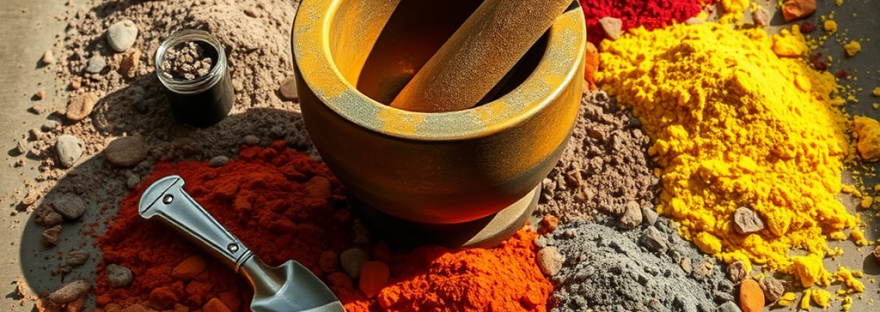
Now comes the transformation. Each soil sample must be turned into fine powder before it can become watercolor pigment.
You’ll need:
- A mortar and pestle (or an old spoon and small bowl)
- A fine sieve or mesh
- A little patience
Crush the dried soil gently until it becomes a fine powder. Sieve it to remove tiny pebbles or roots. What remains will be your earth pigment. The finer it is, the smoother your paint will feel on paper.
Here’s where geology meets art — if you look closely at your powder under a magnifying glass, you’ll see tiny mineral grains glinting. That sparkle might come from mica; the rich red, from hematite; the yellow, from limonite. You’re not just making paint — you’re studying the mineral composition of your home ground.
Mixing the Paint
To turn the pigment into watercolor, you’ll need a binder — something that helps the pigment stick to paper. Traditional watercolor binders are made of gum arabic, a natural tree resin. You can buy it in liquid form or make your own solution by dissolving 1 part powdered gum arabic in 3 parts warm water. Gum arabic is easily available in art stores such as Deovir and also in the blue and orange apps.
For added fluidity and preservation, mix in:
- A drop of vegetable glycerin (for smoothness)
- A drop of clove essential oil (a natural preservative as it kills some microbes)
Now, add your powdered pigment little by little, stirring as you go, until the mixture has a creamy consistency — similar to melted chocolate. Please see the videos in our previous blog post below to see how we made our own:
If you’d like to make paint pans, spoon the mixture into small containers or bottle caps and let them dry for a few days. Once solid, they’ll behave just like store-bought watercolor cakes: just add water and paint away.
Painting with the Earth
The first brushstroke of handmade watercolor often brings a small surprise. Unlike synthetic pigments, natural earth colors have gentle, organic tones that feel both ancient and alive. Browns may dry with a hint of red, while gray pigments may reveal a soft violet undertone.
You’ll notice, too, how they granulate — tiny particles settling on the paper’s texture — mimicking the look of weathered stone or dried riverbeds. It’s as if the painting itself breathes with the earth’s rhythm.
This natural unpredictability is part of the beauty. Encourage children (and yourself!) to explore freely: paint abstract washes, landscapes, or even a map of where each pigment was found.
Why This Matters
In a world where most colors are mass-produced, creating pigments from the earth reconnects us with the origins of art and science. It teaches observation, patience, and respect for nature’s limited resources.
Each handmade color carries a story — a little piece of your local geology transformed by hand and imagination. When you dip your brush into that self-made paint, you’re part of an ancient tradition that spans cave painters, early scientists, and modern artists alike.
A Note on Safety
While most soils and rocks are safe to handle, some may contain heavy metals or pollutants. Always:
- Wear a mask when grinding to avoid inhaling dust.
- Wash your hands afterward.
- Avoid using unknown urban soils that might be contaminated.
If you’re doing this with kids, choose natural clay, sand, or soil from clean, rural areas — or even buy small rock samples from educational kits to experiment safely.
The Palette Beneath Our Feet
Making watercolor from rocks and soil isn’t just about creating paint — it’s about rediscovering our connection to the land. Every hue, from burnt sienna to pale yellow, reminds us that the earth itself is a vast canvas, constantly weathering, changing, and renewing.
Next time you take a walk outdoors, look down for color. Beneath your shoes might be the next shade on your palette — waiting to be uncovered, ground, mixed, and brought to life with water and light.
Other online references you might want to read also:
- https://jennarainey.com/make-your-own-natural-watercolor-paints/
- https://www.lostincolours.com/foraging-for-pigments-from-local-rocks/
- https://theartofsoil.com/blogs/news/diy-soil-based-watercolor-paint
#WatercolorArt #SustainableArt #DIYWatercolor #GeologyArt #EarthPigments #HomeschoolArt #NatureInspiredArt #EcoFriendlyArt #ArtAndScience #TheFabulousScientist
Discover more from The Fabulous Scientist
Subscribe to get the latest posts sent to your email.

 The Fabulous Scientist