
by Grass Padrique | The Fabulous Scientist
There’s a quiet magic that happens when water touches pigment. As the color spreads, merges, and settles into soft gradients, it reminds me of something far grander, the slow artistry of Earth itself. Every brushstroke and every wash feels like a miniature reenactment of the processes our planet paints its own layers (e.g. volcanic eruption, earthquakes, erosion), shaping mountains, cliffs, and valleys over time. It is for my love of outdoors and nature in general and my profession as an earth scientist that influenced me to paint landscapes as my favorite subject.
As a geologist who also loves watercolor, I’ve often felt that these two worlds — science and art — are not opposites at all. In fact, the more I paint, the more I see echoes of geology in the watery flow of color on paper.
Water and Time: The Shared Language of Art and Earth
Both watercolor and geology are ruled by time and patience. In watercolor, we wait for layers to dry before adding new ones, allowing transparency to build depth. In geology, layers of rock accumulate slowly — one era at a time — each holding the memory of ancient seas, volcanic ash, or desert winds.
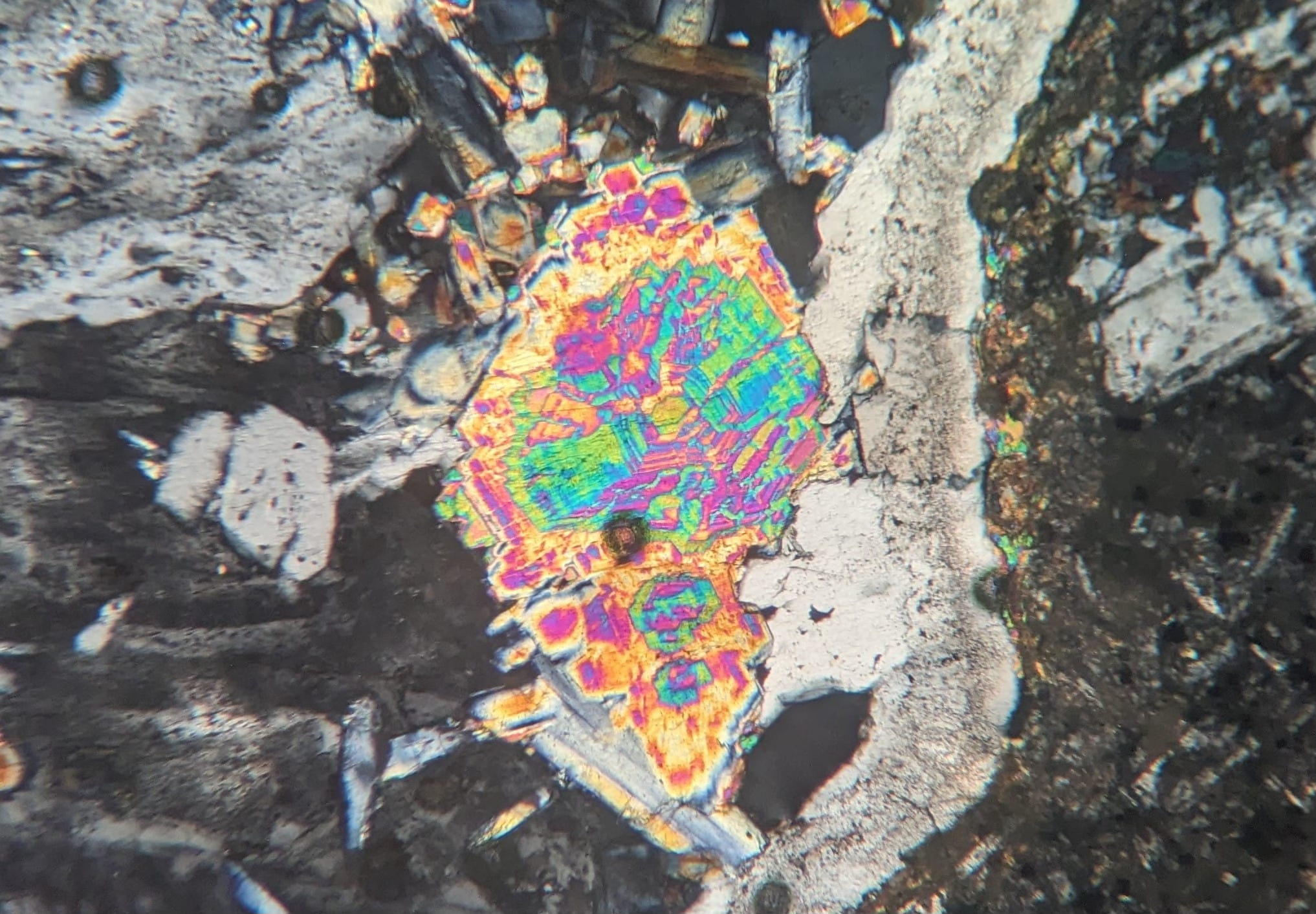
Sedimentary rocks, for example, form when fine grains of sand, clay, or organic matter settle in water and harden over millions of years. The process is delicate yet enduring — just like a watercolor painting. If you’ve ever watched pigments drift and settle in a wet wash, that’s not far from how minerals precipitate from water in geothermal or marine settings. In geothermal we call these minerals that deposit along fractures as veins. In fact, my graduate study attempted (and quite successfully too) to segment images of these veins as part of reservoir rock characterization. A photo of a vein filled with minerals as seen under the microscope is shown below:
“Earth paints with time; we paint with water.”
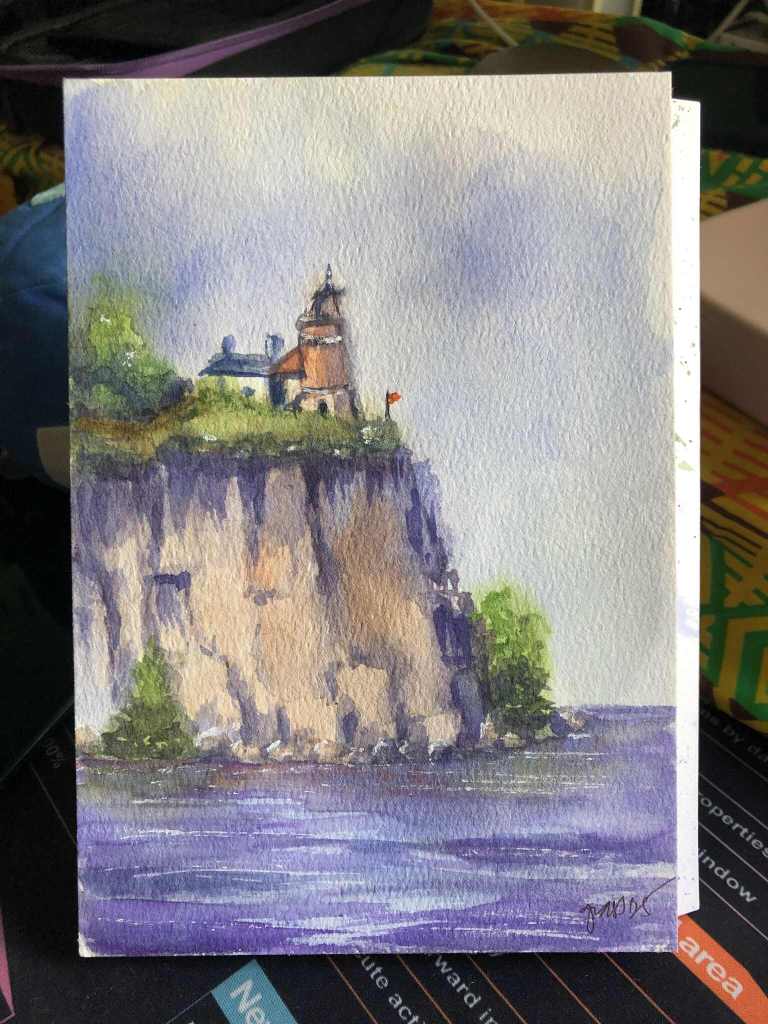
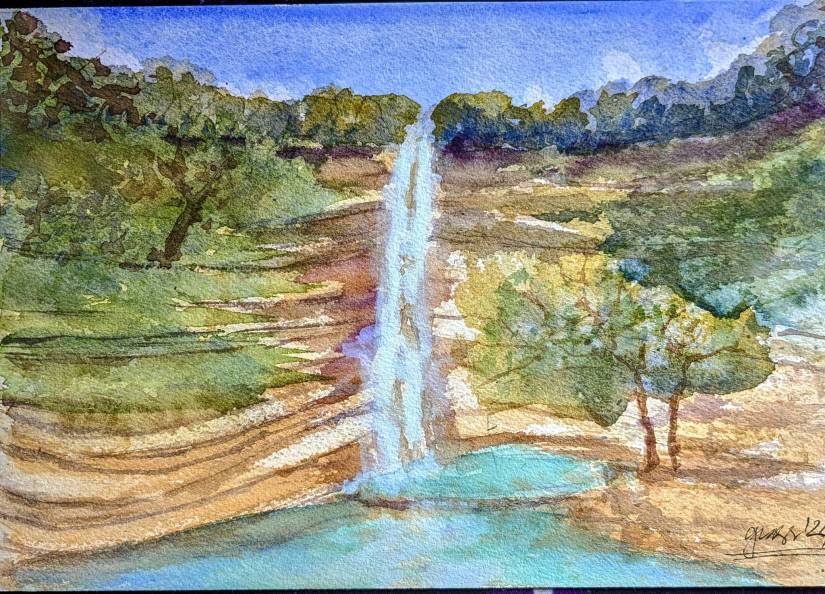
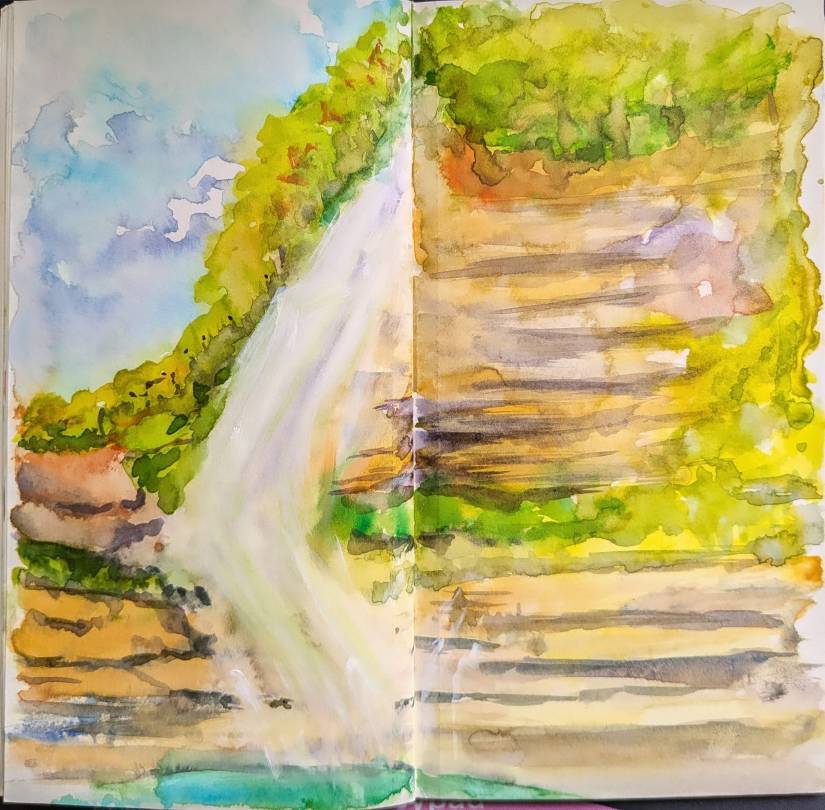
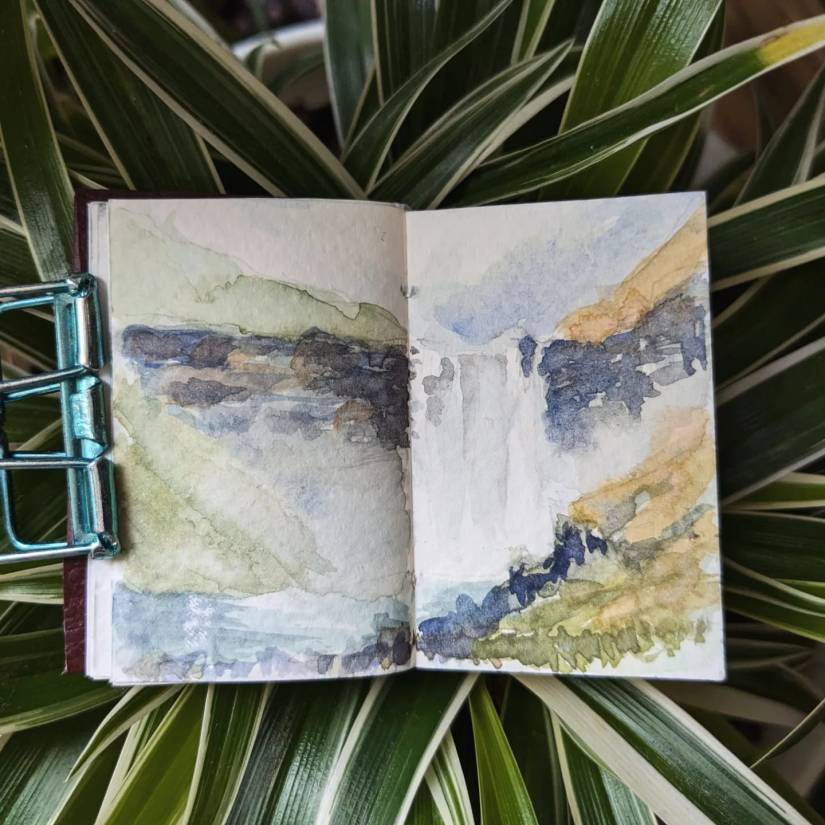
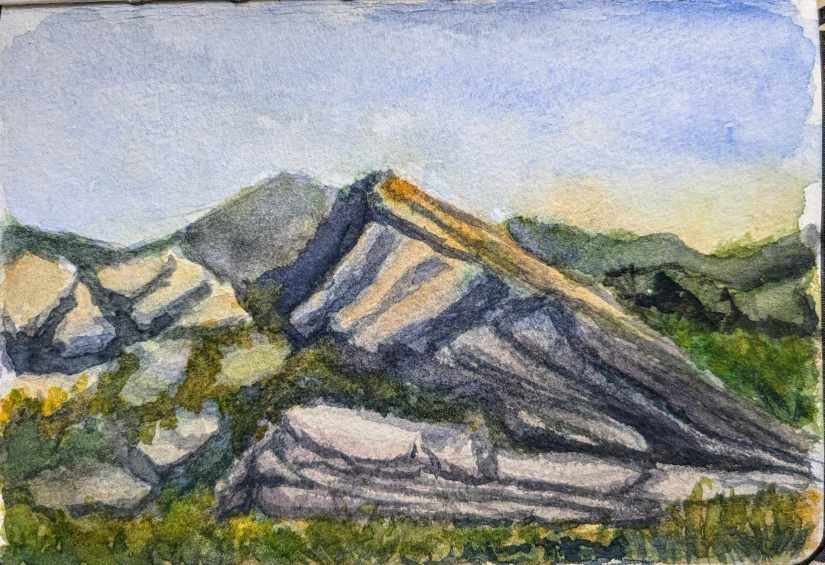
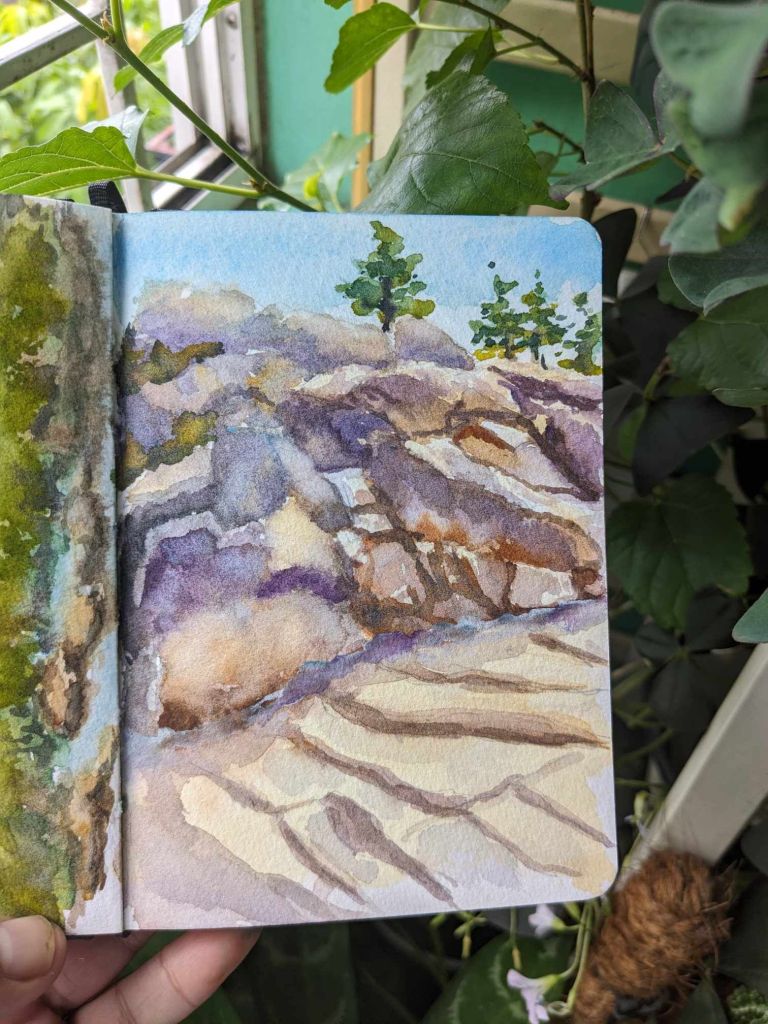
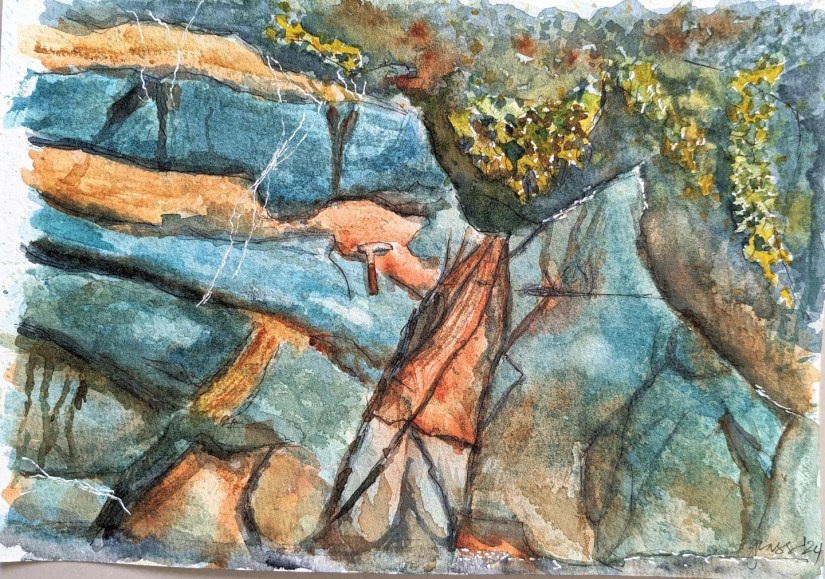
Both require gentleness and curiosity to appreciate how beauty emerges from process. The slideshow below shows layered sedimentary rocks and fossils one can sometimes see in sedimentary rocks, all painted in watercolor.




Parallels Between Brush and Bedrock
I love how specific watercolor techniques mirror geological processes:
| Watercolor Technique | Geological Analogy |
|---|---|
| Wet-on-wet blending | Magma mixing or hydrothermal alteration — where heat and fluids blend materials beneath the surface |
| Layer glazing | Sedimentary layering, each glaze like a geological time layer |
| Pigment granulation | Crystal growth or mineral precipitation, forming texture and depth |
| Controlled edges | Fault boundaries or contact zones between different rock types |
When pigments pool and separate on textured paper, I see the same forces that create mineral bands in agate or color zoning in feldspar. When I tilt my painting to let color run, I imagine erosion carving through riverbeds. Water, whether in a stream or on my brush, always finds its own path.
A Simple Science-Art Activity: Painting an Outcrop
Here’s a homeschool project that combines watercolor and geology — one my son and I loved doing together during our homeschooling days. I have also painted some of the outcrops during my fieldworks in watercolors and if you ever go outside and see outcrops yourself, this is watercolor painting activity you can do with your family.
What you’ll need:
- Watercolor paper
- A small palette with earth-tone pigments (yellow ochre, burnt sienna, raw umber, Payne’s gray)
- Brushes and clean water
- A reference photo of a cliff, roadcut, or rock outcrop or go outside and paint en plein air
Steps:
- Observe first. Look closely at your reference or a rock outcrop in front of you. How many layers can you see? Are they horizontal, tilted, or folded? Note the colors — browns, grays, rusty reds — and where they change. Use the plants/trees as anchor points.
- Sketch lightly. Draw simple bands across your paper to represent layers.
- Start with the lightest wash. Use diluted pigment to paint the base layer — just as the earliest sediments form. Usually the lightest colors are also painting first.
- Build layers gradually. Let each layer dry before glazing another. Vary your colors slightly to show differences in rock type or mineral content.
- Add textures. Use a dry brush or sprinkle salt while the paint is damp to mimic granular patterns like sandstone or breccia.
- Finish with shadows and highlights. These bring dimension, just as weathering reveals structure in real rock.
Afterward, you can label your “strata” with imagined names: “Ian Formation”, “Family Clay,” and “Vacation Basalt.” It can be both a playful and thoughtful way to remember that every rock, like every painting, tells a story of moments layered over time. On the right side of this site you will see a video recording watercolor class we conducted online for homeschoolers where kids learn how to paint an ammonite fossil and Mayon volcano. Feel free to watch and paint using these videos as well!
Reflections Beneath the Layers
As I watched my son paint, I realized that watercolor’s unpredictability — its runs, blooms, and uneven edges — mirrors the natural beauty of geological processes. We can guide the brush, but water has its own wisdom, just as Earth follows its slow, inevitable rhythm.
Art helps us feel what science explains. Through painting, we can sense the flow of ancient rivers or the settling of volcanic ash in still water. Through geology, we can understand that the pigments of our world — ochres, siennas, umbers — come from minerals born deep within the planet.
The connection between art and geology isn’t just metaphorical; it’s material. The pigments in our paints are minerals — ground hematite for red, limonite for yellow, azurite for blue. When we paint the Earth, we’re quite literally painting with the Earth.
I talked about oxide watercolors sourced from earth in the blog below:
Try It Yourself
The next time you paint with watercolors, think of each brushstroke as a geological event. Let your layers tell a story of time — the quiet settling of color, the deepening of tone, the way light interacts with transparency.
If you’d like, share your painting online with the hashtag #PaintTheEarth and tag The Fabulous Scientist on Facebook or @scientisgrass in Instagram. I’d love to see how others interpret geology through watercolor.
Whether you’re studying rocks or painting skies, both remind us of the same truth: beauty is built layer by layer, with patience, curiosity, and love.
“Earth paints in millennia. We paint in moments. Yet both tell the same story — of water, color, and time.”
Discover more from The Fabulous Scientist
Subscribe to get the latest posts sent to your email.

 The Fabulous Scientist