

- What are iron oxide watercolors?
- What is granulation in watercolors?
- How I got into iron oxide watercolors:
- My Personal Experience with Sinours Iron Oxide Watercolors
- What I like and don’t like about Sinours Iron Oxide Watercolor Set
What are iron oxide watercolors?
Iron oxide pigments are widely used in watercolors because of their permanence, non-toxicity, and availability in a variety of natural earth tones. Here’s a breakdown of the composition of iron oxide watercolors:
- Iron Oxide Pigments: These are the main coloring agents in iron oxide watercolors. They are derived from natural minerals often present in soils produced by natural weathering or break down of mostly volcanic rocks such as hematite (red iron oxide), goethite (yellow iron oxide), or magnetite (black iron oxide). These minerals are ground into a fine powder to create the pigment.
- Binder: Watercolors use a binder, typically gum arabic, which holds the pigment particles together and helps them adhere to paper when water is applied.
- Water: Water is the solvent used to activate and dilute the watercolor paint, allowing the pigment to spread and adhere to the paper.
- Additives: Some manufacturers may include additives to improve the texture, consistency, or flow of the paint. These can include glycerin (to help keep the paint moist), ox gall (a wetting agent to improve flow), or honey (for a smoother application). Below is a video of a recent painting of an ammonite fossil I made using iron oxide watercolors.
Iron oxide pigments are favored in art because they are lightfast, durable, and can produce a range of earthy, muted tones such as reds, yellows, browns, and blacks. These pigments have been used for centuries, dating back to prehistoric cave paintings!
What is granulation in watercolors?
Granulation in watercolors occurs when the pigment particles settle unevenly on the paper, creating a textured or mottled effect. This happens because certain pigments are heavier and coarser than others, causing them to clump together or “granulate” as the water evaporates. The effect is most noticeable in watercolors that use inorganic or mineral-based pigments, such as iron oxides or ultramarine. Below is my reel when I swatch my set of iron oxide watercolors by Sinours:
How I got into iron oxide watercolors:
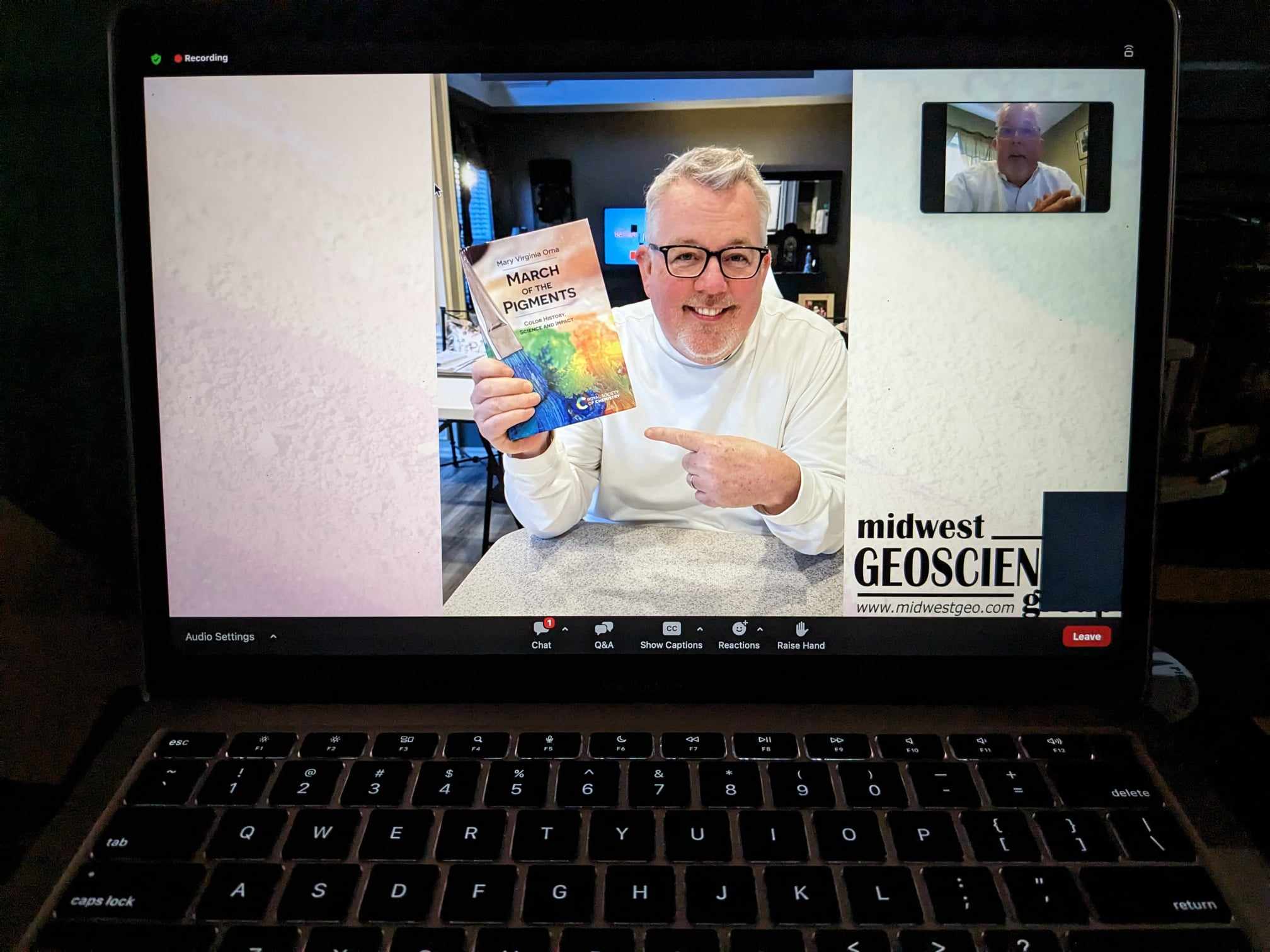
Last April, a friend informed me about a webinar hosted by the AAPG Women’s Network titled “The Geology of Pigments.” The event, held later that month, piqued my interest, and I’m glad I set my alarm for 5 AM to attend! One of the highlights was a virtual demonstration on painting with iron oxide watercolors. My favorite part, though, was a session led by a geochemist, who discussed how mine tailings and waste materials in the Midwest are being purified and repurposed to create pigments. I found it inspiring that waste can be transformed into resources that artists use to create beautiful works of art.


My Personal Experience with Sinours Iron Oxide Watercolors
Disclaimer: I don’t get any form of reward from mentioning any brand or store in this part of the post. I bought the set of watercolors with my own money and the following review is based on personal experience as a watercolorist using the set for the first time.
The stacked images are my artworks the past two weeks using granulating watercolors, mostly from my Sinours iron oxide palette and other brands such as Schmincke and Daniel Smith. Since I only have limited paints in Schmincke and Daniel Smith as they are so pricey, I decided to feature just the Sinours iron oxide in this article.
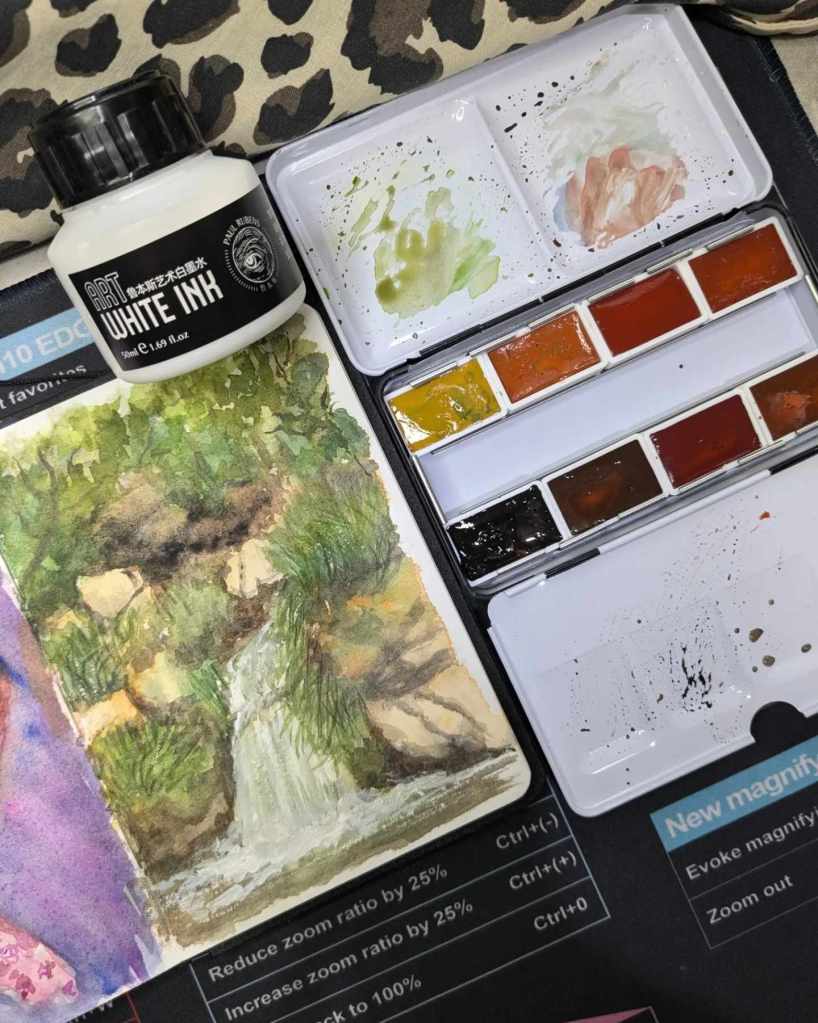

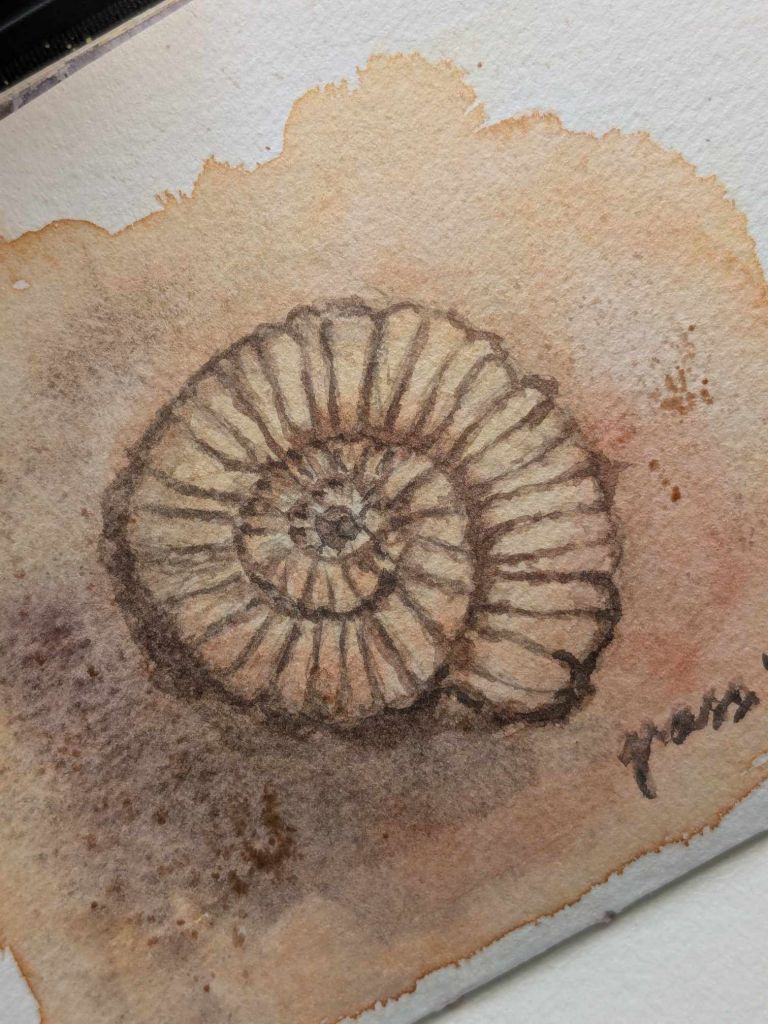


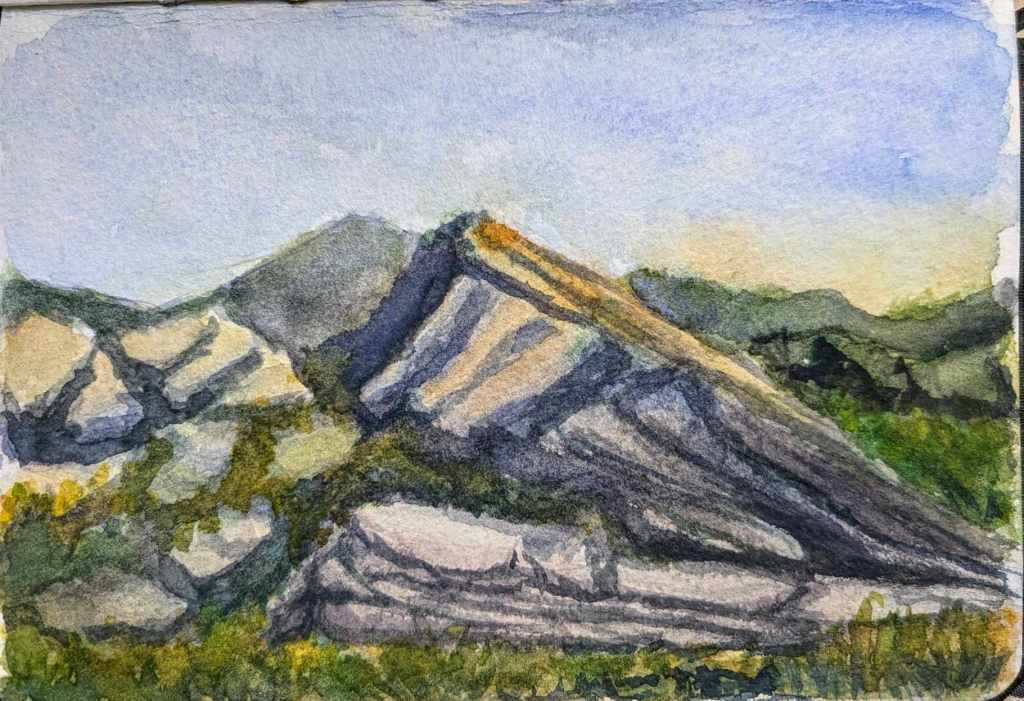
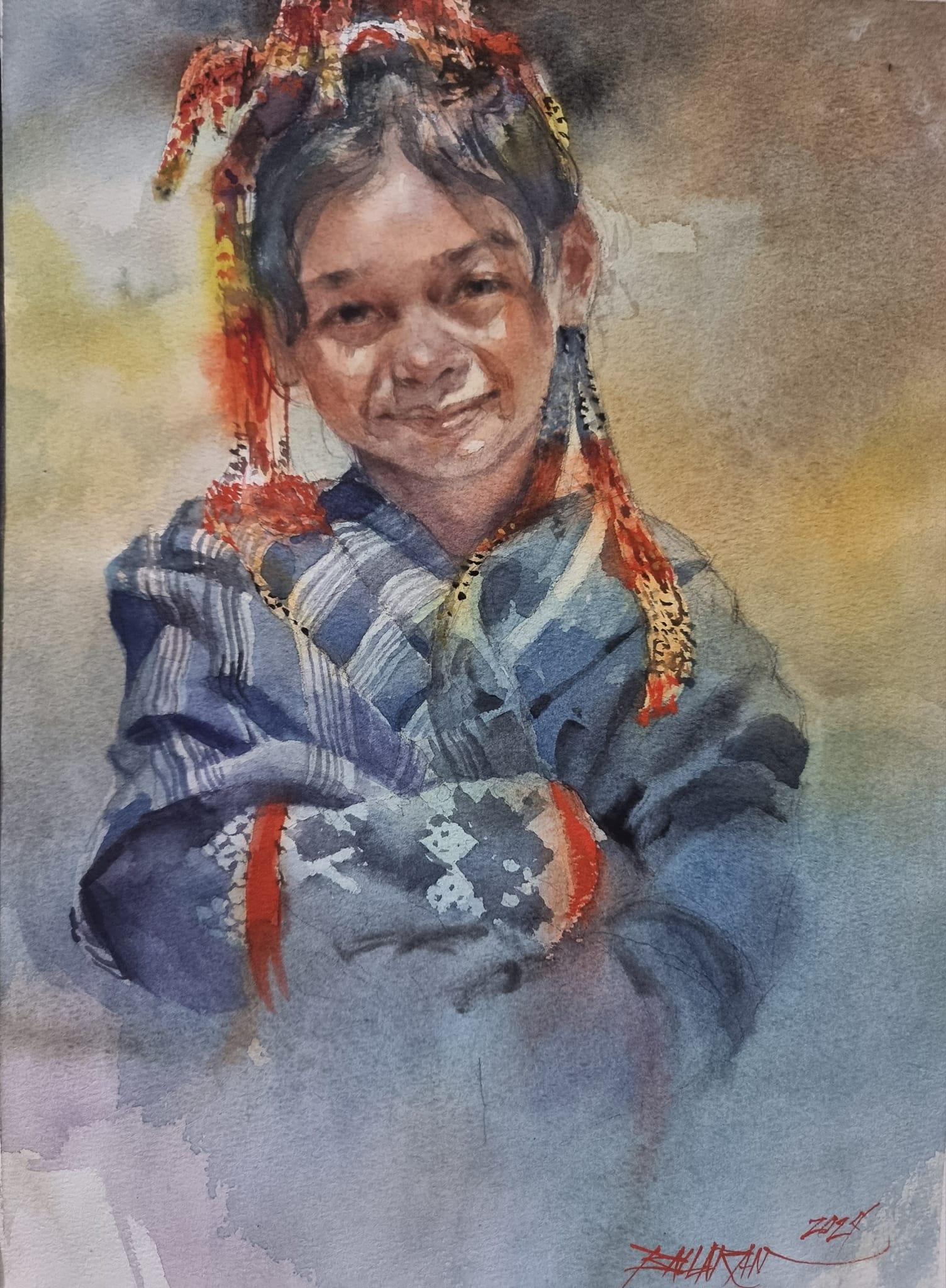
If you haven’t heard of Sinours, you’re not alone. I only discovered it when a master watercolorist shared his experience visiting China, where Sinours watercolors were launched in August 2024. Upon his return, he gifted a set of the iron oxide palette to my mentor, Master Lito Ballaran. Master Lito used the palette to paint portraits (see photos below), and the results were absolutely stunning! Inspired by his work, I decided to purchase a set myself last month. Since then, I’ve been testing it by painting a variety of subjects, including an ammonite fossil (featured in the reel above), rocky landscapes, and waterfalls.

What I like and don’t like about Sinours Iron Oxide Watercolor Set
What I like about Sinours Iron Oxide Palette:
- Affordable – The Sinour Iron Oxide palette costs me just Php 1, 188 or 21 USD from its official distributor in the Philippines, Giftbox, Inc. A palette consists of 8 full pans of pigments which means a full pan only costs 2.7 USD.
- Vibrant – A little goes a long way and the colors are so vibrant.
- Granulating – For those who like granulating watercolors, this is your cheaper alternative to Daniel Smith and Schmincke.
- Earth tones – If you like painting desert scenes, rocky landscapes, and such in neural tones, this is a good starter palette. However, you’d need to add a blue pigment (e.g., for the sky) as this set does not have one.
- Nifty container – The palette comes in sturdy, high quality metal palette with holder at the back so you can hold it with one hand when painting on an easel especially when painting outdoors. There is a row of blank space in the middle if you decide to add more pigments in pans.
- Comes in full pans so they will last a while hence, I can say that the set is bang for your bucks!
What I don’t like (or have qualms about):
- The set does not come with blue pigment which is one that I can’t paint without as I often paint sky. I would also add more yellows if I decide to customize this palette in the future.
- There’s not much information about how the iron oxides were sourced or if these were sourced sustainably. I really hope they were!
One of their sales people reached out to me on Facebook when I posted my artworks using the palette and they said that more colors are coming to the Philippines very soon. Currently the only official distributor of Sinours in the Philippines is Gifbox, Inc. Below are the current palettes available from their store:


Hope you like this post and do share them with your artist friends!
Cheers,

Discover more from The Fabulous Scientist
Subscribe to get the latest posts sent to your email.

 The Fabulous Scientist
2 thoughts on “Exploring Iron Oxide Watercolors: A Personal Journey and Insights”