
Hi, everyone! Since it has been a while since I wrote about fountain pens, blog snippet below, I thought I’d write about fountain pen inks this time around.
It’s close to one year now since I got introduced to fountain pens and as I look back, I realize I don’t pick up ballpoint pens or gel pens now to write. I have given away my gel pens and refills to a friend’s daughter but now I am also considering buying a fountain pen for each member of my family to “penable” them into this hobby. I have gotten so addicted to writing with fountain pens that, believe it or not, most of my thesis notes are handwritten. I have used up so many notebooks in just one year!
For those of you out there who share the same love for writing, then you’d know that there is a trifecta in fountain pen writing. The trifecta would be the pen, the ink, and the paper. So far, I have discovered inks that really go well on different types of papers and they are what I’m gonna feature here today. The first in my list is Vinta, a local brand of ink, that is now gaining popularity in the pen world. Today we’ll be talking about this brand of ink because it’s proudly made in the Philippines and I love supporting local business.
Vinta Inks
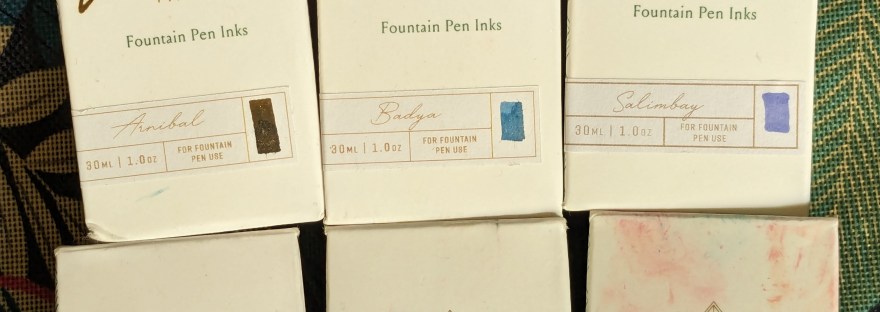
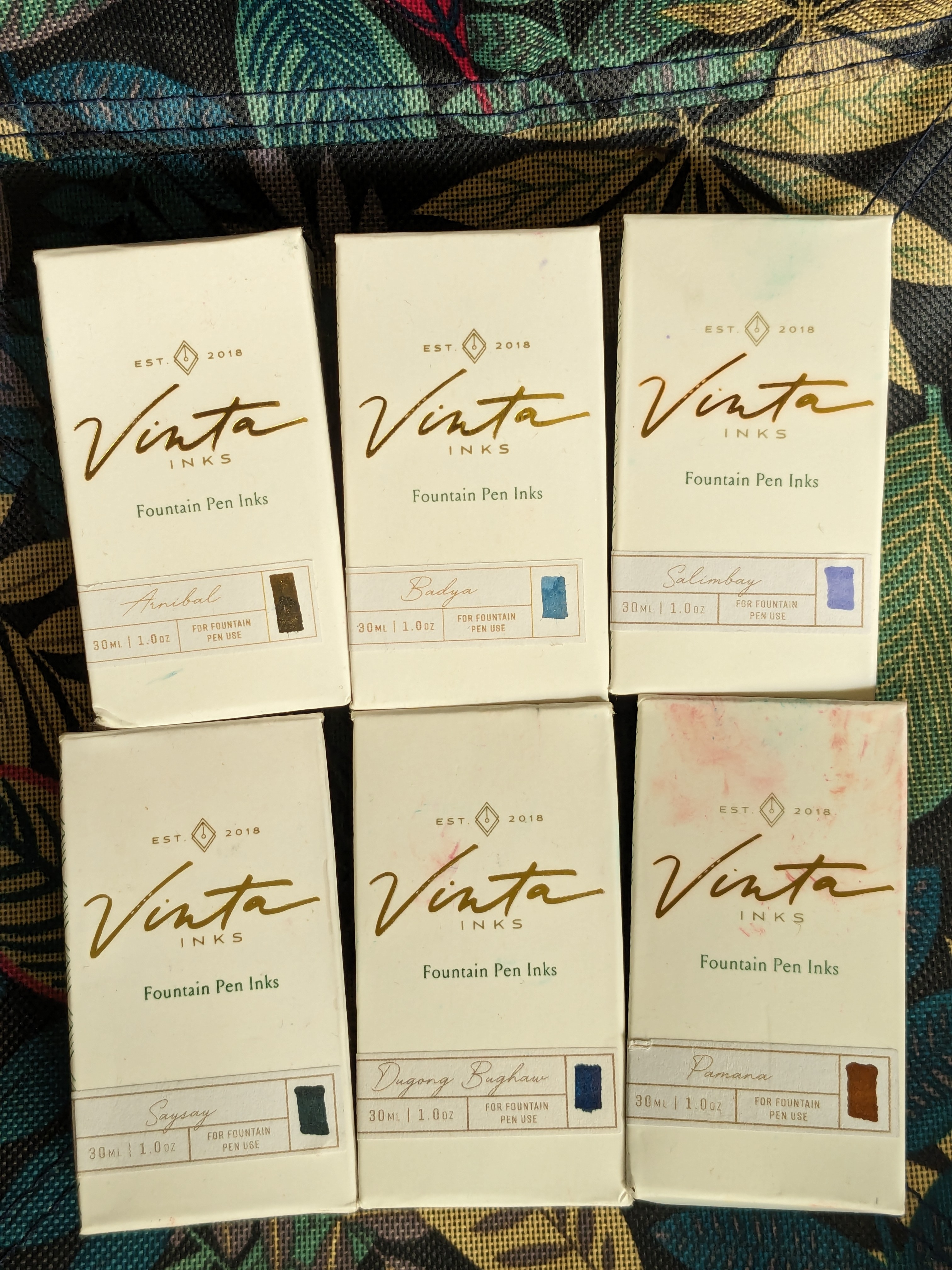
Vinta is a Filipino word for outrigger boats in Mindanao that is known for their colorful sails. The local ink brand must have been inspired by the play of colors to have named their inks so, I’m guessing. Here’s a photo of the Vinta inks I have at the moment:
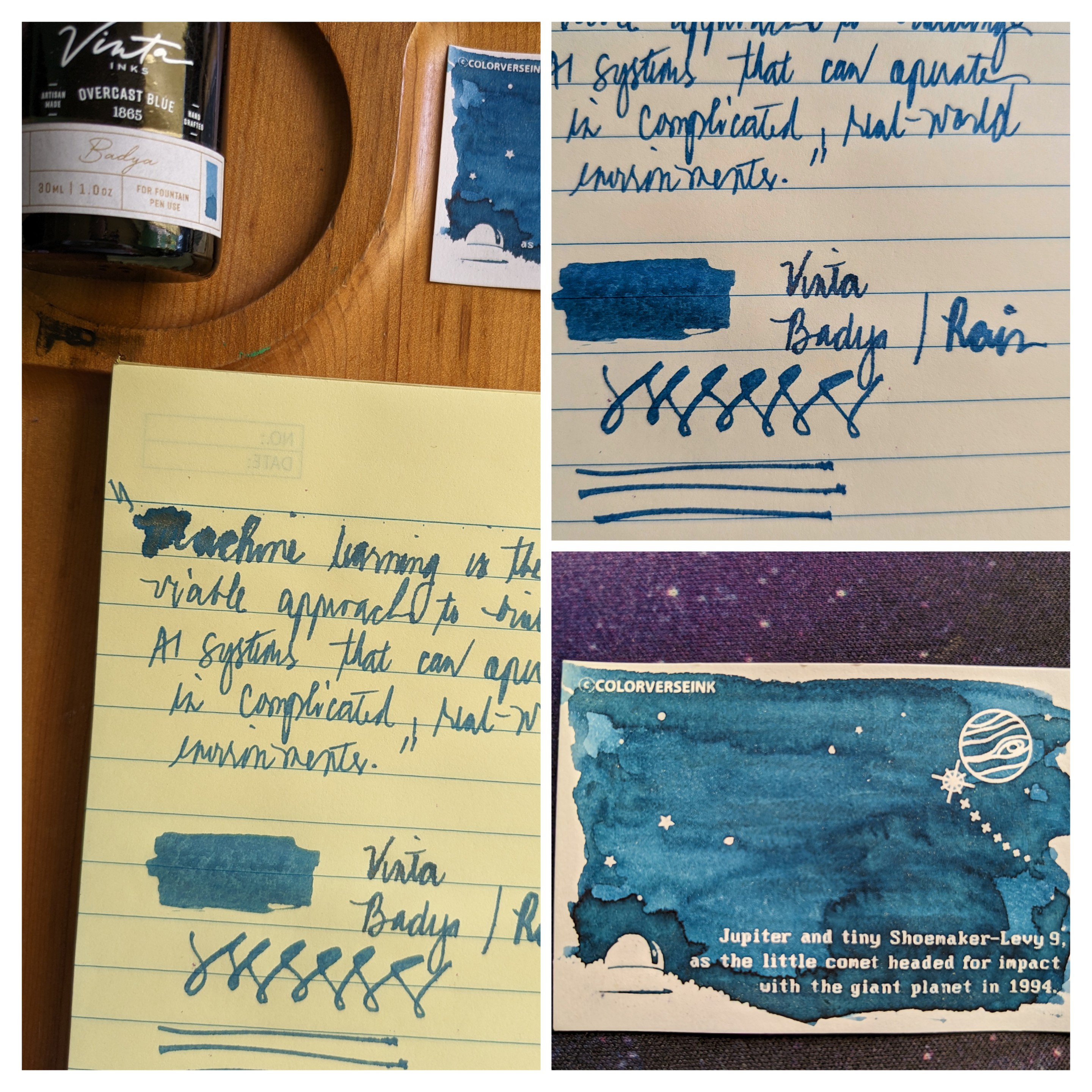
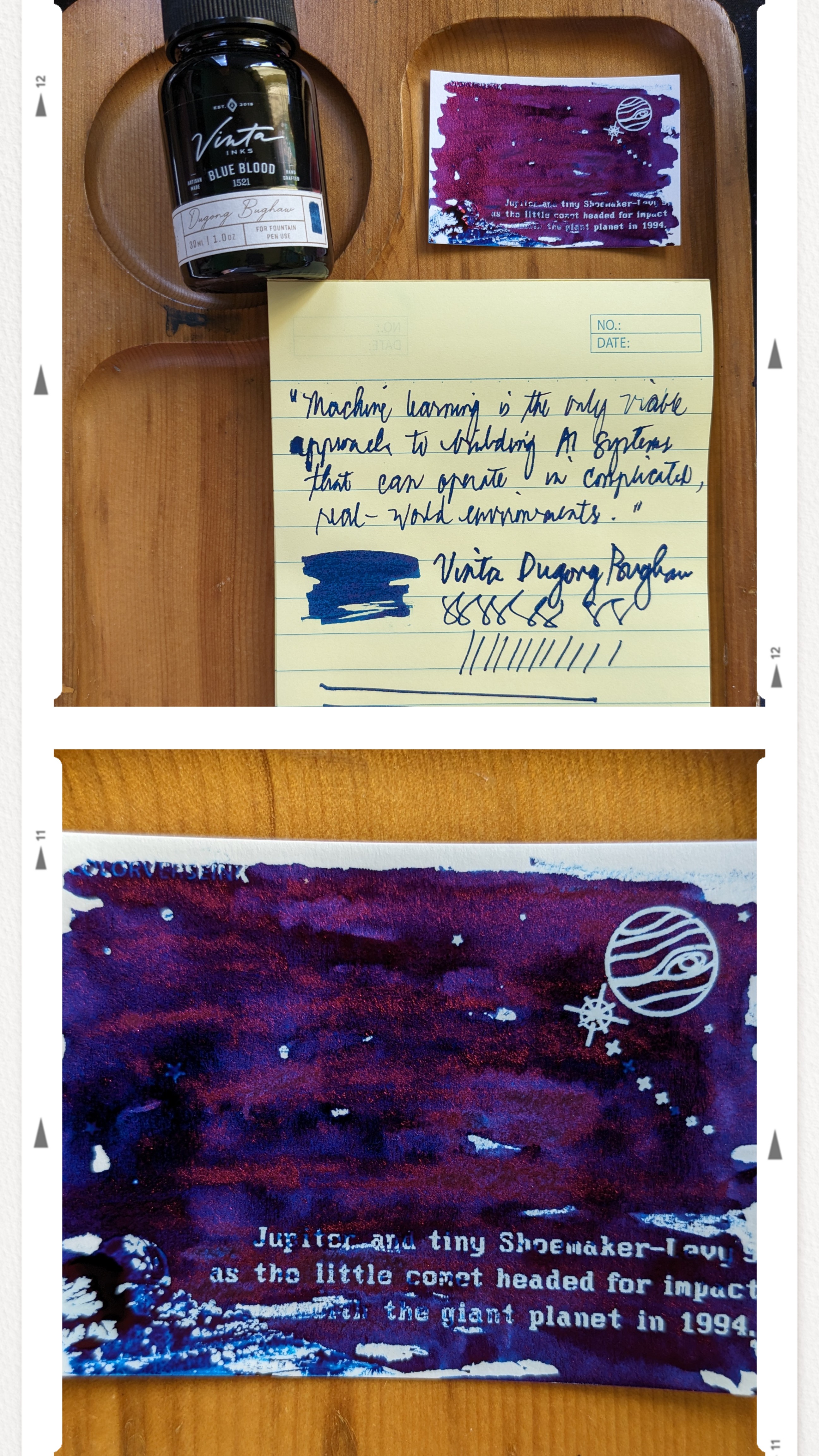
Now for the swatches, here’s a series of photos of the swatches with short description.

The two swatches below show Vinta Arnibal or Burnt Sugar (left) and Vinta Heritage Brown or Pamana (right). Vinta Arnibal is reminiscent of burnt brown sugar but with strong bronze shimmer while Vinta Pamana is a shading ink of brown and green. I love brown as a color, I often associate this color with humility and Mother Earth, especially Vinta Pamana which reminds me of the verdant hills of Batanes. Just like any shimmer inks, these inks are best used with broad nibs to see the effect. Also, the fine glitter in shimmer inks can clog the nib and feed so make sure you’re writing with your pen often.

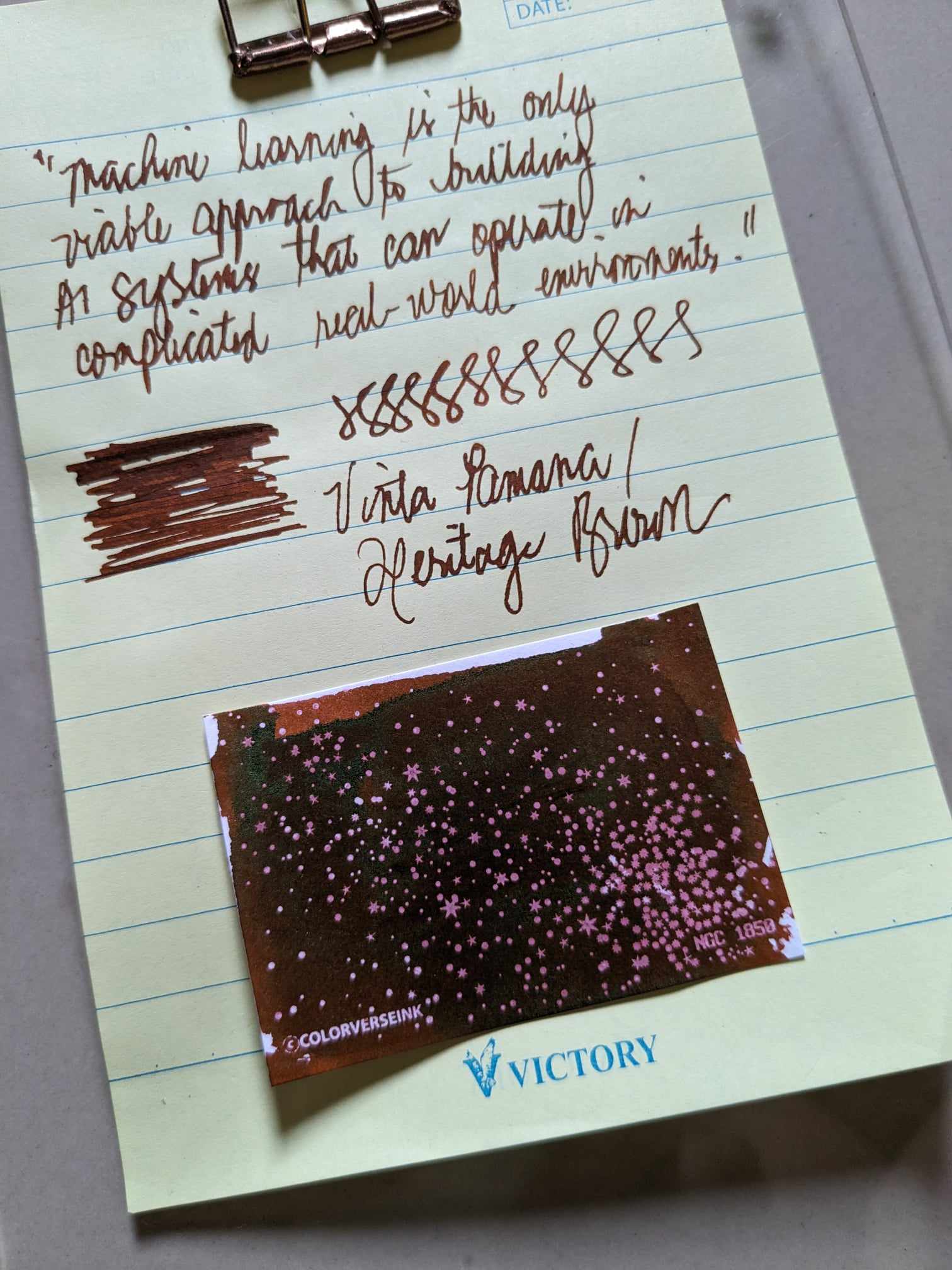
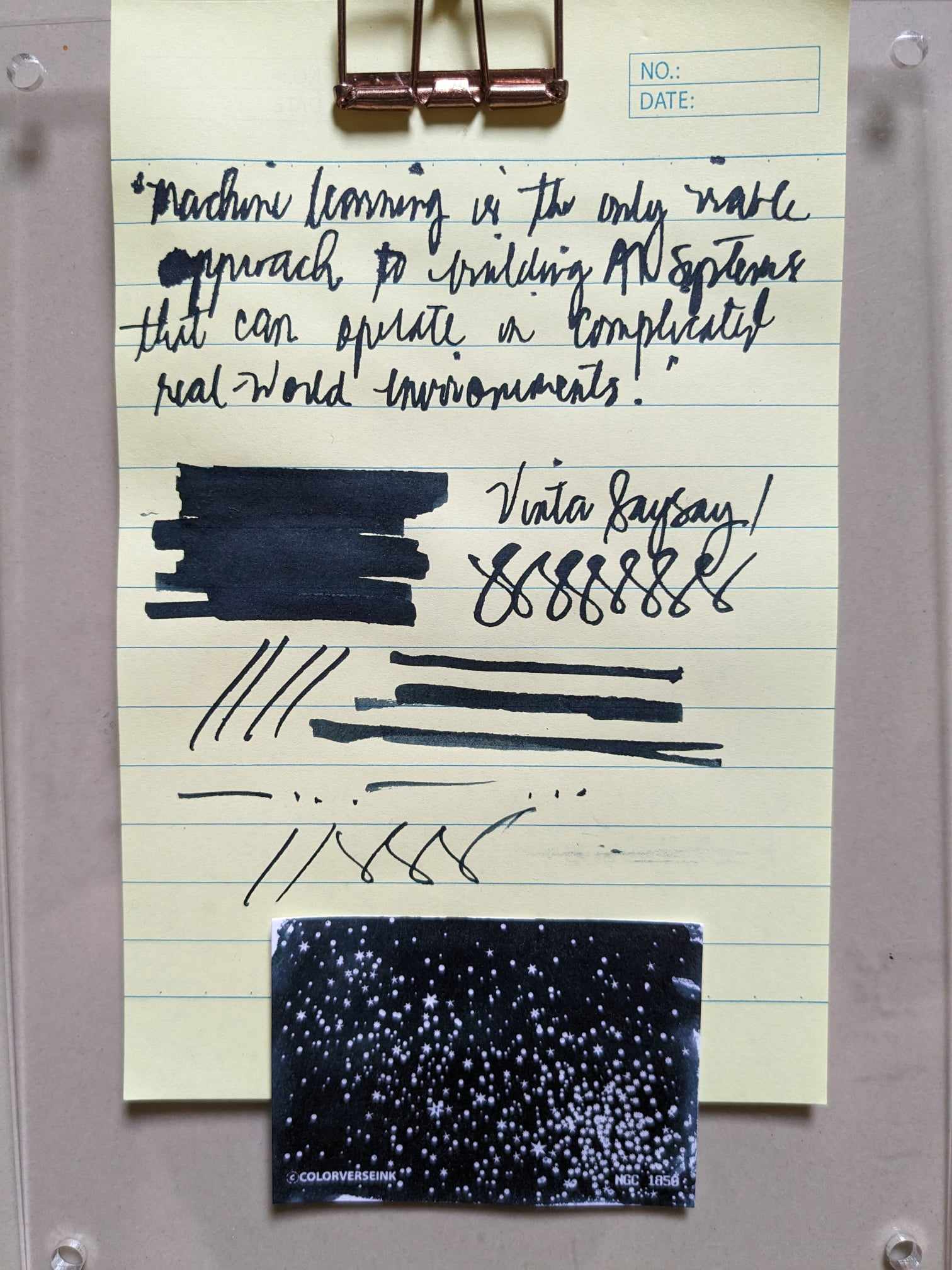
If you are looking to support local businesses, I recommend trying Vinta for your fountain pens. Here’s my observations so far about the inks:
- The shading inks tend to exhibit the color grading even on ordinary papers. For the swatches above, I used white Colorverse swatch card and Victory yellow pad paper (1/4 size). However, if you’re going to use thin sheets of ordinary paper like coupon bond, expect some bleeds.
- A bottle of 30 ml would cost about 450-599 pesos (~9-10 USD) so that’s something to think about if budget is an issue.
- The inks are not waterproof as most fountain pen inks are, so if you’re looking for one, this ink won’t be it. I’ll suggest another brand of ink that’s waterproof in my next article about fountain pens.
- The shimmer inks of Vinta tend to clog my pens’ nibs when not used for a week or so. When this happens, my nib does not write at all. Here’s a fix if it happens to you: put the nib under a faucet and let the water wash off the dried up ink on the fins of the feeder and the nib’s body. Pat dry with clean face tissue. Test by writing on a paper. Usually this fixes the problem. To ensure this does not happen again, try using your pen everyday and store horizontally.
If you liked this post, maybe you’d like to also read about Batanes which I mentioned briefly here in this blog:
Discover more from The Fabulous Scientist
Subscribe to get the latest posts sent to your email.

 The Fabulous Scientist